BIZCHINA> Cars

|
BIZCHINA> Cars
|
|
A moral question on car bans
By Bai Ping (China Daily)
Updated: 2009-12-04 11:56
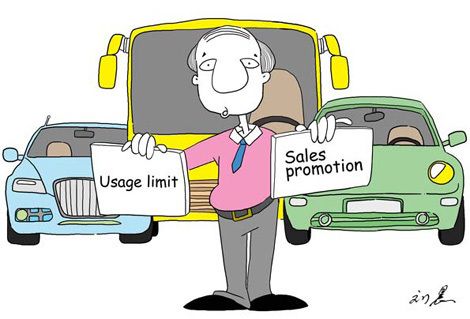 If you live outside the Fifth Ring Road of Beijing and work downtown, you'll fret about transportation one day every week when it's your turn to keep your car garaged. You probably need to brave a long wait in the cold for the bus and the packed subway at rush hour. If you defy the city's car ban, you'll risk being fined if you are pulled over by ambushing police at the exits near the ring road, or captured by surveillance cameras. I live on the other side of the eastern Fifth Ring Road and my workplace is about three km inside from the road's north section. It takes me about half an hour to drive to work, but on my lucky day, I need to use a combination of suburban bus and subway that can take hours during peak times. Cabs cost more than 100 yuan per round-trip. From a utilitarian point of view that evaluates an action on the basis of benefits and costs, I might be better off taking my chances on the three-km expressway. If I get caught, I'd be fined 100 yuan on the spot, with no points deducted or police record. Even better, past offenders say, the fine receipt will become your pass because you'll be punished only once during the day. But most motorists won't actually do this because it's wrong to break a rule and there are also things intractable to measurement. For example, what's the cost of the humiliation of being stopped and questioned by the police? It may considerably outweigh the gain from the time or taxi fare you have saved from breaking the rule. The practice of banning vehicles from the road according to the last digit of their license plates was first introduced last year, as an Olympic emergency response to air pollution and traffic congestion in the city. People who violated the car ban during the Games were morally guilty of causing damage to the mega event. So you can imagine motorists' bewilderment when they realize that while about 800,000 cars are parked every day now, the city is seeing record car sales spurred by tax and other stimulus incentives. The car population is expected to exceed 4 million this month, 800,000 more than the end of last year.
However, while they play down concerns over pollution and traffic congestion, the car ban that pulls motorists off the road one day every week still stays. From an utilitarian point of view, it would be morally right to continue to encourage car sales to maintain the economic momentum for the maximum benefits, while imposing burdens or costs on car owners who have paid hefty sums for their right to use the roads and their vehicles. But from a perspective of rights and justice, it's unfair and unjust to motorists. Many rich motorists have bought a second car to get round the car ban. I hope the city will charge the use of roads with a better scheme. I can pay a little more, but I don't want to feel guilty on the road.
(For more biz stories, please visit Industries)
|
|||||||



