Biz Unusual
Cutting off criminal channels
By Hu Yongqi (China Daily)
Updated: 2009-12-01 08:00
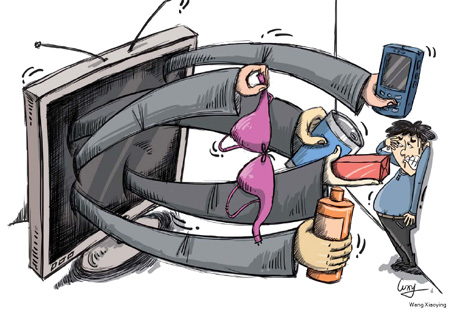
Deng Xiaobing had been waiting for days for his new cell phone to arrive in the mail. According to the television show he called to order it, the phone was a high-tech model and a dead cert to impress his friends.
What arrived in the mail was far from what was promised.
"The phone is total rubbish," said the 24-year-old printer from Beijing. "I paid 499 yuan, a quarter of my monthly salary, but it is not what the hosts of the show said it was at all."
Deng is just one of thousands of consumers who have been deceived by direct-response infomercials, which are usually late-night promotions for products fronted by loud and excited young presenters.
Last year, Shanghai authorities alone received more than 4,226 complaints about infomercials - 30 times the number than in 2004, showed figures from the local industry and commerce bureau. More than 3,000 unhappy customers in the city registered their anger in the first quarter of this year, a 28-percent rise on 2008.
"I blame the hosts. They claimed the phone had the same functions as a Nokia, the brand from Finland. It could surf the Internet, and receive radio and television, they said. But it can't," said Deng, who saw the infomercial on a television station based in Jiangxi province.
The phone was in fact an earlier model than advertised, he complained, adding that the keypad was unusable and the sound was muffled. "I felt so stupid when I realized I'd been cheated," he groaned.
|
||||


Like Deng, 27-year-old Beijing tour guide Qin Meng thought she had found a bargain when she bought an "invisible" bra for 560 yuan after watching an infomercial in 2007. But just days later she saw an identical product in a department store priced at just 70 yuan.
"These direct advertisers know how to grab the consumers' attention, and prey on people's impulses. I paid the price," she said.
Zhang Shuting, a professor in advertising at Communication University of China in Beijing, said purchases from infomercials accounted for as much as 60 percent of all television retail sales each year, and added that the figure is increasing.
However, unlike in the United States, Britain or Japan, where infomercials also run, Chinese buyers find it almost impossible to get refunds for poor quality goods because advertisers rarely give customers their real contact details.