BIZCHINA> Top Biz News

|
BIZCHINA> Top Biz News
|
|
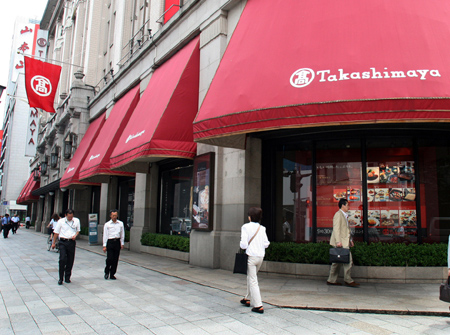
Takashimaya to open store in Shanghai
By Ma Zhenhuan (China Daily)
Updated: 2009-02-26 07:53 The recession-led slump in retail turnover is being seen as an opportunity by some high-end foreign retailers to tap into the Chinese mainland, but they need to factor in risks associated with market saturation before marching into China, industry analysts told China Daily yesterday.
The 180-year-old Japanese chain store operator will partner with China Enterprise, a Shanghai-listed developer, to launch the eight-storey store in 2012. The project would come up at the Gubei International Fortune Plaza, a commercial property project developed by China Enterprise. The store, with a floor area of 40,000 sq m, would become one of Shanghai's largest department stores, covering apparel, cosmetics, food and beverages. The store would be a high-end one, targeting the wealthier Shanghai shoppers, Takashimaya said. Analysts, however, said Shanghai's high-end retail market was already saturated, and pointed out that more such stores would only lead to price wars.
 "I don't think such high-end retailers would perform very well in the long run, especially because of the highly competitive market here," said Xu Xiaofang, a retail sector analyst from Guotai & Jun'an Securities. Shanghai Department Store Association data showed that the city had about 30 foreign department stores, including the Japan-based Isetan and Malaysian retail giant Parkson. Lu Qilin, deputy director at Uwin Real Estate Research Center, said new stores would not be profitable in the short-term. Since Shanghai's high-end retail business was located in densely-populated areas such as Huanhai Road and Nanjing Road West, which had gained enough market recognition from shoppers, it would take a while before Gubei can be recognized as a high-end retailing area, he said. Besides, many Japanese citizens and South Koreans were selling off their houses in Gubei and returning home due to the economic crisis. That means the occupancy rates there were coming down, he said. "Such a situation would pose a threat to Takashimaya's business operations (due to the lack of customers)," Lu said. Gubei, near the Hongqiao International Airport, has long been regarded as a high-end residential area heavily inhabited by people from Japan, South Korea and Taiwan. It is estimated that around 48,000 Japanese citizens live in Shanghai, with most of them residing in Gubei. Shanghai's retail consumption volume hit 453.7 billion yuan in 2008, a year-on-year rise of over 15 percent, data from the Shanghai Commerce Commission showed. (For more biz stories, please visit Industries)
|
|||||
宜城市| 孝昌县| 东乌珠穆沁旗| 斗六市| 油尖旺区| 吉安市| 仙居县| 交城县| 莫力| 牟定县| 北碚区| 弋阳县| 津南区| 蒲城县| 沂水县| 兴和县| 贡山| 桂阳县| 江阴市| 亚东县| 浏阳市| 通河县| 双柏县| 青浦区| 拉萨市| 宣恩县| 冀州市| 乳山市| 永靖县| 姜堰市| 清镇市| 通辽市| 洪湖市| 石河子市| 太仓市| 永寿县| 曲沃县| 长寿区| 恭城| 砀山县| 赫章县|



