BIZCHINA> Top Biz News

|
BIZCHINA> Top Biz News
|
|
Related
Capital's public transport system to get extra funding
By Cui Xiaohuo (China Daily)
Updated: 2009-01-13 07:34
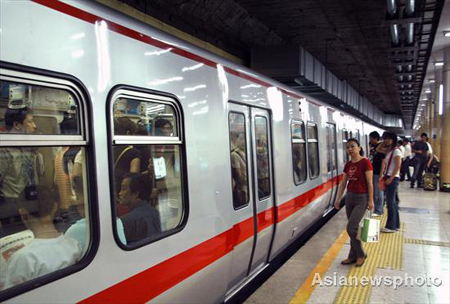
Beijing's mayor said Monday that the biggest infrastructure spending this year will be on public transport, primarily the subway network. The municipal government will expand its infrastructure investment by 15 percent to 30.5 billion yuan ($4.5 billion) this year, with the priority on the citywide railway network, Mayor Guo Jinlong said in his report to Beijing's annual legislative meeting that opened Monday. Beijing has launched the largest expansion of railway network in modern China this year, with a budget taking up one third of the city's annual spending on infrastructure. The total investment on railways is expected to exceed 50 billion yuan this year, which is partly financed by other investors, Guo said. With the spending, Beijing will open a new subway line in the west part of the city later this year. It will also begin construction of four new light rail lines in suburban Beijing, while continuing to build four other subway lines. Senior transportation officials told China Daily earlier that Beijing's expansion of public transport will pick up speed after the Olympics. Beijing said its goal is to establish a rail service for all residents, who will never be more than 1 km from a station on the city's subway network of 19 lines. By 2015, a quarter of all Beijing's commuters, 8.8 million, will use the metro, the government has estimated. Guo said the city also plans to implement flexible parking fees in downtown areas to ease congestion and leave more space for pedestrians and cyclists. Cheng Jing, director of the city's transportation management authority, said on Sunday that it is considering raising parking fees in downtown areas to an average of 10 yuan per hour, two to three times the current price. Higher parking fees will help the city promote environmentally friendly transport. From Monday, car owners whose heavy-polluting vehicles were ordered off the roads by the environmental bureau, received government funding of up to 25,000 yuan to buy new vehicles. Beijing's transport authority is also considering the long-term effects of the controversial no-car day rule, which bans drivers from driving one day a week. The Economic Observer reported earlier that the national automobile association said in its annual report that it is unwise to ease traffic congestion by traffic restrictions in the long run. (For more biz stories, please visit Industries)
|
中阳县| 五家渠市| 岗巴县| 东乡族自治县| 泗洪县| 柏乡县| 肃北| 新津县| 吉安县| 石景山区| 察隅县| 景德镇市| 阳曲县| 桐梓县| 庆元县| 花莲县| 衡阳县| 永和县| 东安县| 城市| 保康县| 互助| 景德镇市| 兴海县| 福州市| 阿合奇县| 防城港市| 左权县| 巩义市| 大理市| 珲春市| 六盘水市| 北宁市| 凤凰县| 堆龙德庆县| 石首市| 青海省| 定襄县| 岳西县| 新野县| 耒阳市|