M&As, emerging markets key for big players
Updated: 2007-11-30 11:00
Regulators are cautious about foreign investment in China's construction equipment industry, as the sector has become strategically important for the nation.
US buyout giant Carlyle Group is still waiting for approval to invest in top Chinese player Xugong Group Construction Machinery Co Ltd after a lengthy process.
But Ron DeFeo, chairman and CEO of the world's third largest construction equipment maker Terex, said it is important to consider the added value a foreign company can bring to a Chinese partner and the nation's economy.
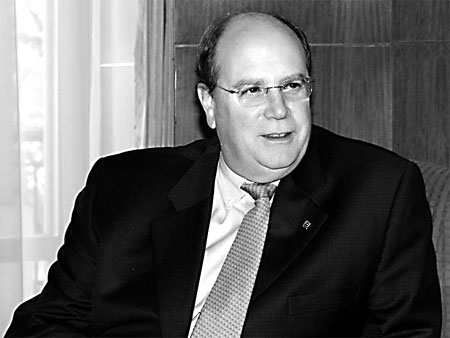 |
|
Ron DeFeo, chairman and CEO of the US buyout giant Carlyle Group, said it is important to consider the added value a foreign company can bring to a Chinese partner and the nation's economy.[China Daily] |
He said in an interview in Beijing that Terex plans to make acquisitions in China.
"I am not coming here to tell Chinese companies how to run their business, but with an open mentality to collaborate to help accelerate their business globally," said DeFeo.
Many Chinese construction machine makers including Sany, Longgong and Xugong have established overseas offices or factories, but their success is small scale and mainly in developing markets. In developed markets like the US or Europe, these companies still face difficulties.
As the global construction equipment business consolidates frequently and competition builds on a larger scale, acquisition and emerging market are key terms for every big player. In July, South Korean firm DooSan paid US$4.9 billion for Bobcat under the ninth largest player Ingersoll Rand, taking DooSan to seventh place in the industry.
Japanese firms like Komatsu and South Korean companies like DooSan, which came to the Chinese market earlier, also benefited from the growth of the construction market in the world's fastest growing economy. Caterpillar also said in October it plans to quadruple its sales in China to US$4 billion in 2010.
For Terex, which has been growing at an enviable 28 percent on average in the past 11 years, mergers and acquisitions (M&As) have been key.
DeFeo said his company aimed to achieve 10 percent organic growth worldwide a year and another 10 percent from M&A activities.
The growth target is 25 to 30 percent a year in China, and may be even higher with M&As.
He said although Chinese companies are valued high and the government is cautious about foreign investment in the construction equipment industry, Terex wants to build a long-term partnership with Chinese firms, including helping them enter the global market.
The Chinese market has become integral to Terex's sustainable growth.
Currently 80 percent of the Westport, Connecticut-based company's revenue comes from North America and Europe, but DeFeo hopes that the rest of the world, especially Asia, will account for one-third of revenue in the long term.
The company plans to grow its global sales to US$12 billion in 2010, from US$7.6 billion in 2006.
"China is a core market and we want to develop a mentality of China as a domestic market for us," said DeFeo, who has been to the country twice this year and plans to return next month.
He said he hopes sales from China reach US$1 billion to US$2 billion in the coming years. The figure for last year was about two billion yuan, industry sources said.
Besides exploring M&A possibilities, Terex wants to consolidate its Chinese businesses in what it sees as a strategic step for future growth. The company, which has over 50 subsidiaries worldwide through acquisitions, has six different locations across China.
The equipment maker is establishing a holding company in Beijing, trying to pool its resources.
Expanding production is another priority to serve local needs and increase the firm's global competitiveness with Chinese cost advantages.
Terex, which already has a strong presence in cranes, aerial work platforms, compact construction equipment, and mining equipment, wants to bring more products to the local market.
"As the country's economy develops along the coast where you have the highest development, China will need to increase productivity of labor and find aggressive ways to improve safety," said DeFeo. This means increased demand for equipment, he said.
The company's products have been used to construct the National Stadium, the Three Gorges project and the Qinghai-Tibet railway.
Last year, Sinopec, Asia's largest oil refiner, bought four of Terex's most powerful cranes, which can lift 3,200 tons, for its offshore oil-field construction.
This year, Terex opened a factory for mini excavators in Sanhe, close to Beijing, and added a factory in Tianjin.
DeFeo said the company is still evaluating a location for its aerial platform products, but construction of the factory will start next year.
|
|