Agriculture looks to scientific future
Updated: 2007-11-12 07:24
The country could become a global power in agricultural sciences by 2020 despite challenges such as climate change and resource shortages, Vice-Premier Hui Liangyu said this weekend.
|
|
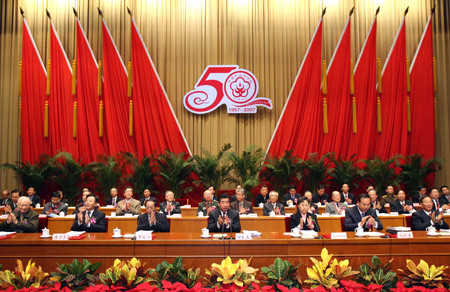
He also said China could become a science power by 2050.
"Only state-of-art scientific and technological progress will allow China to feed its growing population and ensure long-lasting grain security," Hui told the agricultural scientists attending the 50th anniversary celebration of the Chinese Academy of Agricultural Sciences over the weekend.
With about 10,000 scientists and researchers, the academy is a powerhouse in agriculture that has played a vital role in raising the country's grain output to an estimated 500 million tons this year, from 400 million tons in 1984 and 300 million tons in 1978.
Scientists have cultivated 15,000 new crops in the past 50 years.
Hybrid rice was one of the biggest successes. The hybrid rice first developed in the early 1970s boosted the country's rice output by 400 million tons over the next 25 years. That is equal to the entire food output in a single average year in the 80s.
"However, we are still going uphill when it comes to developing agriculture," Hui said. "Maintaining a sound and rapid pace is still a demanding task."
Zhai Huqu, the academy's president, said the agriculture industry faces challenges from environmental pollution, disastrous weather and shortages of water, finances and labor in some regions. Arable land loss, the impact of climate change on agriculture, preventing plant and animal diseases and food safety are also high on the government's concern list.
Zhai, a rice expert, said these challenges should spur research and scientific breakthroughs that will guarantee the country's grain security and food safety, even after the population reaches 1.6 billion in 2030.
Zhai attributed his confidence to the efforts of the many local and foreign scientists and researchers working in the field.
He said he has been recruiting talent ever since he became president of the agricultural academy in 2001. As a result of his efforts, more than 40 world-class scientists are working on rice, wheat, cotton, animal disease prevention and other sectors.
Meanwhile, many international research institutes have expressed interest in moving their headquarters to China.
"Combining all the research forces together, China could become a power of agricultural sciences sooner than expected," said Zhai.
|
|