Shanghai researchers unveil promising clinical trial results in glioblastoma treatment









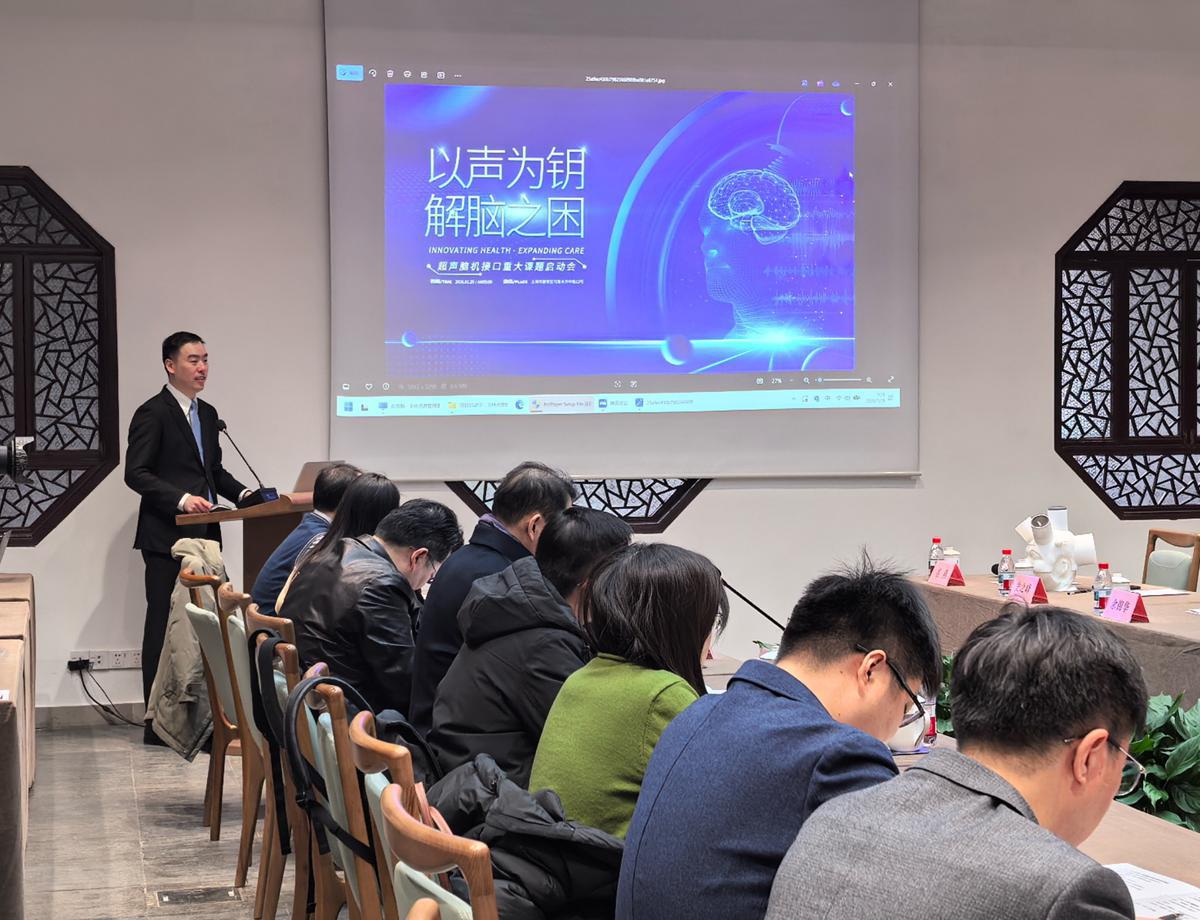
Fudan University and the neurosurgery department of Huashan Hospital in Shanghai announced on Thursday the promising clinical trial results of the domestically developed "UltraBrainPad" device, which successfully open the blood-brain barrier in patients with glioblastoma — an aggressive form of brain cancer — significantly enhancing drug delivery to the brain.
It marked the first time in the country that such device — an ultrasound-based diagnostic and therapeutic tool — has demonstrated clear clinical efficacy, offering new hope for glioblastoma patients.
The research team also said that their exploration into the new field of ultrasound brain-machine interfaces could offer new treatment possibilities for Alzheimer's disease and various other brain disorders.
Glioblastoma is notoriously difficult to treat due to the blood-brain barrier, which prevents most drugs from reaching the tumor, according to medical experts.
In this study, the research team established optimized ultrasound parameters for opening the blood-brain barrier through preliminary in vitro and animal experiments. The technique can rapidly open the barrier in just three minutes, resulting in an average eightfold increase in drug concentration compared to brain tissue where the barrier is not opened. The blood-brain barrier then closes six hours after treatment, with efficacy and safety surpassing international reports, according to Shi Zhifeng, a researcher on the team who is from Huashan Hospital.
He explained that this Chinese innovation employs a semi-invasive technique based on ultrasound. A small handheld ultrasound probe provides real-time imaging of the patient's brain on the "UltraBrainPad" screen, allowing doctors to select multiple treatment targets by touch. Once activated, ultrasound waves simultaneously open the blood-brain barrier in all targeted areas. AI image recognition technology enhances safety by visualizing the degree of the barrier opening, the researchers said.
For the next step, the researchers said they will initiate a clinical study to treat recurrent glioblastoma patients.
The team is also exploring the potential of ultrasound brain-machine interfaces, which could revolutionize treatments for Alzheimer's disease and other neurological disorders, offering new therapeutic possibilities in neuroregulation and brain-machine integration.





- Shanghai researchers unveil promising clinical trial results in glioblastoma treatment
- CCG organizes 134 patrols around the Diaoyu Islands since 2021
- Yangtze finless porpoise population increases in China
- Trains undergo inspections ahead of Spring Festival travel rush
- China to foster new quality productive forces in water conservancy sector
- China sees 66.86 billion cross-regional trips in 2025