Visit highlights China's increasing global stature









Canadian Prime Minister Mark Carney's visit to Beijing from Wednesday to Saturday represented more than a routine diplomatic engagement. It reflected a broader recalibration in Canada's foreign policy preferences and signaled a growing international recognition of China as an indispensable major country in global governance.
President Xi Jinping, when meeting with Carney on Friday, said that China and Canada should be partners of mutual respect, common development, mutual trust and collaboration.
At a time marked by a fractured international order, geopolitical fragmentation, economic uncertainty and evolving power balances, Carney's visit underscored a pragmatic acknowledgment that effective global governance and national economic resilience increasingly require constructive engagement with China. The high-level visit, the first by a Canadian prime minister in eight years, sent a clear message that China is a central actor whose cooperation is essential for addressing global and regional challenges.
The visit has proved fruitful. On Friday, the two countries issued a joint statement emphasizing their commitment to enhancing cooperation across various sectors. The leaders pledged to strengthen exchanges at all levels and advance initiatives in economic and trade cooperation, energy, finance, public security, multilateralism and other fields. In addition, the signing of eight cooperation documents in areas such as food, tourism and energy has underscored their intent to bring tangible benefits to the peoples of both nations.
In the past decade, China-Canada relations have experienced several challenges. Differences over trade, technology, legal cases and normative issues complicated the bilateral ties and reduced high-level political dialogue.
However, global realities have increasingly exposed the limits of disengagement. As China consolidated its position as the world's second-largest economy and expanded its diplomatic reach, middle powers such as Canada began reassessing strategies that relied heavily on distancing in the past. Carney's decision to prioritize Beijing reflects strategic pragmatism.
The visit suggests that Canada recognizes China's enduring influence in global markets, international institutions and governance frameworks, and is increasingly inclined to engage with China constructively.
At the core of the visit lies an implicit affirmation of China's status as a major responsible country. Such countries are not defined solely by military strength or economic size, but by their capacity to shape international norms, influence global governance and provide public goods. China today meets all these criteria. It plays a decisive role in global trade, climate governance, development finance and multilateral diplomacy. By engaging with Beijing at the highest political level, Canada signals trust in China as a responsible stakeholder in global affairs while acknowledging it as a structural pillar of the international system. Carney's Beijing trip reflects Ottawa's acceptance that sustainable global solutions, from climate change to financial stability, cannot be achieved without China's active participation.
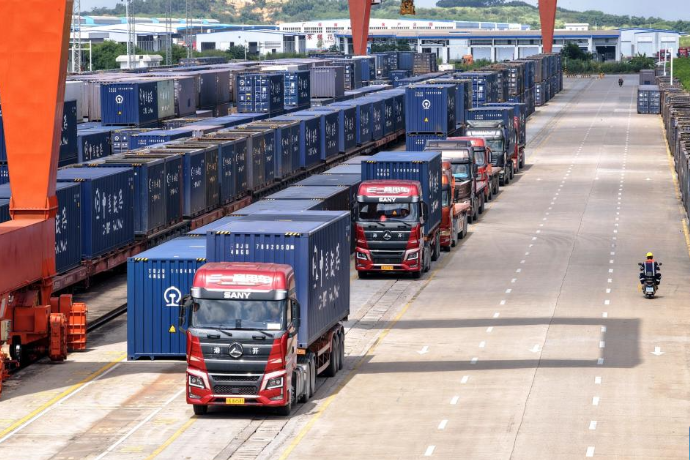
Economic considerations are central to the symbolism of the visit. China remains one of Canada's most important trading partners, particularly in agriculture, energy resources, education services and, increasingly, clean technology and critical minerals. For Canada, access to China's vast market is not simply an opportunity but a strategic necessity in an era of global supply-chain reconfiguration.
Carney's visit highlights the growing understanding that economic interdependence reinforces strategic trust. Ottawa recognizes China as a partner in economic resilience and diversification. This perspective aligns with China's own emphasis on stable, predictable relations with developed economies and reinforces Beijing's image as a central node in global economic governance.
The Canadian prime minister's visit also restores a high level of dialogue that had been absent for years, signaling mutual willingness to stabilize relations. From Beijing's perspective, the visit validates China's long-held view that engagement, strategic patience and economic gravity eventually bring partners back to the negotiating table. From Canada's standpoint, the visit affirms confidence in China's diplomatic maturity and institutional continuity. High-level dialogue allows both sides to manage differences responsibly, while expanding cooperation in areas of mutual interest. This normalization of engagement itself reflects growing trust in China's capacity to act as a predictable and influential great power.
The international community will view Carney's visit not merely as a bilateral event, but as a signal to other middle and advanced economies. It suggests that engagement with China is becoming normalized once again, even among countries closely aligned with Western alliances. This reflects a more nuanced understanding of multipolarity. Canada's engagement lends credibility to the idea that cooperation with China is compatible with national sovereignty, strategic autonomy and multilateral values.
Carney's visit to Beijing also has broader global implications. It affirms growing trust in China's major-country status. By engaging China at the highest level, Canada acknowledges that effective global governance, economic stability and strategic autonomy increasingly depend on constructive relations with Beijing. The visit reflects an evolving international consensus that China is a central actor whose participation is essential for shaping the future international order.
The author is director of the China Studies Center of National University of Modern Languages in Pakistan.
The views do not necessarily reflect those of China Daily.