Beijing, Ottawa build ties through shared interests









The last time a Canadian prime minister visited Beijing was eight years ago. Since then the world has changed beyond recognition; a global pandemic undermined people’s sense of security worldwide; armed conflict now stalks almost every continent; global warming has accelerated; and trust between Canada and China has fallen to unprecedented lows. While technology has progressed, global governance institutions and the rules sustaining them have been undermined by major country leaders holding them in contempt. Instead of being a tool for mutual benefit and bringing countries and peoples together, trade has been weaponized. Established truths have been shunted aside and the world now faces deep uncertainty.
However, the leaders of Canada and China — Prime Minister Mark Carney and President Xi Jinping — are experienced managers who know that complex problems cannot be resolved with a stroke of a pen. Weeks after Canada’s Minister of Foreign Affairs Anita Anand made a visit to Beijing in mid-October, Prime Minister Carney met President Xi at the APEC Economic Leaders’ Meeting in Gyeongju, Republic of Korea, where they reaffirmed the bilateral strategic partnership.
There is a Chinese saying, that “ice three feet thick is not formed overnight”. Being an Arctic country, ice is a natural element and the foundation of Canada’s national sport, ice hockey. We look forward to the coming Winter Olympics in Milan. Prime Minister Carney is himself a hockey player, having been goaltender for his team at Oxford University. Upon assuming office early in 2025 in the wake of unprecedented trade challenges for Canada, Carney employed the hockey expression “elbows up”, which encourages Canadians to stand up for themselves shocked by betrayal by our closest neighbour and ally. While the expression shows grit and determination in the face of unprecedented challenges, Carney has chosen the path of dialogue and collaboration. As someone born in Fort Simpson in the Northwest Territories, Carney knows that remote northern communities rely on the hard smooth surface of ice to build roads and ensure the delivery of supplies.
So, as the Chinese gear up to celebrate the Chinese New Year, also called Spring Festival, the Canadian spring is still months away, but we can build an ice road to bring our countries closer. While we face challenges we also have complementarities. Not all our problems can be resolved simultaneously. We seek areas within which to cooperate and use these to broaden and deepen our relationship.
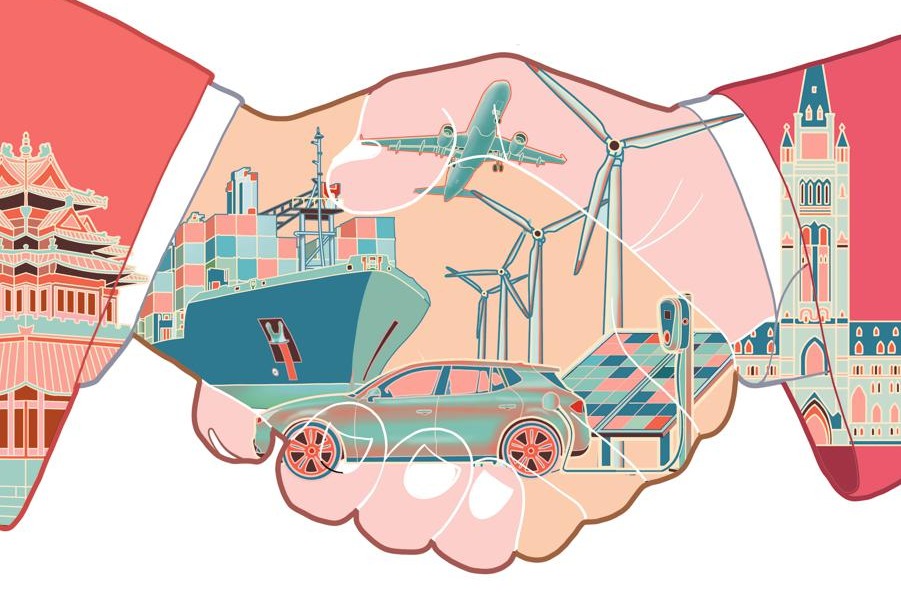
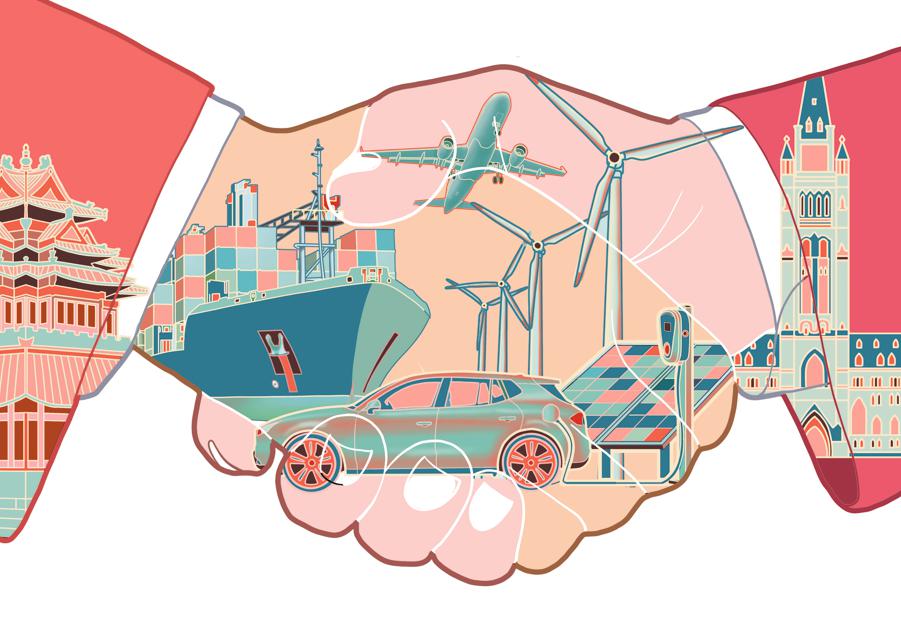
Canada can supply reliable energy to fuel China’s growth and we can and should cooperate on climate change and green technology. Canada’s agricultural and seafood exports have long found favor in China. We have tremendous room to improve our trade performance. However, China needs to understand the vital importance to Canada of high value-added manufacturing, particularly in the automotive sector. The most important lesson of recent history is that cooperation is only possible when people feel secure. Both countries understand and acknowledge that digital technologies such as artificial intelligence come with significant security and privacy challenges. Resource development requires significant investment in infrastructure but critical infrastructure also needs to be secure. We look to find ways to cooperatively mitigate risks and maximize benefits. At a time when global cooperation is in particularly short supply, our leaders can focus on areas where shared interests overlap and work gradually to constructively iron out areas of disagreement.
Both countries are keen to shore up global order and strive to preserve a system where small and medium-sized countries thrive alongside the rich and the powerful. We share a determination to remember the lessons of World War II and preserve and build on the institutions that gave the world unprecedented safety and prosperity in the decades that followed. At the bilateral level, we can remove obstacles to enhance our mutual prosperity and economic security, and at the global and multilateral level work together to preserve and enhance the fabric of international cooperation. If we diligently work on our common interests, we can advance mutual benefit and secure a better future worldwide. Let us gallop together toward a shared future in the upcoming Year of the Horse.
The author is professor emeritus of political science at the Carleton University in Ottawa, Canada.
The views don’t necessarily represent those of China Daily.
If you have a specific expertise, or would like to share your thought about our stories, then send us your writings at opinion@chinadaily.com.cn, and comment@chinadaily.com.cn.