


AI cracks the code for faster, better crops
Hainan's Fan project boosts food security, helps meet national goals










Global quest
These endeavors have been built on a foundation of immense biological resources.
China hosts the world's largest and most structurally diverse repository of agricultural germplasm, according to the Ministry of Agriculture and Rural Affairs.
The latest national census of agricultural germplasm resources collected 139,000 new crop germplasm resources, providing a rich "source supply" for future breeding innovation.
The industry's scale is also expanding. The domestic seed market value surpassed 150 billion yuan ($21.51 billion) for the first time in 2023, while R&D spending reached 7.6 billion yuan, a 20 percent increase from 2021, according to People's Daily.
The use of AI in agriculture is not confined to China. Scientists and entrepreneurs worldwide are using algorithms to build a more resilient and productive food system.
In the US, the drive is spearheaded by a vibrant ecosystem of startups emerging from top research hubs.
Heritable Agriculture, a spin-off from Google X's moonshot factory, applies machine learning to analyze plant genomes, aiming to identify genetic combinations that enhance yield, reduce water use, and increase soil carbon storage — all without direct genetic modification.
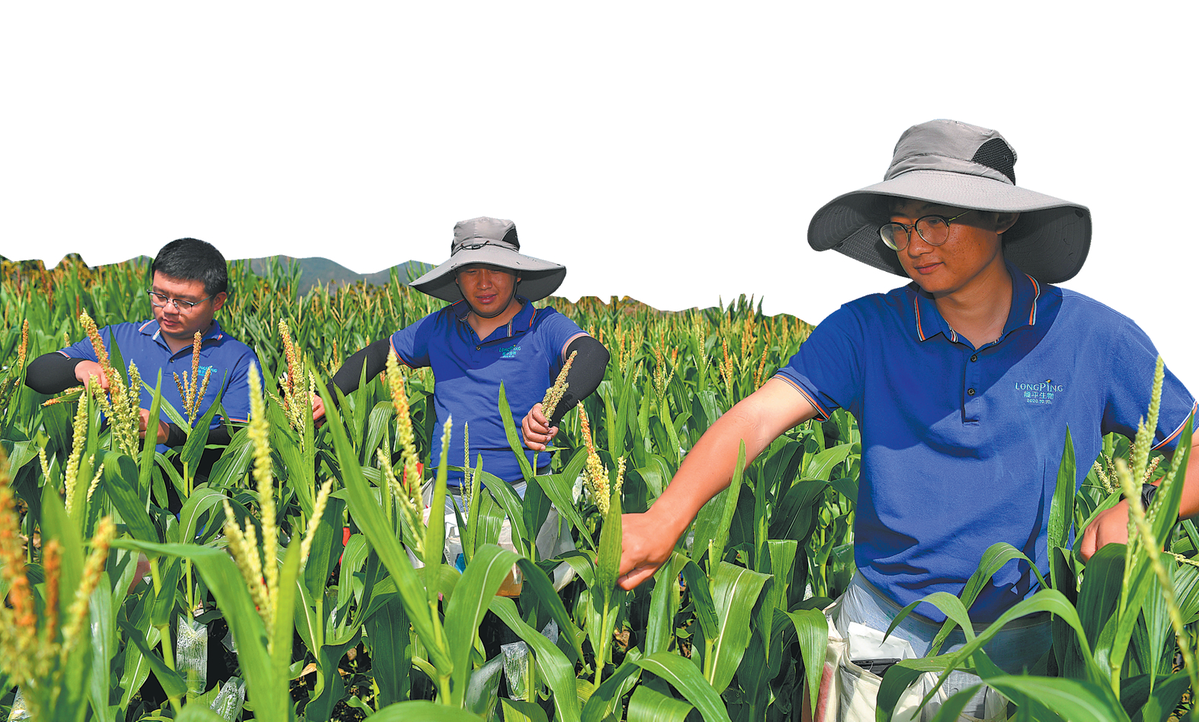
To share the technological progress it has made, the Yazhou Bay National Laboratory is also deepening international cooperation. In December, it signed a cooperation memorandum of understanding with agricultural research institutions from Colombia, Peru, Ecuador, and Chile.
"It is positive to strengthen Global South collaboration, integrating experience and knowledge from both sides to tackle food security and sustainability issues," said Agustin Zsogon, a professor at Brazil's Federal University of Vicosa.
Santiago Signorelli, a biochemistry professor at the University of the Republic in Uruguay, said China's advanced technologies hold great potential for contributing to scientific work in Uruguay.
From the experimental fields of Hainan to farms worldwide, a common narrative is emerging. The daunting challenges of climate change and resource scarcity are being met with the converging power of advanced biology and AI.
Huawei's Yuan said: "Our future collaboration prospects are very broad; this is just the beginning."
Contact the writers at masi@chinadaily.com.cn





