



Merger to bolster jet fuel consumption









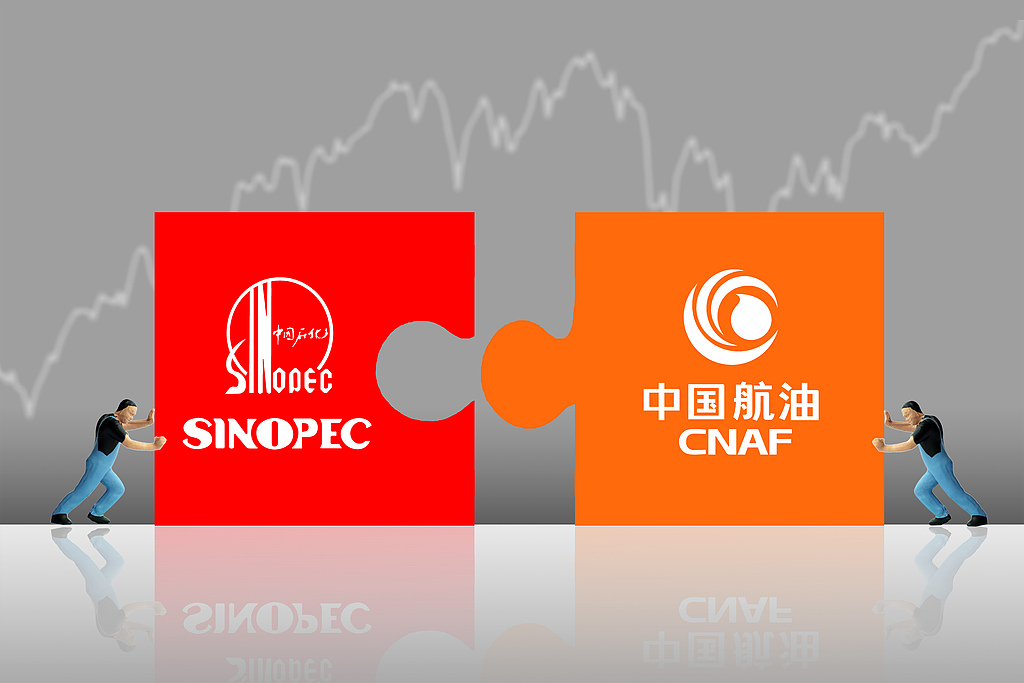
China has greenlit a landmark merger between its top refiner China Petroleum and Chemical Corp (Sinopec) and China National Aviation Fuel Group, creating a vertically integrated giant to anchor a market where jet fuel consumption is set to nearly double by 2040, said industry experts.
The State-led consolidation between the country's largest refiner and Asia's largest aviation transportation service provider is designed to dismantle the logistic barriers between Sinopec's massive refining capacity and CNAF's nationwide airport network, they say.
The restructuring of Sinopec and CNAF was announced by the State-owned Assets Supervision and Administration Commission of the State Council on Thursday.
This synergy arrives as China's aviation fuel demand is projected to surge from around 39 million metric tons in 2024 to 75 million tons by 2040, requiring a more resilient and cost-effective supply chain to support the world's fastest-growing aviation market.
According to a recently released report by Economics & Development Research Institute under China Petroleum and Chemical Corp, jet fuel has emerged as the sole growth engine in China's future refined oil consumption structure.
Forecasts by S&P Global also reveal that China's aviation fuel consumption is projected to reach 75 million tons by 2040.
Industry insiders believe that the restructuring is expected to lower aviation fuel supply costs, boost the industry's competitive edge, and support a green transition in the aviation sector.
The combined entity will leverage its strengths in integrated refining and petrochemical operations and its aviation fuel supply security system, said Liu Xingguo, a researcher with China Enterprise Confederation.
Sinopec, the world's largest oil refiner and China's top aviation fuel producer, processes crude into oil products, including jet fuel, supplying it to CNAF, the country's largest State-owned aviation fuel supplier which integrates the purchase, transportation, storage, quality management, sales and into-plane service of aviation fuel.
By eliminating intermediary links and reducing supply costs, the merger will provide a robust guarantee for China's aviation energy security, said Liu.
Currently, major international aviation fuel service providers are primarily integrated petrochemical giants, characterized by massive production scales, robust infrastructure support, and extensive sales networks, having established a fully integrated production-supply-marketing business model.
The merger will allow both domestic enterprises to leverage complementary strengths, scaling up China's aviation fuel industry while sharpening its global competitiveness and accelerating the sector's green transition.
Aviation has long been one of the most difficult transportation sectors to decarbonize, with sustainable aviation fuel widely recognized as the primary pathway to net-zero.
According to International Air Transport Association data, global SAF consumption was expected to reach 6 million tons in 2025, surging to 18 million tons by 2030.
Sinopec was Asia's first company to master proprietary R&D and commercial production of bio-jet fuel, while CNAF plays a pivotal role in market promotion and ecosystem building.
"This restructuring is a forward-looking move to seize the high ground in green aviation and cultivate a new growth engine," said Zhu Changming, a partner at Sunshine Law Firm.
Sinopec announced earlier a Heads of Agreement with French energy giant TotalEnergies to jointly develop a sustainable aviation fuel production unit at Sinopec's refinery in China. The planned unit, jointly owned by Sinopec and TotalEnergies, will have the capacity to produce 230,000 tons of sustainable aviation fuel per year and will process local waste or residues from the circular economy, including cooking oils and animal fats.
Restructuring the State-owned economy is a key step toward building more competitive and sizable State-owned enterprises and capital. During the 14th Five-Year Plan (2021-25) period, China strategically restructured 10 centrally-administered SOEs into six groups and established nine new central SOEs, effectively enhancing the allocation and operational efficiency of State-owned capital.
zhengxin@chinadaily.com.cn




















