Winter crayfish harvest secures year-round supply









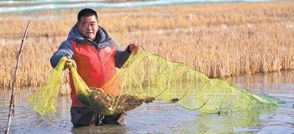
On Friday morning, farmers hoisted cages teeming with plump and wiggling crayfish from the ponds, marking the official launch of the winter crayfish harvest in Qianjiang, Hubei province. Large-scale supplies of the fresh delicacy, traditionally reserved for summer, are now ready to reach dining tables across the country.
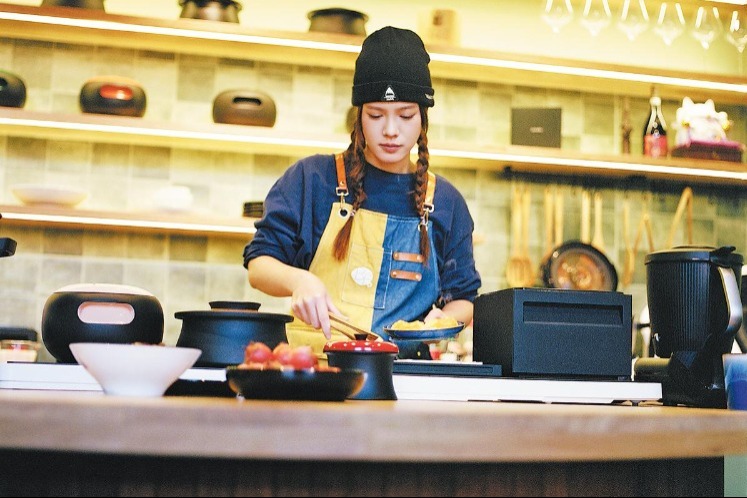
Weeks earlier, as the first snow of the season blanketed Beijing's streets, restaurants in the city's popular Sanlitun area and on Guijie Street were already filled with the aroma of crayfish doused in chili oil and garlic. Thanks to agricultural breakthroughs in Qianjiang, diners can now enjoy fresh crayfish even during winter in North China.
"I didn't expect to eat such authentic Qianjiang crayfish in cold days. Beijing diners are truly lucky," said Yang Zhansheng, founder of The Home, a Beijing catering company, at a recent tasting event in Sanlitun.
"In the past, if you wanted fresh crayfish in winter, the supply was either cut off or the price was high," said Wang Zhongwei, a culinary research and development director at COFCO Group, China's largest food processing company. "Now, 'crayfish freedom' has been realized year-round," he added.
Through innovations in aquaculture technology, the hometown of China's crayfish has shifted from a seasonal production model to a year-round supply cycle, allowing for the harvesting of fresh crayfish in winter that rival the size and texture of their summer counterparts, according to local authorities.
Ren Yaowu, an official with the Hubei Provincial Agriculture and Rural Affairs Department, said that with nearly 40 percent of China's crayfish output, the technological shift from seasonal harvesting to steady, year-round production is "a major leap" for the industry.
The fresh winter stock is the result of overcoming technical bottlenecks in winter rice paddy farming, an agricultural process where crayfish are co-cultivated with rice. Though this model has been promoted for years for the summer market, it barely satisfied the large-scale winter consumption due to low temperatures.
"While pond farming techniques had previously matured, Qianjiang focused on promoting the co-cultivation model in winter rice paddies this year," Ren said.
Wang Shujuan, director of the Qianjiang aquatic technology promotion center, said that two critical challenges have been addressed — maintaining a viable growth environment and ensuring adequate nutrition.
To keep the crustaceans growing rather than sleeping, farmers now plant low-temperature resistant aquatic grass and use microbial agents to strictly regulate the water environment. Farmers install isolation nets under the rice paddy ridges to separate breeding from rearing. "The nets prevent the crayfish in the farming zone from digging holes to hibernate — a natural instinct in winter — while ensuring the protected breeding zone maintains a sufficient supply of high-quality seedlings," Wang said.
Along with nutrient feed aimed at stimulating appetite in low temperatures, the crayfish remain active and fleshy year-round, she added.
According to Zhang Yun, director of the Qianjiang Crayfish Industry Development and Promotion Center, the city's winter crayfish output is estimated to exceed 26,000 metric tons this year, a year-on-year increase of approximately 30 percent. "The daily supply to Beijing has stabilized at 11 tons since November," he said.
Meanwhile, crayfish farmers have also benefited from the year-round production. Under the traditional model, farmers earned a net profit of about 34,500 yuan ($4,852) per hectare. With the new winter model, farmers can earn an additional 30,000 yuan on average for winter crayfish.
He Baogui, vice-president of the Beijing Food and Beverage Industry Association, said the consistent supply of high-quality ingredients injects new vitality into the capital's dining industry, offering restaurants reliable options in the coldest months.