Famed worldwide for its unique Danxia landforms and prized Wuyi rock tea, Wuyi Mountain in East China's Fujian province has long been a muse, captured in poetry and sipped from cups. Its cultural essence is often distilled as "rock forms the mountains, rock infuses the tea". Today, a new artistic expression is emerging from this ancient landscape, one that literally grinds the mountains into pigment: rock color painting.
The vibrant, textured soils of Wuyi Mountain, a product of its unique geological history, have become a revelation in the world of mineral pigment art. These naturally occurring earth tones, ranging from vivid ochres and rust reds to subtle umbers and serene greens, possess a granular authenticity and enduring luminosity that synthetic paints cannot replicate. Their discovery and development have captured the imagination of artists and scholars.
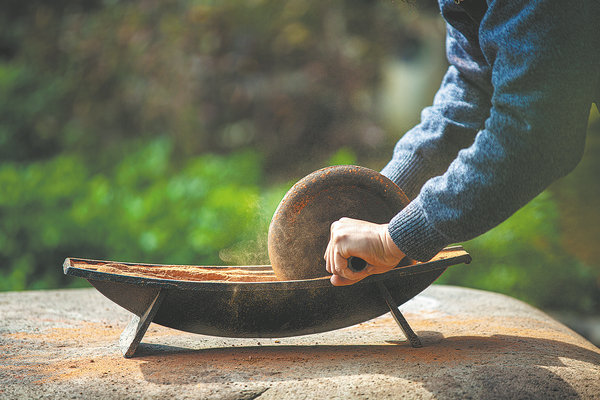
The process itself is a ritual connecting art to origin. Artists and researchers carefully collect, clean and grind the colored soil and rocks into fine powders. Each pigment is classified and processed, often mixed with natural binders to create paints. This practice transforms painting into an act of cultural and environmental communion.
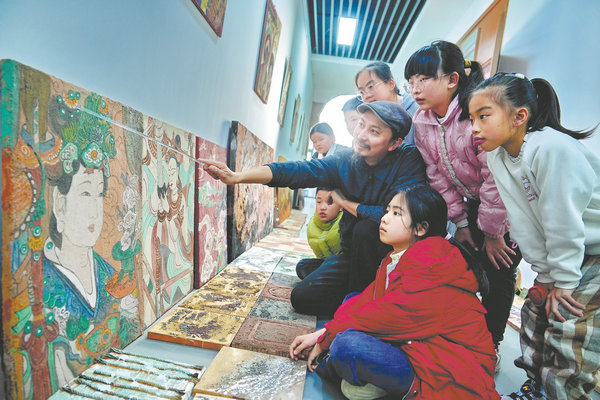
Artists utilize the rich textures and dense colors to depict the area's soaring crimson cliffs, mist-shrouded pine forests, and the timeless traditions of tea cultivation.
The granular, tactile quality of the paint adds a profound physicality to the work, making the landscape not just seen, but felt.
A single painting might layer the deep red from a cliff face, the soft green from a mossy river stone, and the golden hue from a tea garden's path, composing a true portrait of the region.
This ancient art form is injecting new vitality into the local cultural heritage. It provides a fresh, tangible link between the region's natural wonders and its artistic output, creating a sustainable cultural industry that values local resources.
Workshops, academic symposia, and exhibitions are flourishing, attracting artists and collectors to explore this unique language.