Pinggu sets a template for modern agriculture









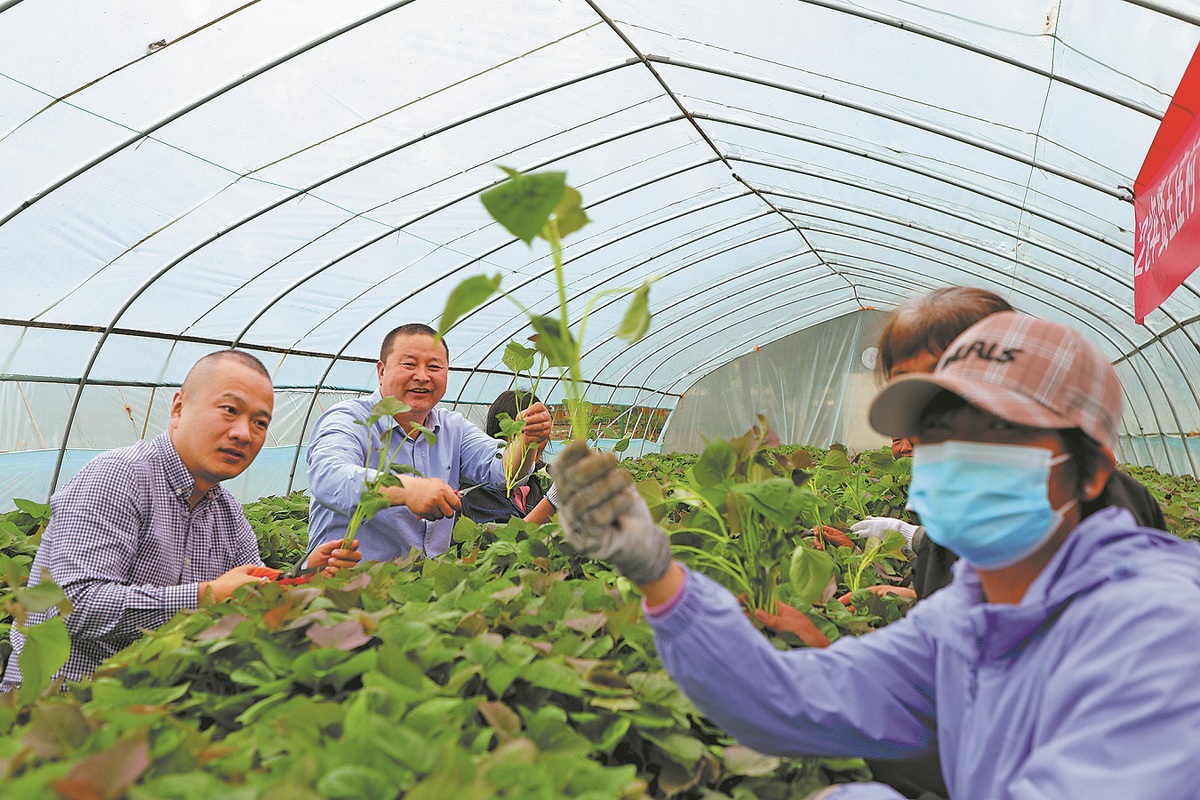
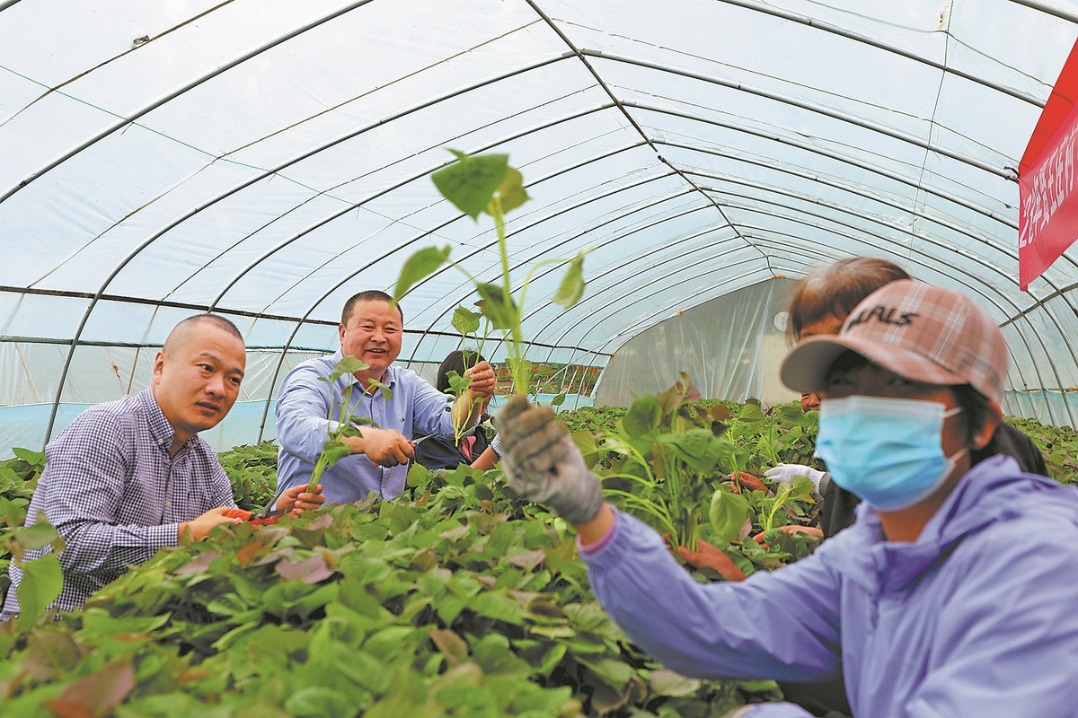
Zhao Bo does not fit the usual description of a university lecturer. The 56-year-old associate professor from the Beijing University of Agriculture spends much of his time in the fields of Pinggu district, on the capital's eastern edge, where he looks more like a seasoned farmer than an academic.
Zhao was among the initiators and participants of the 117 "doctor-led farms" launched in the district in 2022, an effort designed to bring scientific expertise directly into rural production.
Since May 2024, he has helped spearhead a new "family farm + doctor farm" model that pairs researchers with local households to improve farming practices. More than 400 doctoral degree holders have now joined the program.
Working in Xianwangzhuang village in Xiagezhuang town — an area with a history of over 300 years of sweet potato cultivation — Zhao says the initiative has been well received. "Local farmers welcome our involvement. They are seeing bigger harvests each year," he said.
The role has also reshaped his own work. "I used to only teach students and guide theses. Now I am involved at every stage, including market sales. I used to be a 'coach'; now I'm an 'athlete'."
In 2024, Zhao's farm produced 112,000 virus-free test-tube seedlings and 55 metric tons of virus-free sweet potatoes, marking a shift from commercial seedling production to upstream research and seed-source development. The improved seedlings are supplied locally and to regions such as Hebei province and the Xinjiang Uygur autonomous region.
"Putting scientific achievements into the soil is about turning research potential into productive power," he said.
Pinggu's experiment in doctor-led agriculture comes as the latest communique from the Communist Party of China places renewed emphasis on accelerating agricultural and rural modernization.
The document calls for keeping agriculture, rural areas and farmers at the top of the national agenda, and stresses the need to boost agricultural productivity and quality, and ensure that policies aimed at supporting and enriching farmers deliver more tangible results.
Pinggu officials are positioning the district as a test case for this ambition.
Di Tao, head of the district government, said Pinggu aims to establish itself as a core area for technology-driven agriculture in the country, a concept they describe as creating a "Zhongguancun for agriculture", referencing the capital's well-known high-tech hub.
By the end of this year, a 3.1-million-square-meter logistics storage complex is expected to be completed, establishing a major hub for agricultural products in Beijing.
Construction of an international research institute focused on agricultural microorganisms is also due to begin shortly.
Next year, Pinggu will once again host the World Conference on Farm Animal Welfare, led by the Food and Agriculture Organization of the United Nations, while an international agricultural exchange center is expected to break ground in March.
A new agricultural-technology innovation center is set to start construction in 2027, part of a wider plan that will see 11 major projects completed by 2028.
By then, the district expects to host 13 national-level laboratories and four innovation bases dedicated to agricultural science.
Officials say these facilities will help establish Pinggu as a source of breakthroughs in agri-tech and support the development of what they describe as an "Agri-Tech town along the banks of the Ruhe River".
As Zhao and hundreds of other scholars continue their work in farming fields, Pinggu is emerging as a concrete example of the modernization drive outlined in the communique — illustrating how academic expertise may be used to reshape China's long-standing rural economy.




- Pinggu sets a template for modern agriculture
- Asteroid named after Chinese space-tech expert Qi Faren
- Age limit for blood donors may be raised
- Xizang's first ultra-high voltage power link begins operations
- New subsidies provided for HK fire victims' resettlement
- World's longest expressway tunnel to open to traffic in Xinjiang by year-end