Party's eight-point code sets self-discipline benchmark
With other countries troubled by disruption and corruption, regulation lights path ahead, experts say










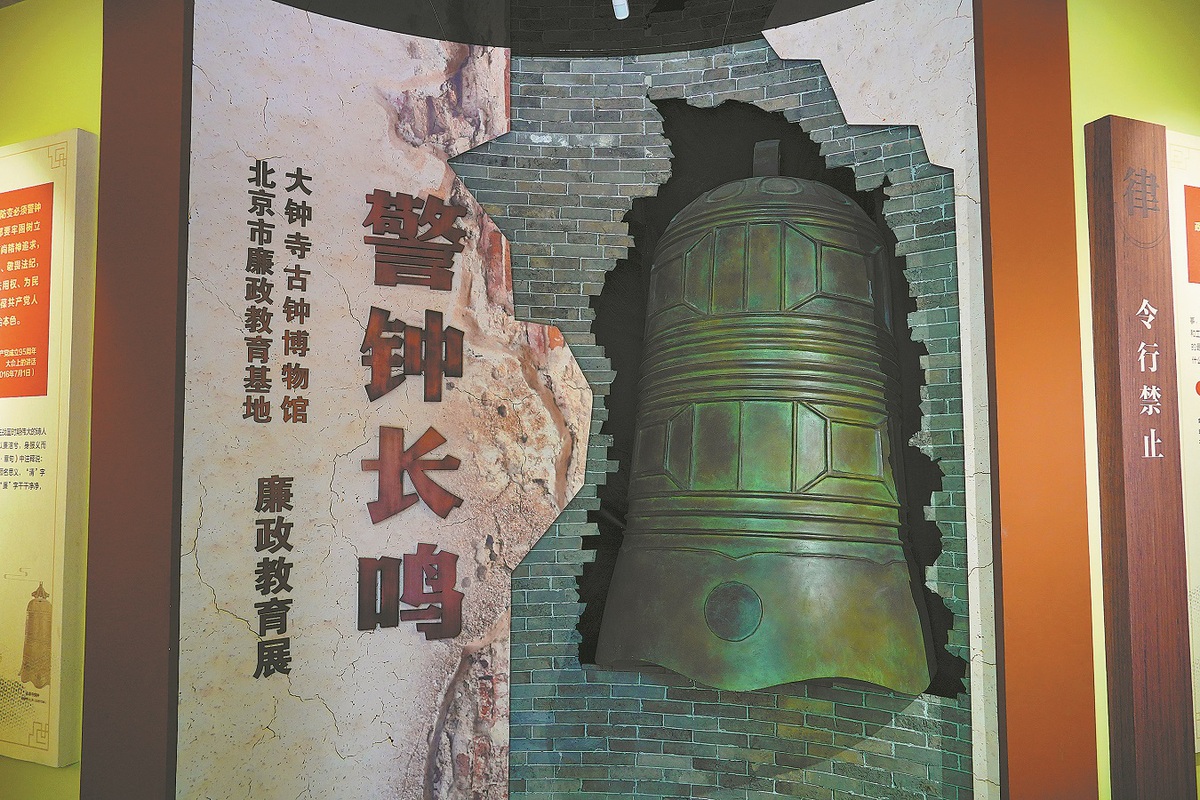
Thirteen years have passed since the Communist Party of China introduced a code to promote self-discipline and enforce strict governance in December 2012, shortly after Xi Jinping was elected general secretary of the CPC Central Committee.
The concise yet powerful Eight-Point Regulation, aimed at improving Party and government conduct and curbing bureaucracy, extravagance and corruption, has since become an important cornerstone of modern Chinese governance.
Over the past decade, the Eight-Point Regulation has reshaped the work style of officials, strengthened discipline within the Party, and, according to both domestic and foreign observers, changed the social behavior of officials in China. What began as a list of behavioral rules for leading officials has evolved into a prevailing spirit and a commitment to discipline and responsibility among all Party members.
As corruption scandals trouble many parts of the world, domestic and foreign scholars and observers have begun examining the regulation's meaning beyond the Chinese context, and see it as part of China's broader contribution to global governance and a model of institutional self-reform.
"The regulation clearly shows the difference between China's approach to dealing with corruption and the absence of such mechanisms in the Western system," John Ross, a senior fellow at the Chongyang Institute for Financial Studies, Renmin University of China, told China Daily.
"It's enough to look at how China's rules extend from major issues down to details such as official meals and business trips to see the complete difference in approach."
Ross was referring to the details of the Party's disciplinary measures. In the early years following the adoption of the regulation they were often discussed in the context of lifestyle changes among officials — banquets were reduced, travel policies tightened, and protocol simplified.
A 2019 doctoral thesis submitted to the University of Nottingham described several direct outcomes of the policy.
"Some immediate impacts of the Eight-Point Regulation include the disappearance of luxurious mooncakes, a steep drop in the prices of high-end cigarettes and spirits, and the closure of many clubhouses and upscale restaurants in scenic and historic areas," the author noted, citing BBC reports.
"Following this trend, the number of violations of the Eight-Point Regulation has been reducing dramatically."
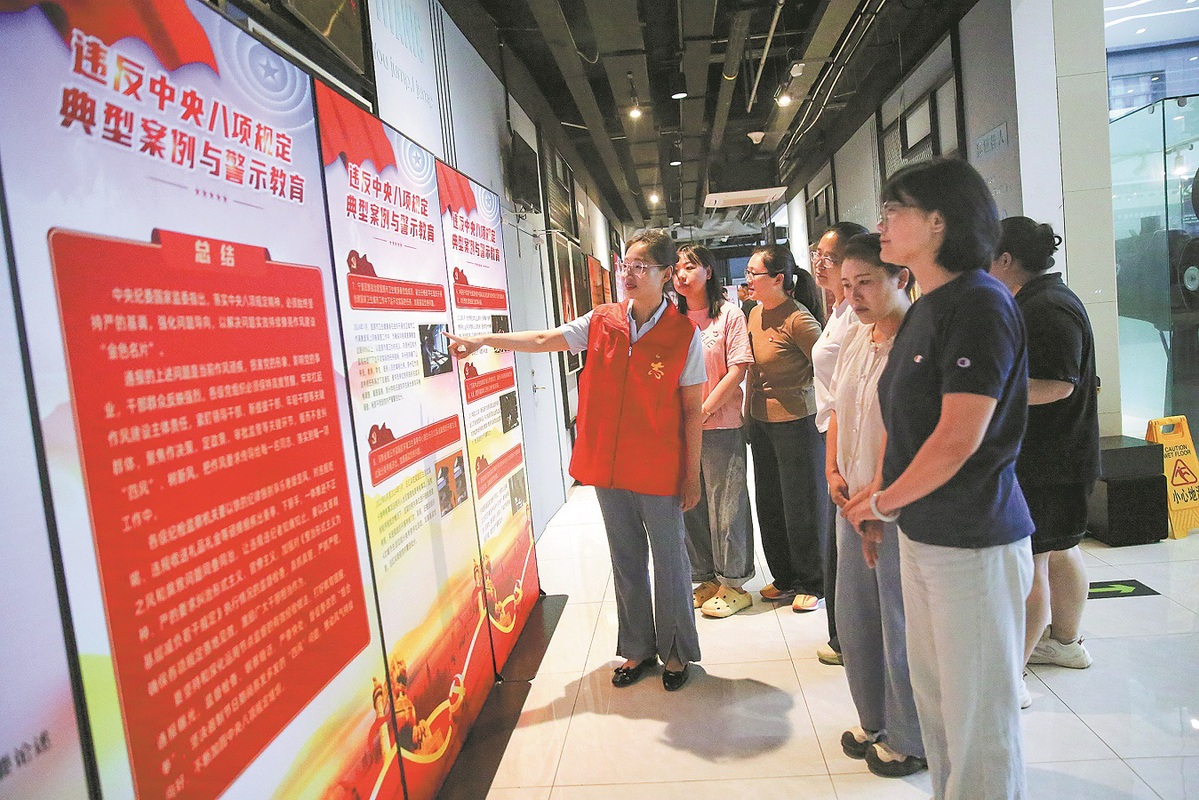
Ross, citing his new book Profound Changes Unseen in a Century: The World and China, pointed out that the CPC's excellent governance ability had made this possible.
Yang Zengdong, vice-dean of the School of Marxism at Beijing Normal University, said the success of the Eight-Point Regulation lies in its disciplined implementation rather than in its words alone.
"Strong discipline is the key to the CPC's success in combating corruption," Yang said in an interview with China Daily. "Compared with the so-called 'partition of power' model, what truly curbs corruption is not the mere separation of authority, but the power of rules and the ability to enforce them."
Yang said while the regulation initially targeted senior officials, it has since expanded to apply to all Party members and government employees, reflecting its "institutional maturity".
"When it was first issued, it was meant to restrain the behavior of top leaders," he said. "But over time, it has evolved and strengthened rather than weakened. Today, it governs a much broader group under the concept known as the 'spirit of the Eight-Point Regulation', and this spirit continues to guide how officials interact with the public."
He emphasized that the CPC's enduring commitment to the regulation demonstrates a unique capacity for self-governance.
"In a world undergoing constant changes, the Party's ability to sustain such an effective and long-term institutional framework shows both determination and capability," Yang said. "Not every political organization in the world can conduct this kind of continuous self-discipline education."