China a welcome partner for Global South









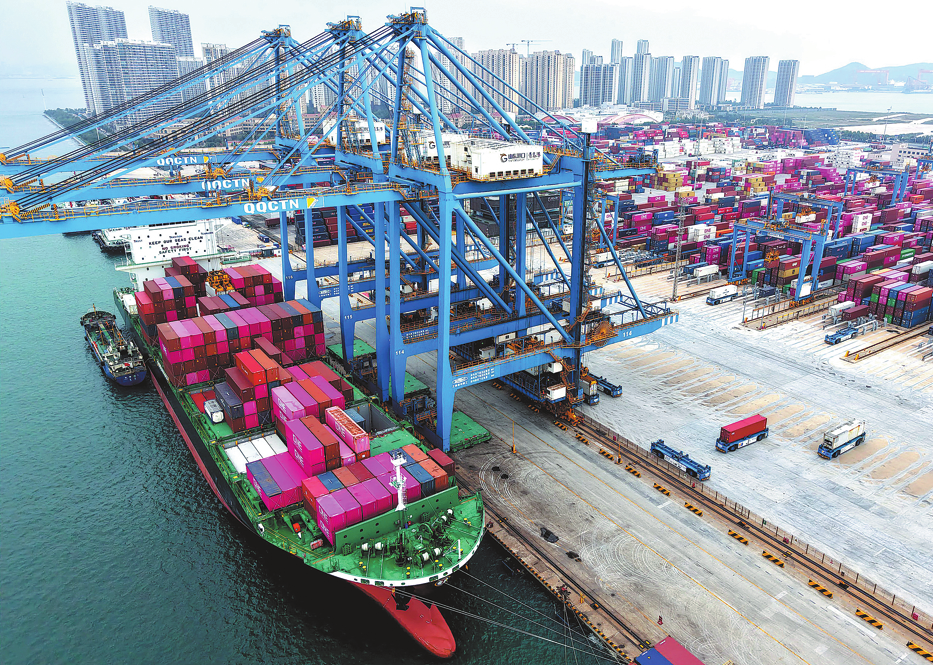
Exports growth, cheap imports and access to affordable credit are key factors for the development of the Global South. The domestic markets in low — and middle-income countries are generally too small to absorb their full productive potential. To reduce unemployment and achieve economies of scale, they must sell their products to other countries as well. The more potential buyers, the better are their chances of overcoming the constraints of a limited domestic market.
At the same time, the price they pay for imports — food, pharmaceuticals, machinery, cars and sustainability technologies — determines the ability of developing countries to defeat poverty. Competition among suppliers often leads to lower prices and better-quality products.
The same logic applies to credit. The domestic savings of poorer countries are rarely sufficient to fund universal education and healthcare services, build infrastructure or finance business expansion. These countries would benefit if they could tap global capital at competitive interest rates.
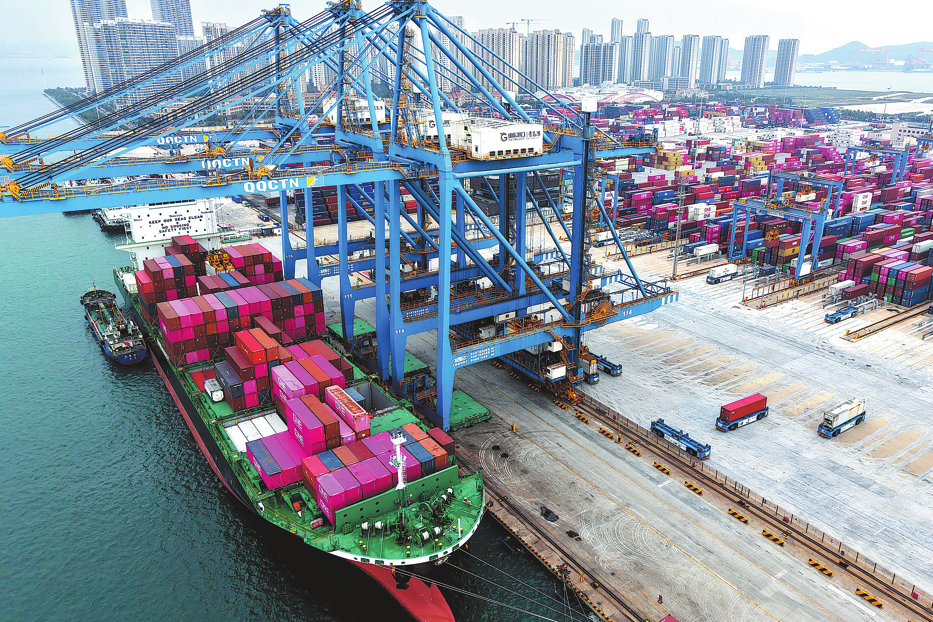
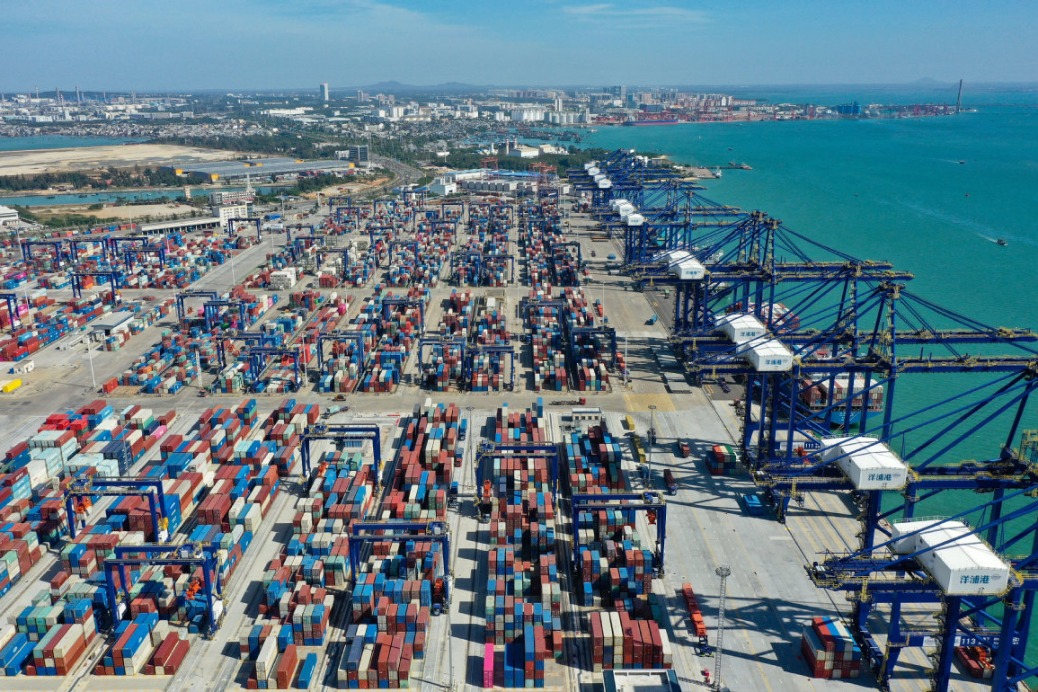
On all these fronts, China is playing a critical role for the Global South. It has become a major market for many developing countries — some of which enjoy trade surpluses with China. The United States has revived its Monroe Doctrine and is trying to persuade Latin American countries to reduce their economic relations with China. But despite US pressure, China has become the top export destination for Brazil, Uruguay, Peru and Chile.
In the past 10 years, China's imports from Global South countries have grown much faster than its imports from the US or Europe. According to a report by Standard & Poor's, China's imports from the Global South reached $1 trillion in 2024, which was six times the value of its imports from the US ($165 billion) and nearly four times that from Western Europe ($260 billion). The US economy is bigger than China's, but with the exception of Latin America, every region of the Global South sells more to China than to the US. In total, China buys $1.6 trillion worth of goods from developing countries while the US buys worth $1.3 trillion.
China is also a key factor that keeps prices low across the world. Without China's efficient, large-scale and low-cost manufacturing ecosystem, global prices for most goods — especially industrial products — would be much higher. Western firms would have been able to muscle in oligopolistic and monopolistic prices, squeezing consumers and businesses all over the world.
China's influence on prices is especially evident in green technologies. Thanks to its heavy investments in solar, wind and battery production, equipment costs have plummeted. Solar panel prices have come down by 90 percent in the past decade, allowing low-income countries to meet their commitments on green transition. The International Energy Agency estimates that producing solar power modules, wind turbines and batteries outside China costs up to 40 percent more in the US and up to 45 percent more in the EU. Without supply from China, global green energy transition costs would be 20 percent higher.
Electric vehicles tell the same story. The steep US and EU tariffs on Chinese EVs are proof of the pudding. China's prices are much lower because of scale, efficiency in production and the fierce competition among some 130 manufacturers — all of which pushes prices downward to the benefit of consumers across the world.
China has also reshaped global development finance. By channeling its large foreign exchange reserves and high domestic savings into international lending, it has helped lower global interest rates and widen access to credit for developing countries. Over the past two decades, the country has emerged as a major source of long-term and low-cost funds — an alternative to the private capital markets where developing countries have little leverage.
Through the Belt and Road Initiative, the China Development Bank and the Export-Import Bank of China, the country has built a financial infrastructure focused sharply on direct development lending. It also spearheaded the creation of the Asian Infrastructure Investment Bank, which now has more than 100 member countries, including many from Western Europe. Unlike Western bilateral lenders such as the Paris Club or Washington-based financial institutions, China respects the sovereignty of borrowers and does not impose any ideological or geopolitical-loyalty conditions.
The US will continue to be important to the world economy and to developing countries. But its efforts to self-decouple via tariffs and non-tariff barriers will have a negative impact not only on US consumers and businesses but also on the development prospects of many Latin American, African and Asian countries.
China was already a positive factor for the Global South. But recent Western trade policies have made its role all the more critical.

The views don't necessarily represent those of China Daily.
If you have a specific expertise, or would like to share your thought about our stories, then send us your writings at opinion@chinadaily.com.cn, and comment@chinadaily.com.cn.