Security woes may loom over H200 in China
Voices of concern, local competition cast shadow on Nvidia AI chip sales









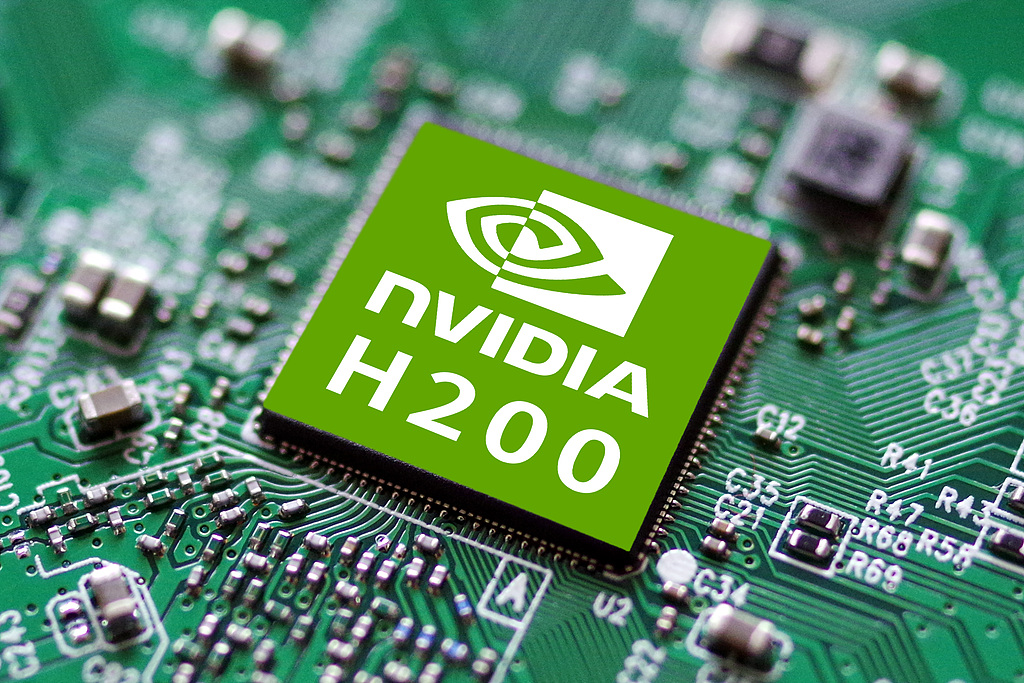
Despite the United States green-lighting exports of Nvidia's H200 artificial intelligence chips to select Chinese buyers, industry experts cautioned on Tuesday that demand in China may fall short of expectations, citing persistent cybersecurity concerns.
The comments came after US President Donald Trump said the US will allow Nvidia to ship its H200 products to approved customers in China.
Nvidia said in a statement to China Daily earlier on Tuesday that, "Offering H200 chips to commercial customers is a welcome approach."
The chips, although one generation behind Nvidia's latest Blackwell chips, are considered among the most advanced and high-powered AI chips.
Tu Xinquan, director of the China Institute for World Trade Organization Studies at the University of International Business and Economics, viewed the latest move as a positive step.
"However, whether Chinese companies will actually purchase Nvidia's H200 chips will depend on the specific circumstances. AI is a highly sensitive field, and certain security risks remain," Tu said.
In late July, the Cyberspace Administration of China summoned Nvidia over alleged security risks concerning its H20 AI chips sold to the country.
Tu said such security concerns are not baseless. "Therefore, adoption will likely vary by the type of institution — some enterprises may proceed with purchases, while others will remain cautious."
He Hui, semiconductor research director at the United Kingdom-based tech research firm Omdia, emphasized China's critical role in the global AI landscape.
"At present, only the US and China are true competitors at the AI forefront. Without the Chinese market, Nvidia's growth narrative in AI cannot fully expand," she said.
She pointed out that Nvidia CEO Jensen Huang has repeatedly highlighted the rapid progress of Chinese competitors — a message she interprets as a signal to the US government that strict chip restrictions could further accelerate China's independent innovation.
"There is certainly no visible ceiling for AI computing power yet. But China is actively building its own ecosystem. Various domestic vertical application sectors are being vigorously promoted, and the country does not need to rely solely on Nvidia's CUDA ecosystem for its AI development."
CUDA, or compute unified device architecture, is Nvidia's proprietary parallel computing platform and programming model.
Wang Yu, Lei Xiaoxun and Liu Zhihua contributed to this story.
masi@chinadaily.com.cn