



What's behind Japan's provocation of China?









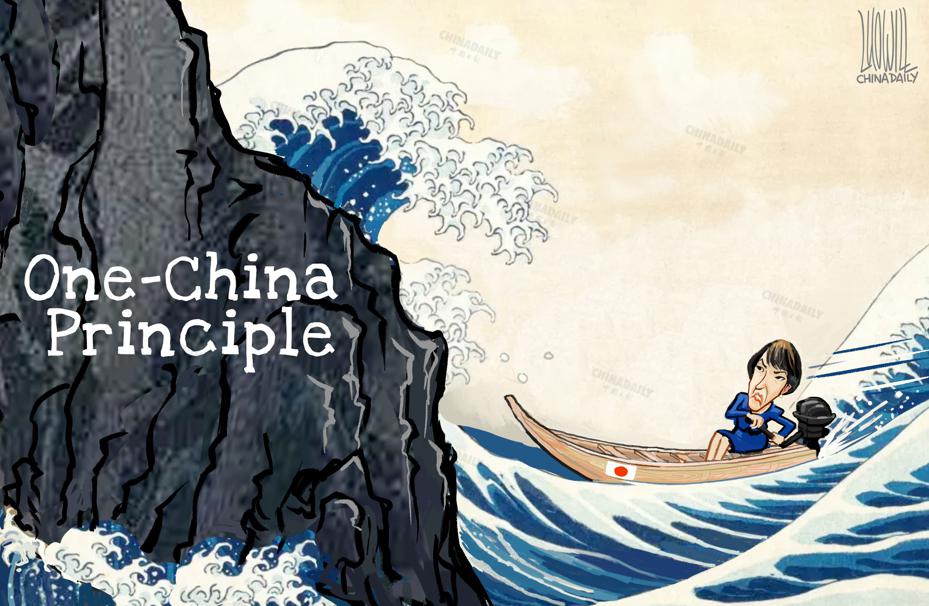
Recently, Japan's Prime Minister Sanae Takaichi publicly made remarks about a "Taiwan contingency", which immediately triggered strong responses from China. Beijing's stance and official media describe Takaichi's comments as a serious violation of the one-China principle and deviation from Japan's position on Taiwan.
Observing the development of the situation, it is not difficult to see that Takaichi's public statement is not only a diplomatic gamble but also a move that casts a negative spotlight on Japan in international public opinion.
The Taiwan question is China's internal affair. What does this have to do with Japan, a former colonial power? Using the territories seized during past invasions to portray itself as a "savior" is, frankly, ridiculous.
Sanae Takaichi clearly wants to use rhetoric to curry favor with right-wing groups and consolidate her domestic political standing. Historically, some leaders have used provocations against other countries to divert attention from domestic livelihood and economic issues. But such provocations by Japan are unwise. Expanding the Self-Defense Forces' posture could provoke strong dissatisfaction from neighboring countries, destabilizing the Asia-Pacific region. Apart from angering China, South Korea has postponed plans to resume joint exercises with Japan's Self-Defense Forces.
In international relations, the norm is the accumulation of mutual trust and institutionalized interaction. If domestic popularity or international headlines take precedence, Sino-Japanese relations may slide backward from dialogue and cooperation.
China is Japan's largest trading partner, with bilateral trade around $300 billion last year. Should tensions deteriorate, Japan's economy, already facing headwinds, could bear the brunt.
The most pragmatic path for Japan is to promptly retract its erroneous remarks, discard hypocrisy, and return to the track of institutionalized dialogue and mutual beneficial economic cooperation.
For Japan, true national autonomy lies in establishing a foreign policy decision-making mechanism that reflects the country's long-term interests and public opinion.
Historical lessons and contemporary realities indicate that geopolitical confrontation erodes regional stability, while long-term cooperation and interdependence are the true foundation of economic prosperity and national security. The Japanese prime minister should refrain from reckless moves that cross other countries' red lines.
Bonnie Williamson is a Hong Kong-based commentator. The views don't necessarily reflect those of China Daily.
If you have a specific expertise, or would like to share your thought about our stories, then send us your writings at opinion@chinadaily.com.cn, and comment@chinadaily.com.cn.





