Foresight envisions modern industrial system: China Daily editorial









The Recommendations of the Central Committee of the Communist Party of China for Formulating the 15th Five-Year Plan for National Economic and Social Development, which were published late last month, further provide a systematic blueprint for accelerating new industrialization, developing strategic emerging industries, and enhancing the resilience and competitiveness of the real economy.
At a time of global economic restructuring and rising uncertainties, this expressed commitment to building a modern industrial system reflects China's long-term vision as it is a practical necessity for consolidating the material foundation of China's modernization and sustaining stable growth.
Thanks to a systematic design and its strong implementation capabilities, the country has consolidated its complete industrial system, and its manufacturing scale has ranked first in the world for many consecutive years. More importantly, the efficiency of its innovation system has improved, its R&D investment has continued to grow and breakthroughs have been achieved in some high-tech fields. All these factors have contributed to the forming of new industrial advantages, which has helped to foster some globally competitive manufacturing clusters.
At the same time, the potential of the domestic market is being released through the abundant application and iteration of new technologies and products. These achievements reflect China's evolving growth structure. However, building a modern industrial system still faces some challenges.
Internationally, the country still relies on imports for some core technologies, industrial products and parts and raw materials. Domestically, the efficiency of the country's factor market allocation still needs improvement, as there still exist some institutional and systemic barriers hindering the flow of capital, talent and data between certain industries and regions.
The country therefore must take advantage of its strengths to tackle these challenges. The building of a modern industrial system is not only about creation and innovation but also a problem-solving process. To this end, the central authorities have outlined four major tasks for the next five years and beyond. The first is optimizing and upgrading the traditional industries that are the foundation for the economy. These industries — mining, metallurgy, chemicals, textiles, light industry, machinery, shipbuilding and construction — need to adapt to the changing times by embracing new technology and improving their management.
In the process, reengineering of the industrial base and breakthroughs in major technological equipment can be advanced. The digital transformation of manufacturing — supported by intelligent, green and service-oriented production models — can help enterprises climb up the value chain.
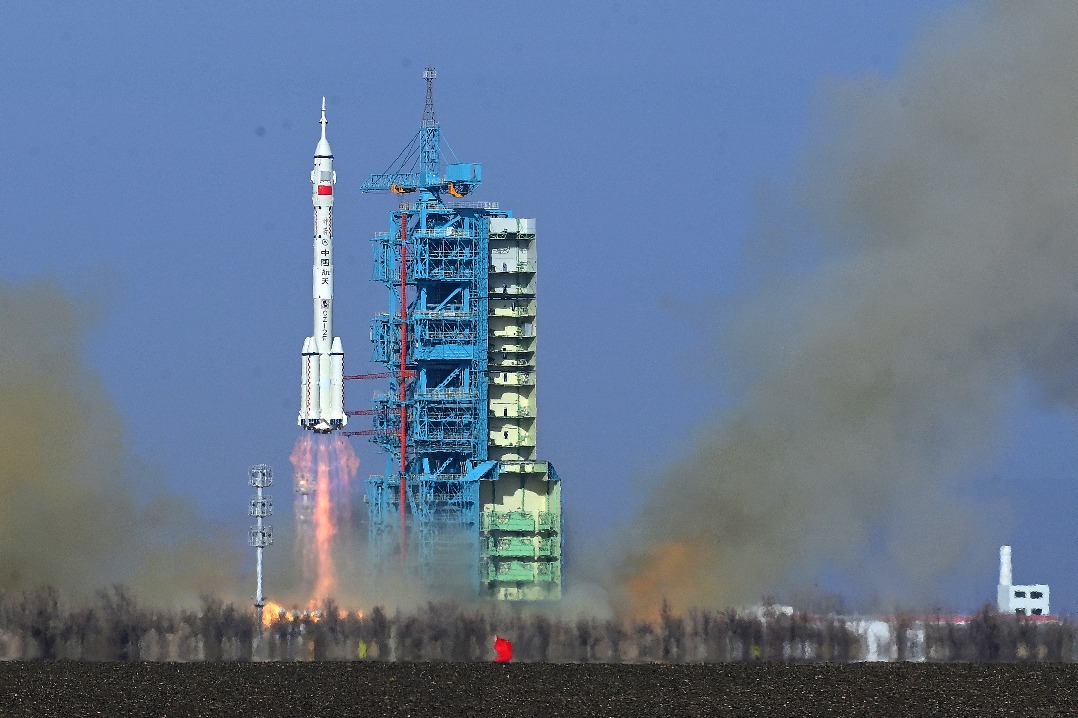
The second task is cultivating emerging and future industries. China will accelerate industrial innovation projects and expand strategic industry clusters, including new energy, new materials, aerospace and the low-altitude economy. Proactive planning can guide the development of future industries such as quantum technology, biomanufacturing, hydrogen energy, nuclear fusion, brain-computer interfaces, embodied intelligence and 6G communications.
By improving the industrial ecosystem, scaling up demonstration applications and strengthening venture capital and risk-sharing mechanisms, the country can nurture more specialized and innovative small and medium-sized enterprises and globally competitive unicorn companies.
The third task is promoting high-quality development of the service industry. The country needs to expand its service-sector opening-up, improve support policies and advance regulatory reforms to foster high-end producer services. The digitalization of services, higher standards and integrated development with advanced manufacturing and modern agriculture would help to enhance the service sector's capacity to support high-quality growth.
The fourth task is building a modern infrastructure system. The country should strengthen its integrated planning and accelerate the construction of forward-looking digital infrastructure, including computing-power networks and major scientific facilities.
With its strategic and forward-looking decision-making and highly efficient execution system, China is well positioned to make the most of its institutional strengths to build a modern industrial system that underpins sustainable development and contributes to the stability of the global industry and supply chains.