Singer's dedication to local opera undimmed by age









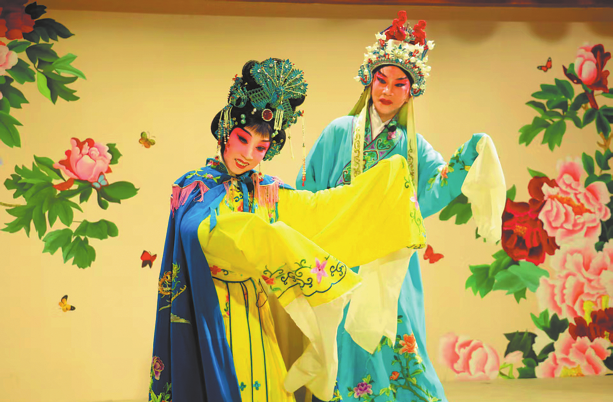
The morning air in Fuzhou, one of China's historical cradles of opera, is still and clear.
From an old courtyard, a familiar melody flows softly into the street — the voice of Wan An'an, a national-level inheritor of Fuzhou Tea-picking Opera, warming up for another day of practice.
At 84, Wan still begins each morning with song, her clear notes carrying the essence of an art that has shaped her life for more than seven decades. "I can't go a day without singing," she said with a gentle smile. "It's already a part of me."
Born in Linchuan district of Fuzhou in Jiangxi province, Wan grew up at a time when Fuzhou Tea-picking Opera was woven into daily life.
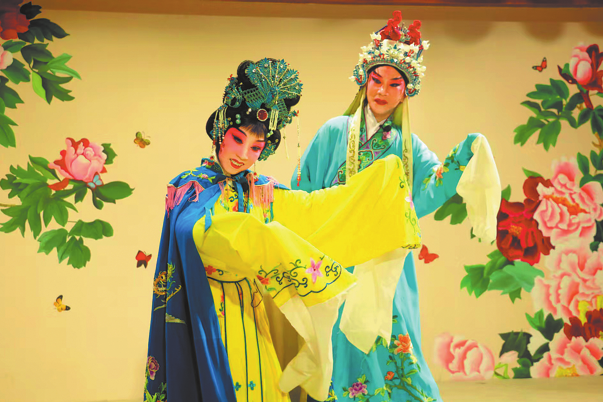
Developed from local folk tunes and performed in the Fuzhou dialect, the art form is known for its lively rhythm, bright tone and expressive gestures. It tells the stories of ordinary people — their labor, joy and resilience — through a distinct "tea flavor" in both voice and emotion.
"In Fuzhou, many seniors can hum a few lines of Tea-picking Opera," Wan said. "Such a unique art should never be forgotten. It needs to be passed on from generation to generation, so that more young people can stand on stage and carry it forward."
At 14, Wan was selected to join the Fuzhou Tea-picking Opera Troupe.
"The conditions were tough then," she said. "We had no professional tutors or proper props, but we dedicated ourselves wholeheartedly to performing."
Her breakthrough came in 1959, when she played the role of Xiaolan in the revolutionary drama Red Pine Forest. The performance brought her national attention and the opportunity to perform for state leaders — a moment she remembers as both overwhelming and unforgettable.
Her signature singing style, described by critics as bright, sweet and rich in "tea flavor", has become emblematic of the genre. "Tea-picking Opera is not about emperors or generals," she said. "It's about the people — about their songs and their lives. It must stay rooted."
In 2011, Fuzhou Tea-picking Opera was listed as a national intangible cultural heritage item. The following year, Wan was officially recognized as its national representative inheritor.
Though she retired from the troupe in 2001, she never left the stage completely. Instead, she devoted herself to teaching, guiding new generations of performers with patience and precision.
"You must practice every day," she often said to her students. "On stage, you can't perform for yourself alone — you need to interact with the audience. Only then can the play come alive."
Her classes combine rigorous training with creative imagination. Classic excerpts such as Selling Flowers and Mending the Vest are used to teach the coordination of eyes, hands, body and steps — the foundation of the craft.
"Basic skills and imagination are equally important," Wan said. "When students can feel the rhythm and emotion of the role, that's when they truly understand the beauty of Tea-picking Opera."
In recent years, cross-cultural exchanges have injected fresh inspiration into Fuzhou's cultural scene.
Since 2016, the city has staged the Tang Xianzu International Theater Exchange Month six times. On Oct 24, the curtain rose on its seventh edition. As part of the event, a troupe from the University of Birmingham in the United Kingdom performed an English adaptation of The Peony Pavilion. The romantic tragicomedy play was written by dramatist Tang Xianzu in 1598. The performance built a symbolic bridge between traditional Chinese opera and Western theater.
Wan welcomed the development. "It's not just an artistic exchange," she said. "It's a deep dialogue between Eastern and Western cultures. Fuzhou Tea-picking Opera can also learn from Western stagecraft and enrich its artistic expression."
Even now, Wan continues to take part in workshops and performances, her dedication undimmed by age. "I hope Tea-picking Opera can preserve its traditional charm while embracing modern elements," she said. "It deserves a broader stage and a brighter future."
Liu Chenxi in Nanchang contributed to this story.





- Singer's dedication to local opera undimmed by age
- China, Russia universities unveil joint institute in Chongqing
- Mystery of sticky lunar soil solved
- Blueprint put Fuzhou on track for transformation
- Report on Shenzhen-Jiangmen railway collapse documents regulation violations
- GX Foundation opens its global headquarters in Hong Kong