



Luxury brands rise as LVMH takes notice









Bernard Arnault, CEO of LVMH, made a visit to China last month — the third year in a row — continuing his strategic focus on the region's luxury market. However, this year's trip marked a notable turn. It is reported that Arnault spent time in Shanghai visiting emerging local luxury brands Songmont and Laopu Gold.
His itinerary, which included purchasing handbags from Songmont and calling Laopu Gold "exquisite and interesting", has sparked significant industry speculation, drawing attention to the growing strength of homegrown Chinese luxury brands.
The CEO's trip signals a shift in the Chinese luxury landscape, as domestic brands continue to gain ground. Songmont, a Chinese handbag brand, has participated in Paris Fashion Week for two consecutive years thus far.
Laopu Gold, a rising player in the jewelry sector, has drawn attention for its unique blend of craftsmanship and cultural storytelling — traits increasingly sought after by domestic luxury consumers.
Homegrown Chinese luxury brands have posted impressive sales growth, outpacing some of the world's largest luxury houses. According to market research and information services provider Big-One Lab, China's top five domestic luxury brands in categories such as handbags, apparel and cosmetics have seen faster growth than major international competitors.
Laopu Gold's half-year revenue surged 251 percent to 12.35 billion yuan ($1.74 billion) this year and profits grew 285.8 percent to 2.26 billion yuan year-on-year. Laopu Gold's average store growth generated 459 million yuan in sales during this period, with same-store sales rising 243 percent. Its overseas market, though accounting for only 12.9 percent of total revenue, has jumped 455.2 percent, showcasing its internationalization strategy.
The rise of local luxury is not merely driven by price or accessibility. Chinese consumers are increasingly prioritizing craftsmanship, innovation and cultural identity. Wu Kunming, founder of the high-end goose down apparel brand Guvet, highlighted this transformation in consumer behavior.
"The definition of luxury among Chinese consumers is undergoing a fundamental transformation," Wu said. "It's no longer just about replacing foreign brands with domestic ones. Consumers are seeking products that reflect their values, aesthetic sovereignty and cultural identity."
Wu said that in recent years, particularly in high-end functional categories like outdoor gear, winter wear and professional apparel, consumers are beginning to prioritize the intrinsic attributes of products — things like materials, technology and experience. Guvet continues to deepen its omnichannel expansion strategy. By November, the brand had opened 12 physical stores and reached an online record with launch day omnichannel sales exceeding 110 million yuan.
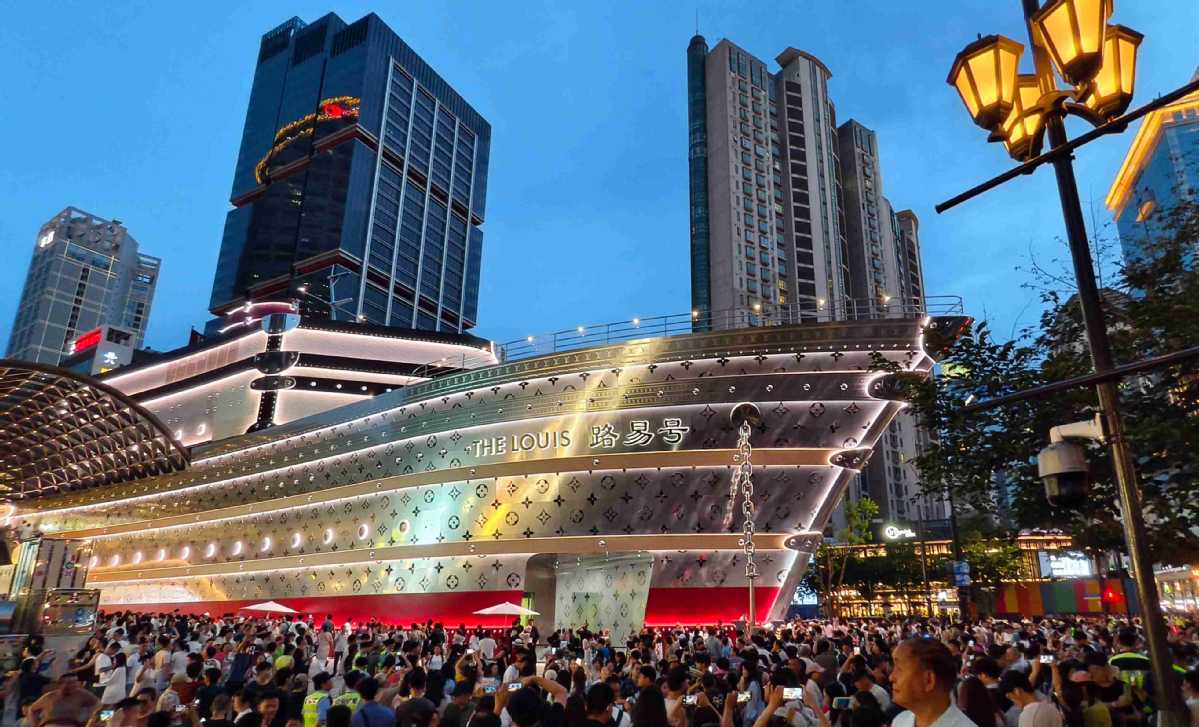
Despite the rise of domestic competitors, global luxury houses are expanding and recovering in China of late. LVMH, for instance, is reportedly ramping up its presence in the country with the launch of multistory flagship stores for Louis Vuitton, Dior, Tiffany and Loro Piana in Beijing next month. All four brands are part of the LVMH conglomerate.
LVMH's third-quarter earnings report showed a modest 1 percent year-on-year increase in global organic revenue, with China's market returning to positive growth. Burberry posted a 3 percent increase in sales in China during the latest quarter, marking its first comparable sales growth in over a year.
As Wu of Guvet said, Chinese brands are uniquely positioned to lead the next wave of luxury innovation.
"We have returned to the essence of products — establishing international exclusive supply chains, partnering with research institutions to overcome technical challenges and integrating contemporary Chinese craftsmanship into our products," he added.
Wu said internationalization is not about actively "going global" — it's about happening naturally.
"We respond to a cross-cultural universal need. Chinese brands, with their agility and local relevance, are uniquely positioned to offer a new answer to the global luxury conversation."
wangzhuoqiong@chinadaily.com.cn











