How technology powers China's drive for common prosperity









HANGZHOU -- From nursing homes to farmland, rapid advances in AI and other digital technologies are reshaping services, production and governance across China.
As the country strives to make technology accessible to all, these innovations are injecting new momentum into its drive for inclusivity and common prosperity.
In the ancient water town of Wuzhen, in East China's Zhejiang province, a local nursing home exemplifies this shift. At the Wuzhen Intelligent Elderly Care Center, residents live with the support of robotic companions and intelligent devices such as smart pill boxes.
Unlike traditional facilities, this smart nursing home features an intelligent system that analyzes seniors' behavior and vital signs in real time. The data-driven system helps caregivers identify potential risks early and provide customized services.
"The system, integrating Internet of Things, big data and AI, streamlines elderly care services, enhances seniors' quality of life, and foresees potential risks," said Zhong Yueying, director of the nursing home.
"We have evolved from simply providing care to helping the elderly enjoy their lives by improving their overall well-being," said Wang Qiuhong, assistant general manager of Tongxiang Heji Nursing Home Co Ltd which manages the nursing home.
This digital transformation is reaching China's growing silver-haired population. By the end of 2024, people aged 60 and above reached 310 million, accounting for about 22 percent of the country's total population, a demographic now increasingly assisted by smart technology.
At a sub-forum of the ongoing 2025 World Internet Conference (WIC) Wuzhen Summit, Li Yanyi, vice governor of Zhejiang, highlighted the province's efforts to expand AI applications to meet public needs, particularly those of vulnerable groups. A major step has been the launch of a digital platform linking over 40,000 senior service providers throughout the province, enabling more elderly residents to access digitalized care.
The wave of technological empowerment is also sweeping China's vast countryside, playing a critical role in the country's push for rural revitalization, further narrowing the urban-rural gap and bringing common prosperity to rural residents.
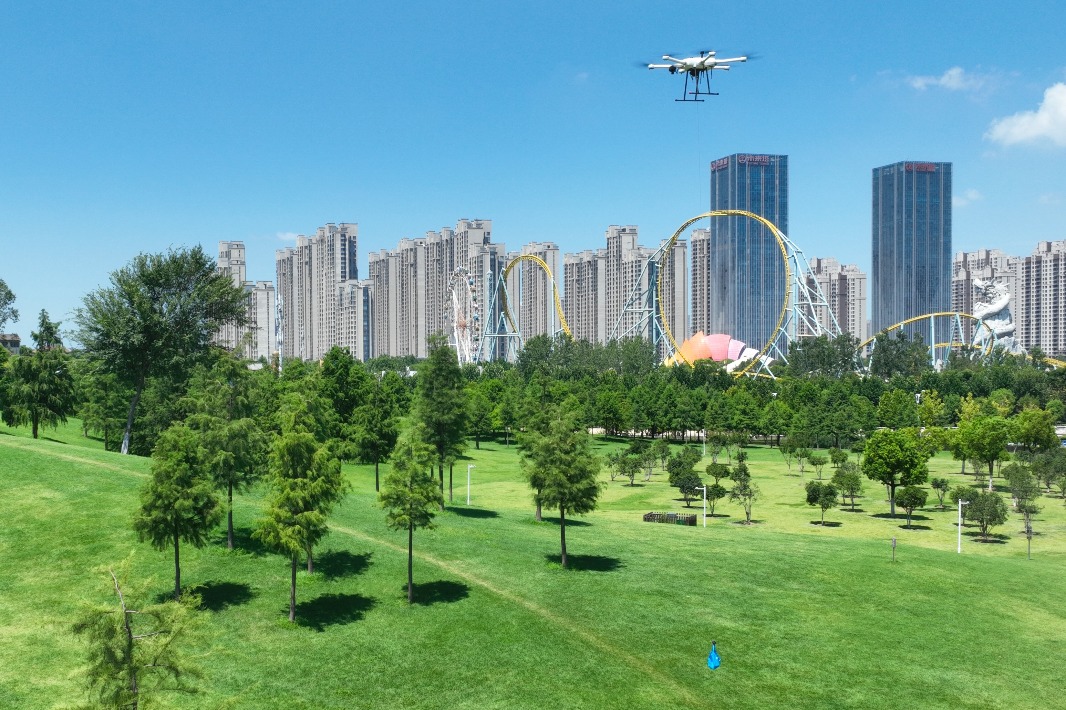
In Xiaogang village, Fengyang county, in East China's Anhui province, intelligent irrigation and field-monitoring systems serve as "digital guardians" for crops, while AI-powered drones conduct precision scouting, identifying pests and diseases in real time. The data they collect generates "digital prescriptions" for targeted fertilizer and pesticide use.
"Smart agriculture in Xiaogang ensures stable and increased yields, cuts costs and boosts efficiency," said Li Jinzhu, the first secretary of the village's Party committee. "We are also integrating digital technology into tourism and local governance to diversify villagers' income and improve public services."
Li added that Xiaogang, widely regarded as the "cradle of China's rural reform", hopes to share its new experience in developing modern agriculture and bridging the urban-rural divide with other regions.
In August this year, China released a national AI action plan, calling for accelerated digital-intelligent upgrading of agriculture and strengthened AI integration in farm management and risk prevention to support farmers across the country.
In Zhejiang's Jinhua city, AI is being paired with low-altitude technology to help farmers map field boundaries, classify crop types, detect forest fires and pest infestations, and reduce pollution by enabling precision fertilization and waste monitoring.
Xu Zhijie, assistant general manager of Jinhua Zhejiang Agricultural Information Technology Co Ltd said that the company has developed over 20 proprietary AI models for agriculture, streamlining tasks from field monitoring to biodiversity tracking.
"AI is fueling high-quality development and expanding the economic pie. It enhances productivity and value of traditional industries while creating new professions and improving governance," said Li Jun, director of the Zhejiang Development and Planning Institute.
"Rural residents are active participants, not bystanders, in this technological revolution," he added.