Yangtze River Delta at forefront of innovation drive
Pioneering models set pace for nation's other regions to follow









"Embodied intelligence" is undoubtedly the buzz phrase in the tech world this year, according to many industry experts.
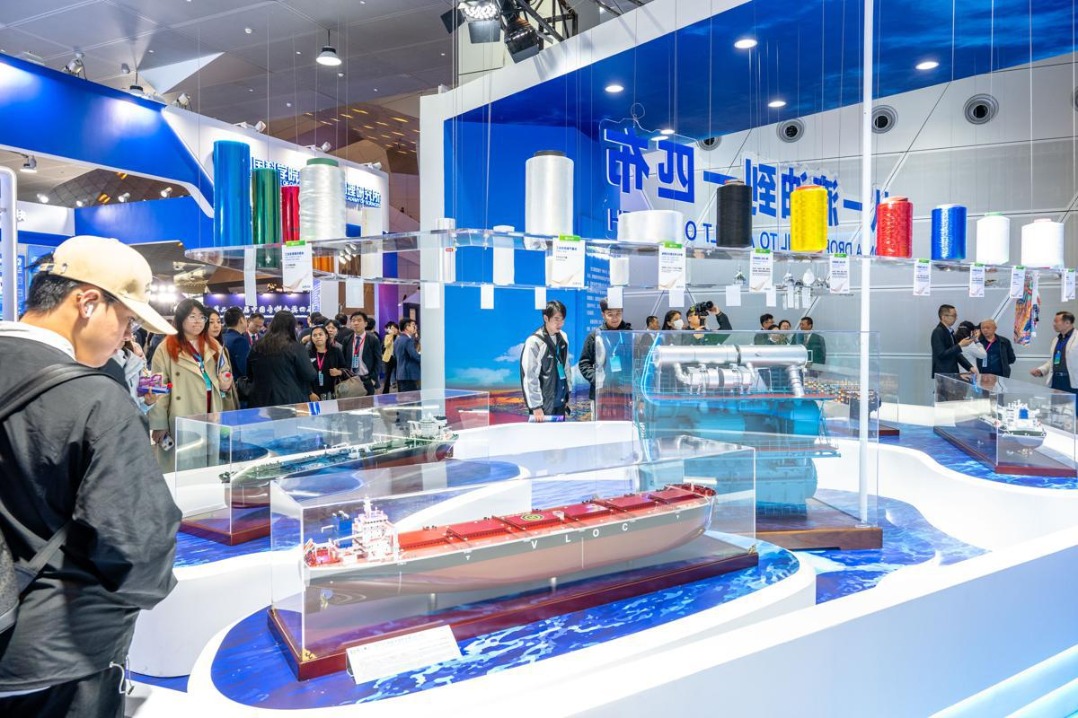
In late September, the annual China International Industry Fair in Shanghai witnessed the giant steps made in this emerging technology, which integrates artificial intelligence into physical entities such as robots to enable them to perceive, learn and dynamically interact with their environment.
The fair — which attracted 3,000 companies from 28 countries and regions — debuted more than 1,000 new technologies and products. It also saw the establishment of an industrial consortium to facilitate the development of embodied intelligence in the Yangtze River Delta region.
The first group of companies and institutes joining the consortium includes Shanghai-based robotics company Fourier Intelligence, Standard Robots (Wuxi), new mica composite materials manufacturer Zhejiang Glory, and Wuxi-based Jiangnan University.
Cheng Peng, Party secretary of the Shanghai Municipal Commission of Economy and Informatization, said that Shanghai has played a key role in leading the development of high-end industries such as embodied intelligence after the city positioned itself as an innovation hub. By leveraging resources from all over the world, Shanghai can help build the Yangtze River Delta region into a comprehensive demonstration and pioneering zone for embodied intelligence, he added.
Other areas of the region also have their respective strengths.
Ma Xuan, chief researcher of the China Academy of Urban Planning & Design's Shanghai branch, said Jiangsu has taken the lead in issuing jointly compiled academic papers, which can be largely attributed to the many well-established universities in the province. In addition, Anhui province has sped up the industrial application of innovations achieved in the lab, she said.
Lu Xiongwen, dean of the School of Management at Fudan University, said disruptive technologies such as artificial intelligence are reshaping business logic.
Industrial upgrading, which was resource reliant, is now more dependent on coordinated development within an ecosystem.
As seen in numerous cases, coordination among companies, research institutes, and governments in the Yangtze River Delta region provides a replicable model for other parts of China. This in turn provides more momentum for China's high-quality economic development, he said.




- Yangtze River Delta at forefront of innovation drive
- Congratulations sent to Seychelles' president-elect
- Book to help readers better understand Xi's thought
- Fujian plays key role in boosting cross-Strait ties
- China studies in the era of digital intelligence
- New platform aimed at China-Africa economic and trade cooperation launched