Xibei PR disaster a blessing in disguise for food industry









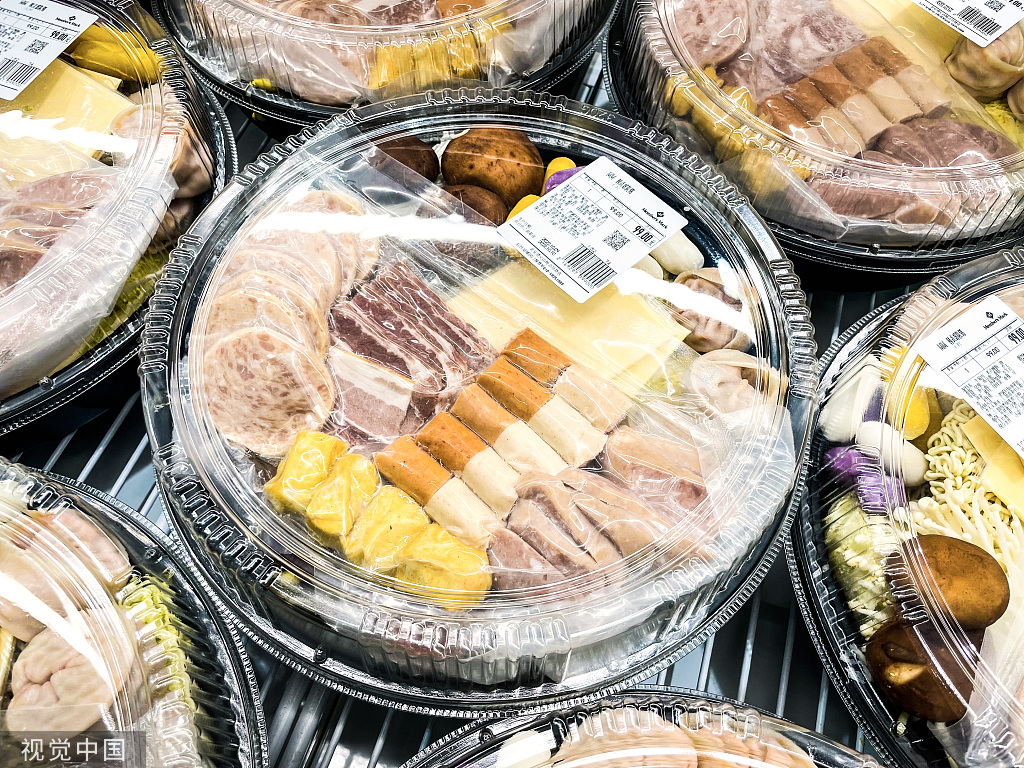
The outcome of a catering company's PR mistake might bode well for China's pre-prepared or premade meal sector. The national food safety standards for premade dishes, for which consultations began at the height of a public opinion crisis, signal more stable growth prospects for the sunrise industry.
Last month, a viral post by an internet influencer criticizing well-known restaurant chain Xibei for "using premade dishes and charging high prices" sparked an intense backlash. The company's own series of misguided defenses, now a classic case study in PR failure, compounded its predicament while dealing collateral damage to China's premade meal industry and the broader catering sector.
Founded in the late 1990s, Xibei had long been regarded as a benchmark in China's catering industry. With nearly 400 outlets and an annual revenue of more than 6 billion yuan ($841.19 million), it has been seen as a pioneer in standardizing and scaling Chinese cuisine. That such a successful company mishandled what was considered a manageable issue, leading to an uncontrollable crisis, belies its reputation.
Undoubtedly, the Xibei incident will leave a mark on the history of China's catering industry, particularly the premade meal sector. Had the company used a more prudent PR strategy, it might have contained the damage. However, with national standards not yet set, the high-stakes debate, though costly to Xibei's reputation, was effectively a large-scale opinion poll. And despite its immediate impact, it will benefit the industry's long-term development.
The controversy surrounding Xibei centers on whether restaurants should serve premade dishes, how to define prepared dishes, how to ensure they are healthy and how to prevent such dishes from being passed off as freshly cooked. Yet such scrutiny shouldn't drive blanket rejection of premade dishes.
The development of the premade dish sector constitutes a national strategy, integrating the primary, secondary and tertiary industries. China's premade meal market approached 500 billion yuan in 2024, with a year-on-year growth of more than 30 percent. It is projected to exceed 600 billion yuan this year. Notably, its 15 percent penetration rate remains far below the 60 percent in the United States and Japan, indicating its massive growth potential.
However, as an originally foreign concept, pre-prepared dishes face adaptation challenges in China. Taking pride in the combination of color, aroma and taste, Chinese culinary culture emphasizes the complex artistry and aesthetic of freshly cooked dishes. Industrial preparation inevitably conflicts with values associated with naturalness, freshness, and handcrafted quality, creating cultural barriers to adoption.
Broadly defined, modern premade meals are believed to have originated during World War II as portable rations for soldiers. In developed economies, postwar fast-paced lifestyles led working women to shorten cooking time, thereby spurring demand for fast food. The proliferation of convenience stores provided retail channels for premade dishes, accelerating consumer market maturation. Later, the stringent requirements of fast-food giants like McDonald's for ingredient standardization, efficiency, and stable supply created an ideal market for businesses.
In China, however, premade meals took a different path, first emerging in the B2B market. The opening of KFC at Qianmen, Beijing, in 1987 was perhaps the starting point for the spread of Western fast food in the Chinese mainland. By the turn of the century, local chain restaurants began to increase, experimenting with standardized operations. As labor, rent and other costs increased — especially with the rise of food delivery — premade dishes became an important tool for catering businesses to reduce costs and improve efficiency. Only during the COVID-19 pandemic did they enter households, having long remained hidden in commercial kitchens.
In earlier developed markets, retail packaging with ingredient and production information served as consumer education, teaching people how to select and prepare such meals. Chinese consumers largely encountered premade dishes passively and unknowingly, whether at restaurants or in delivery boxes. Worse, lacking clear standards and effective supervision, a small number of unscrupulous businesses sold low-quality premade meals while some restaurants marketed reheated premade meals as freshly cooked dishes, cementing the impression that premade dishes are inexpensive meal kits.
That's why the imminent issuing of the national food safety standards for prepared dishes led by National Health Commission is very important. The standards will regulate categorization, ingredients, processing techniques, storage, transportation and inspection methods for premade meals, ensuring the healthy development of the industry while safeguarding consumer dietary rights.
Crucially, premade dishes will receive standardized identification, with restaurant usage and application methods falling under mandatory disclosure requirements. This will help premade dishes shed their invisibility cloak and legitimately enter the Chinese lifestyle scene.
The author is chief researcher at the China Watch Institute, China Daily.