



New rules set for NEVs to boost quality growth
Updated standards for tax exemptions in purchases key to sector's future









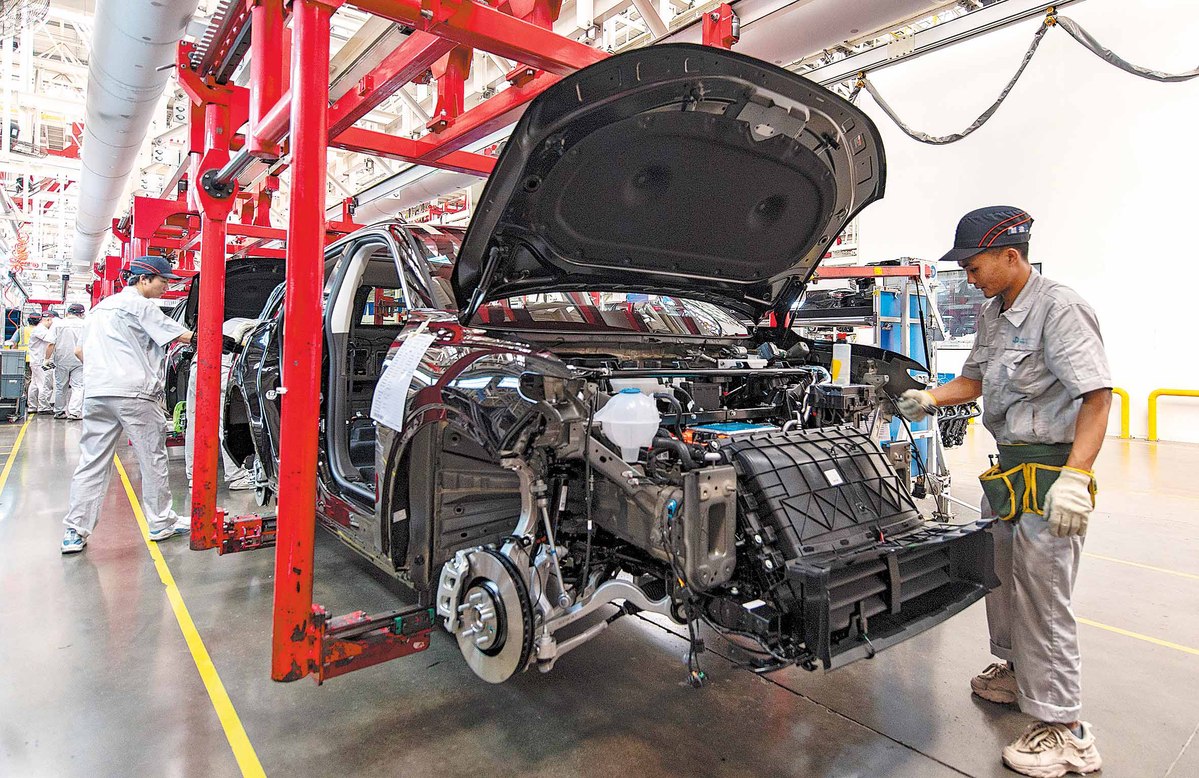
China's latest step to adjust technical requirements for new energy vehicles eligible for purchase tax exemptions between 2026 and 2027 will promote the high-quality development of the NEV sector, while driving advancements and applications of energy-saving technologies, and improving the energy efficiency of vehicles, experts said.
The country has recently issued new regulations stipulating updated technical thresholds for pure electric vehicles and plug-in hybrid EVs, according to a notice released by the Ministry of Industry and Information Technology, the Ministry of Finance and the State Taxation Administration.
For pure electric passenger vehicles, power consumption per 100 kilometers should not exceed the energy consumption limits specified in a national standard, while passenger vehicles with a maximum design total mass exceeding 3,500 kilograms should adhere to the energy consumption limits specified for vehicles weighing up to 3,500 kg, the notice said.
It also set higher technical requirements for plug-in hybrid vehicles, including extended-range models, with their minimum pure electric range requirements having been raised from 43 km to no less than 100 km.
The recent policy adjustment aligns with the rapid advancements in endurance mileage of NEVs and extended range technologies, said Cui Dongshu, secretary-general of the China Passenger Car Association.
Cui said that by elevating the technical thresholds for NEVs, the government is seeking to encourage companies to invest more in research and development, phase out outdated products, and guide the industry to shift from rapid large-scale expansion toward high-quality growth.
He said electricity consumption is a critical metric for pure EVs, and the reduction in power consumption showcases the improved comprehensive design capabilities of electric vehicles, and is a key objective for NEV manufacturers.
"The new standards will drive technological advancements in battery capacity and hybrid systems, optimize driving experience and improve product safety and competitiveness," Cui said, highlighting that stricter standards will motivate companies to launch higher-performance vehicle models that cater to consumers' demand for longer range and lower energy consumption, thus supporting the country's green and low-carbon development.
The country first began exempting NEVs from purchase taxes in 2014, and has extended the tax-exemption policy several times to the end of 2027, so as to support the NEV sector's development and stimulate automobile consumption.
Zhang Xiang, a visiting professor in the engineering department at Huanghe Science and Technology University, said China's NEV purchase tax exemption policy has significantly raised public awareness of the sector, reduced financial burden on buyers, and boosted both the sales and industrial output of NEVs.
The latest regulation is expected to further strengthen the policy's guiding role by raising technical thresholds, leading automakers to produce more energy-efficient models and driving the sector toward higher-quality development, Zhang said.
China's NEV segment has witnessed rapid growth this year. The China Association of Automobile Manufacturers said the country's NEV production volume surged 37.3 percent year-on-year to over 9.625 million units in the first eight months, while sales amounted to 9.62 million units, an increase of 36.7 percent year-on-year.
China produced more than 12.88 million NEVs and sold 12.86 million of them last year, and has maintained the world's top position in NEV production and sales for 10 consecutive years.
Ji Xuehong, a professor at Beijing-based North China University of Technology, said the latest policy measures will push NEV manufacturers to increase R&D investment and accelerate technological iteration and industrial upgrade, while fostering a fair and orderly competitive market environment by preventing low-tech and low-quality models at cheaper prices from crowding out premium car manufacturers.
It will also encourage buyers to choose higher-quality NEVs with more mature technologies and better safety performance, Ji said.
"For NEV manufacturers, the new regulation is both a challenge and an opportunity. Companies with insufficient technological capabilities will face significant pressure to speed up innovation in order to keep their main models eligible for tax exemptions. Otherwise, they may witness a decline in sales."
Meanwhile, the policy offers a chance for NEV makers with advanced technologies to consolidate their market position and further expand their competitive advantages, he added.
















