Anti-dumping probe by EU raises concern
Measures could undermine trade ties, and slow green transition, critics warn









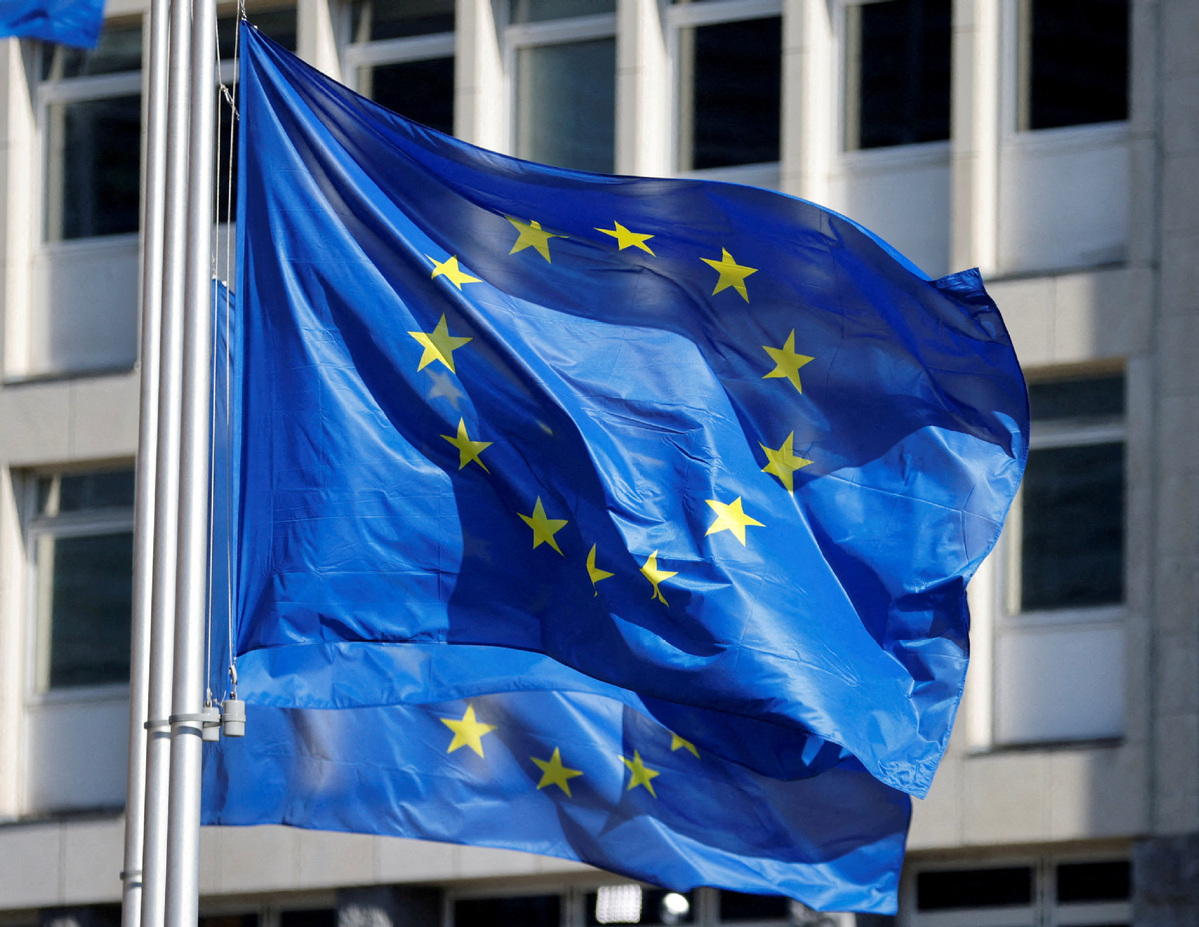
The European Union's growing use of anti-subsidy and anti-dumping investigations, particularly those targeting Chinese companies, is drawing criticism. While Brussels frames the measures as necessary to ensure fair competition, critics warn they could undermine trade relations, raise costs for consumers, and slow the green transition.
In recent months, the European Commission has launched probes into the import of chemicals, automobiles, pharmaceuticals, and batteries under its new Foreign Subsidies Regulation. Officials say the aim is to counter state support from non-EU countries that distorts competition, but the timing and scope of the measures have raised concerns over whether they are safeguards or protectionism.
Horst Loechel, professor of economics at the Frankfurt School of Finance & Management, said the EU's defensive trade posture runs counter to its interests as one of the world's strongest exporters. "As a strong export region with the highest trade surplus in 2024, it would be much better for the EU to have less, not more, protectionist measures," he said. "In the fight for free trade, the EU should be partnering up with China."
He argued the bloc would be better off implementing the Mario Draghi report's recommendations, which emphasized strengthening innovation and industrial capacity rather than shielding producers from rivals.
Tim Clissold, author of Mr China and Chinese Rules, said the EU overlooks why Chinese firms have become competitive. He pointed to EU-published data showing that outside China, developing economies have virtually no representation among the world's top 500 corporate R&D spenders.
"That shows you the complete dominance of Western firms in R&D — except for China," he said. "China has 93 companies in that ranking. Yet people still say the only reason Chinese firms succeed is subsidies. That's simply not true."
He credited China's joined-up approach between industry and academia, large R&D budgets, industrial clustering, and above all, consistent long-term policy. "Western countries can't commit to a 20-year project when elections change everything every few years," he said.
Questions over consistency have long dogged EU trade policy. WTO rulings against subsidies for Airbus and sugar exports fueled perceptions of double standards. "Still today the EU is subsidizing certain industries like chips and EVs," Loechel noted. "In some cases, the EU is applying double standards."
Omer Baris, associate professor of economics at Nazarbayev University in Kazakhstan, said this weakens Brussels' case. "The EU subsidizes its own green industry, but that is a blow to the fairness argument. The EU complains about anti-fairness when others do it, but when they do it, it's fairness. It's selective retaliation."
Gerhard Stahl, former secretary-general of the EU Committee of the Regions, said subsidies are not unique to Europe. "Both Airbus and Boeing have benefited from public funding that conflicted with WTO rules," he said. "The difference is that in the EU's case, such subsidies were the exception, whereas in the US, public support through military procurement or protective legislation is more entrenched."
Many experts warn that tariffs and duties act as hidden taxes, with costs borne by European households rather than foreign producers. Loechel said tariffs undermine decarbonization and fuel inflation. Baris was blunt: "If we impose tariffs on China, the Chinese do not pay a dime. Tariffs are paid by the consumers buying those products; they're tools against ourselves."
Pedro Brinca, associate professor of macroeconomics at Nova School of Business & Economics in Portugal, stressed that investigations must be rule-based and not politically motivated. "Those are values of the EU, but also the last thing we want is to signal the world that the EU does not abide by principles of the rule of law and fair treatment," he said.
The measures are already reshaping EU-China dynamics. Baris predicted they will accelerate the shift toward "managed economic rivalry", replacing the WTO-era vision of open trade with sector-by-sector contests for market share. Retaliation from Beijing, he suggested, may target vulnerable EU exports such as agriculture. Rather than full decoupling, he said tensions may result in "controlled entanglement", with Chinese firms increasing local production inside Europe to bypass barriers.
Brinca warned that escalation would harm both sides. "We all lose," he said. "Competition should drive innovation and gains for consumers, investors and governments. Trade can be a force for peace, connecting people and building bridges. But the current geopolitical reality is impeding the process at everyone's loss."