



Revitalizing nation's aging housing stock
China empowers residents to lead reconstruction of old urban homes









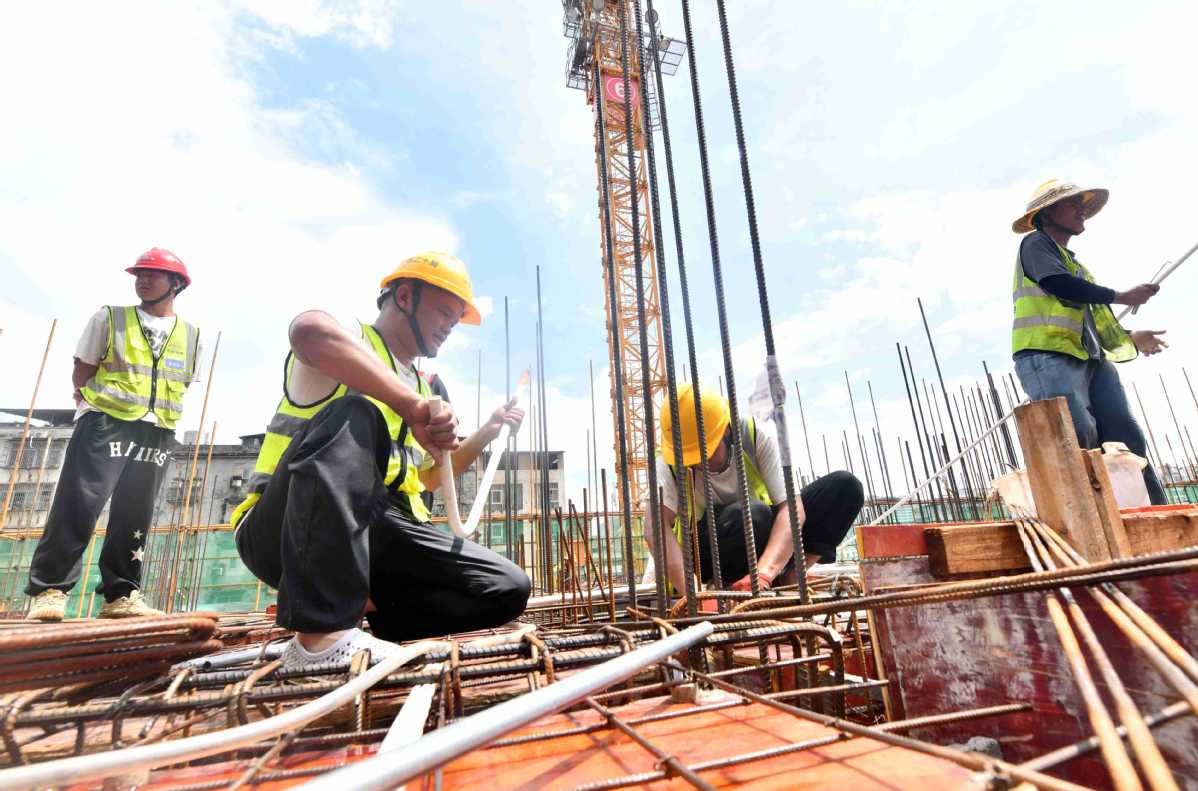
Zhegong New Village, a community of 548 households, has become a shining example in Hangzhou, Zhejiang. Fourteen buildings were cramped and obsolete, with four classified as C-level dangerous structures. Public space was scarce, amenities were lacking and residents desperately wanted change.
After extensive consultation, the households agreed to self-fund 470 million yuan ($66 million) — averaging nearly 1 million yuan per family including parking space purchases — covering over 80 percent of the total 530 million yuan project cost. The remainder came from government renovation funds.
A total of 13 dilapidated buildings were replaced with seven modern 11-story towers featuring expanded green spaces, underground parking and community facilities. The project added 9,800 square meters of new construction while improving living conditions.
As China advances its ambitious urban renewal initiatives, planners and policymakers are confronting a complex reality: the success of resident-led reconstruction projects often hinges not just on funding and policy, but on the often-overlooked human element of community leadership.
"The difficulty cannot be overstated," said Wang Binwu, an associate researcher of the policy research center at the Ministry of Housing and Urban-Rural Development.
"Achieving consensus among hundreds or even thousands of homeowners, securing adequate funding and managing temporary relocation during reconstruction have tested even the most successful pilot projects," Wang said.
"The diversity of resident demands creates enormous complexity," Wang said. "Young families want larger units, elderly residents prioritize elevators and accessibility, while lower-income households fear the financial burden."
Yan Yuejin, deputy head of the Shanghai-based E-House China R&D Institute, cautioned that funding presents another major obstacle. While some households can readily contribute significant sums, others struggle, creating equity concerns.
Moreover, attracting private investment remains difficult without clear models for risk-sharing and returns. Ensuring transparent and standardized use of collective funds adds another layer of complexity requiring robust institutional oversight, Yan said.
"Perhaps the most immediate challenge is transitional allocation. The period of demolition and reconstruction forces residents to find — and fund — temporary housing, often incurring additional rental and commuting costs that strain household budgets, particularly for fixed-income seniors," Yan said.
Chen Jie, a researcher of China Institute for Urban Governance with Shanghai Jiao Tong University, said that the prevailing approach to community-led renewal — which often struggles to achieve 100 percent homeowner agreement — has fundamental limitations.
Chen proposes formalizing an exit mechanism that would allow unwilling residents to depart while enabling committed residents to stay and rebuild.
It's viable to allow investment institutions to acquire properties from willing sellers at market rates in predominantly small-unit communities. Once sufficient shares are assembled, these institutions would negotiate with remaining residents to demolish and rebuild, then sell the new apartments back to staying owners at discounted market prices, Chen said.
"Housing improvement isn't limited to in-situ renewal alone," he emphasized. "We shouldn't forcibly bundle those who want to leave with those who want to stay."
wangkeju@chinadaily.com.cn











