Chinese study reveals how single cells develop into whole plants









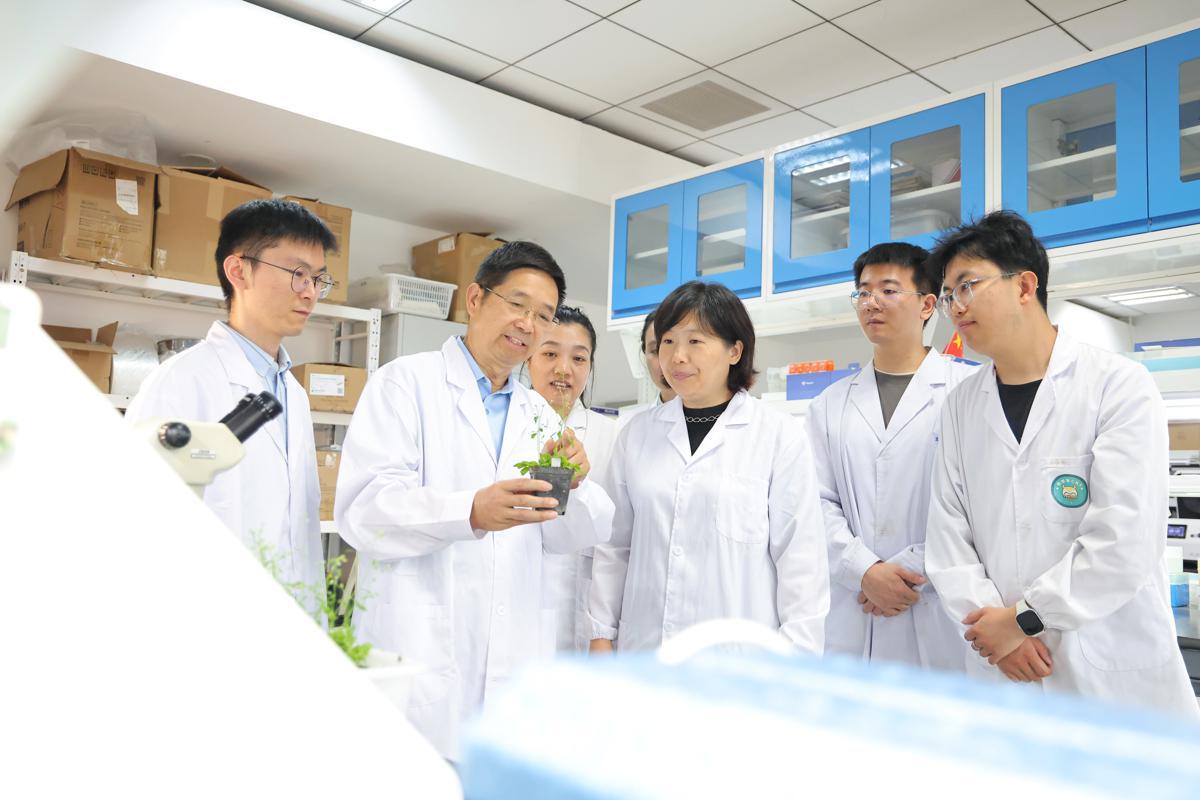
In a groundbreaking study, Chinese researchers have revealed how a single plant cell can develop into a full organism, unlocking potential applications for agriculture and crop conservation.
The team published their study, titled Time-resolved Reprogramming of Single Somatic Cells into Totipotent States During Plant Regeneration, in the academic journal Cell. They come from Shandong Agricultural University and were led by professors Zhang Xiansheng and Su Yinghua.
Plants have long fascinated scientists with their remarkable ability to regenerate—where a leaf, a stem, or even a single cell can give rise to an entirely new plant. This phenomenon, known as plant cell totipotency, was first proposed in the early 20th century. It refers to the capacity of a plant cell to dedifferentiate and form totipotent stem cells similar to a fertilized egg, which can then develop into a complete plant. However, the molecular mechanisms behind this process have remained elusive for over a century.
"It's common to observe plant regeneration, such as in sweet potatoes, which can grow into new plants even from a cut piece," said Zhang, professor of the university's College of Life Sciences. "But how does a single somatic cell change? What is the mechanism? These are the questions we had been trying to answer."
Using single-cell sequencing and live imaging, the team spent two decades capturing the complete division process to provide visual evidence that plant totipotency originates from a single cell.
"We can flip a switch to turn it into a totipotent cell similar to a fertilized egg, which can then grow into the next generation," said Su, professor of the university's College of Life Sciences. "That switch is the high accumulation of auxin in the original cell. By providing a specific environment, the cell can be triggered to become a totipotent stem cell."
The research not only answers a long-standing question in plant biology but also opens new pathways for agricultural innovation. The technology is currently being tested on wheat, corn, soybeans, and other crops.
Precise regulation of cell totipotency could allow for rapidly cloning high-quality crop varieties, shortening breeding cycles and offering new strategies for conserving rare and valuable germplasm resources, according to Zhang.





- Museum of Art Pudong offers a peek at two upcoming exhibitions
- China's healthcare resources maintain growth trajectory
- Police punish shopper after AI video used in fake crab claim
- Historians identify Chinese pilot saved by John Rabe in Nanjing
- Rainforest-themed activities launched in Hainan
- Hebei advances intelligent construction and prefabricated housing