Is SCO poised for an economic breakthrough?









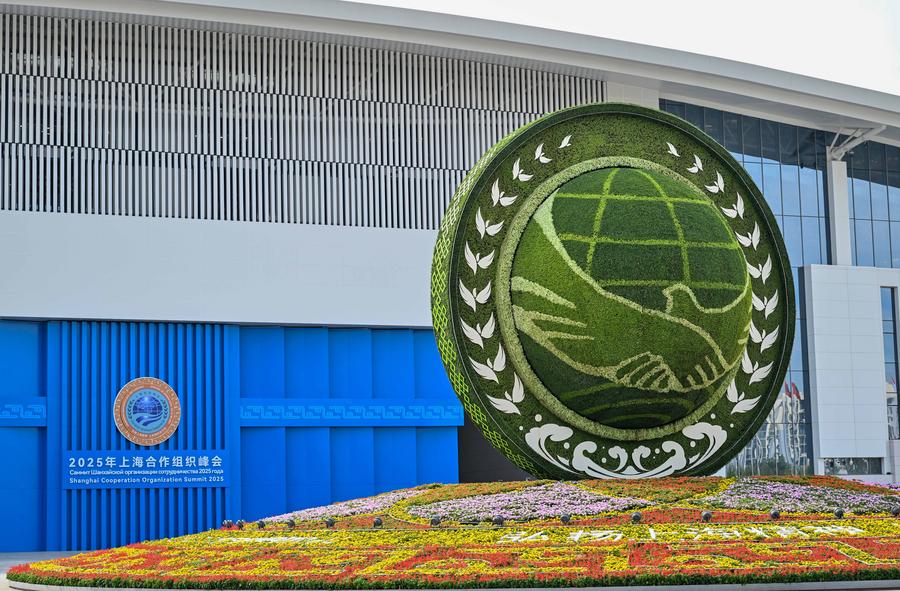
On Sept 1, the Shanghai Cooperation Organization wrapped up its largest summit ever in the bustling Chinese port city of Tianjin, which impressed the world with its energy, modernity and flawless organization of the event, showing what it takes to host a truly global gathering.
But the deeper question is: Can Tianjin inspire the SCO to also achieve its bold economic ambitions?
As the SCO approaches its 25th anniversary next year, its trajectory is clear. In just a quarter of a century, it has transformed from a regional initiative into a force of global relevance. The transformation has been driven by the 10 member states, which are committed to building a new kind of partnership rooted in the "Shanghai Spirit" of mutual trust, mutual respect and equality.
Today, the "SCO community" spans 27 countries — 10 member states, two observer states and 15 dialogue partners — covering a quarter of Earth's land that is home to nearly half of the world's population.
Economically, the SCO speaks with gravitas: its member states account for about 24 percent of global GDP, growing at an average of 5.5 percent a year. Two guiding principles underpin this progress.
First, the SCO has never projected itself as being against any country or bloc. It is not an alliance, not based on ideology, and not confrontational. From the start, it has worked with, not against, other international organizations, especially the United Nations.
Second, every decision in the SCO is made by consensus. The process may not always be fast, but it ensures fairness and inclusion — and it creates unity. As Confucius said, the noble find harmony in differences, the petty quarrel even in agreement.
The adoption of the SCO Development Strategy up to 2035 at the Tianjin summit was a landmark move, and sent out a clear message: the SCO does not aspire to become a military alliance or a supranational economic union. Instead, it will chart its own course. Still, critics argue that after 24 years, the SCO's trade and economic results are modest. Their point seems valid, and should prompt the SCO to promote innovation and achieve breakthrough solutions.
And breakthroughs are desperately needed in these times. Eurasia, the SCO's heartland, is now a region for massive economic initiatives. So the SCO cannot remain on the sidelines and, instead, should use practical, effective tools to promote economic cooperation.
The SCO already has numerous cooperation mechanisms at the level of ministers or heads of different government departments, more than half of which are devoted to trade and commerce. Yet policies and programs alone are not enough. There is a need for more agreements like the 2014 "intergovernmental agreement on creating favorable conditions for international road transport", which mapped six transcontinental routes from China's Lianyungang to Russia's Kaliningrad. A bold vision yet to be fully realized.
Beyond governments, SCO institutions such as the Business Council and Interbank Consortium are working to foster business ties and attract more capital. The intent is commendable, but the impact so far remains limited. What could make the difference? Real, mutually beneficial, on-the-ground projects.
The SCO's Economic Development Strategy up to 2030 highlights initiatives like the green economic region platform, and a unified SCO tourism brand. Negotiations are on to streamline trade procedures, too. Turning these ideas into reality must begin now.
Equally crucial is finance. For nearly two decades, the idea of an "SCO Development Bank" was being debated. Tianjin changed that. Leaders made the political decision to move forward with its creation. Negotiations on how the bank will function are next. In a world of fragmented economies and exclusive "club" trade groups, the SCO needs its own financial engine, and it needs it soon. At the same time, lessons learned from BRICS and other multilateral organizations need to be taken into account to avoid familiar pitfalls.
Yet the SCO has quietly built one of the largest regional cooperation systems in the world. Since its motto is win-win progress, countries of different sizes and systems can not only coexist but also thrive together in the SCO.
The message from Tianjin is clear: The conditions for an economic breakthrough are ready and the political will is there. If will turns into action, the SCO will have a long, distinguished and influential future.
The author is deputy secretary general of the SCO.
The views don't necessarily represent those of China Daily.
If you have a specific expertise, or would like to share your thought about our stories, then send us your writings at opinion@chinadaily.com.cn, and comment@chinadaily.com.cn.