


Ancient carving linked to first emperor
Carving:?Chiseling methods offer clues









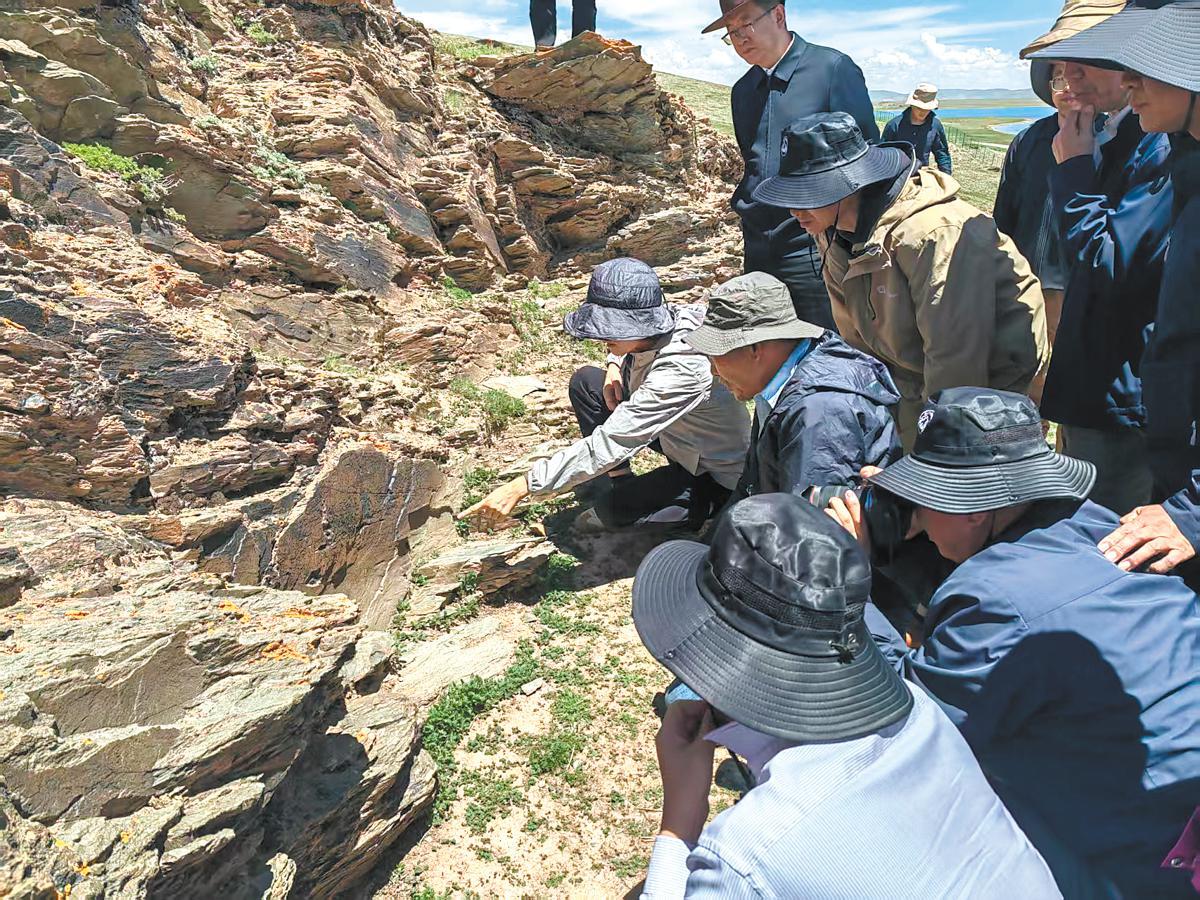
After months of lively debate about its nature, an inscribed rock carving near a lake in Madoi county, Qinghai province, has been identified by the National Cultural Heritage Administration as being from the Qin Dynasty (221-206 BC).
The 37-character inscription was found in 2020 on a rock along a lakeside slope, about 4,300 meters above sea level. It is of typical Qin-era zhuanshu, or seal script writing style. The characters are spread across an area of 0.16 square meters, 19 centimeters above the ground.
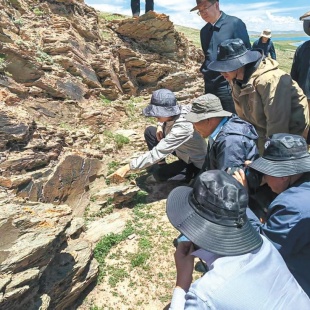
Tong Tao, an archaeologist with the Chinese Academy of Social Sciences, arrived at the site in 2023 and realized its extraordinary significance.
Except for some unclear characters, he recognized that the surviving words indicated that the carving was a historical recording that was absent from previously known documentation.
The characters documented that Qinshihuang, the first emperor of China, had sent a high official named Yi on a mission to lead alchemists picking medicinal herbs on Kunlun Mountain.
It is the only known surviving Qin-era rock carving that remains at its original site and could provide a key reference on the location of Kunlun, a monumental sacred mountain in ancient Chinese culture that is hailed as the "ancestor of all mountains".
For example, in Erya, one of the oldest Chinese dictionaries, dating back to the third century BC, it is said that "the river comes from Kunlun", which corresponds to the location of the rock carving, which is close to the source of the Yellow River.
Nevertheless, after Tong, the archaeologist, wrote an article to release the earlier findings in Guangming Daily newspaper in June, the inscription ignited a lasting debate in the media. While some scholars supported its identification as being from the Qin Dynasty, others doubted its credibility and saw it as a modern fabrication due to its well-preserved condition.
Deng Chao, director of the National Cultural Heritage Administration's department of historic monuments, said at a news conference on Monday in Beijing that "laboratory analyses indicate that the inscribed rock consists of quartz sandstone, characterized by high abrasion resistance and strong weathering durability".
"Through high-definition examination, distinct tool markings on the inscribed characters were identified, indicating their creation using blunt-tipped engraving instruments, which matches with craftsmanship practices of the historical period," Deng added.