


Forging bonds beyond borders
China's pairing assistance programs blend intangible heritage with livelihoods, empowering Xinjiang women, Yang Feiyue reports.










Since its founding in the Ming Dynasty (1368-1644), Changshengchuan's tea traveled through ancient tea routes to border regions, becoming a daily necessity for multi-ethnic communities.
To this day, it remains a designated producer of specialty ethnic goods, supplying border areas under plans organized by the national ethnic affairs authorities.
As a key component of Hubei's pairing assistance program in Xinjiang, Changshengchuan worked closely with Bortala Mongol autonomous prefecture in the north of Xinjiang since 2018.
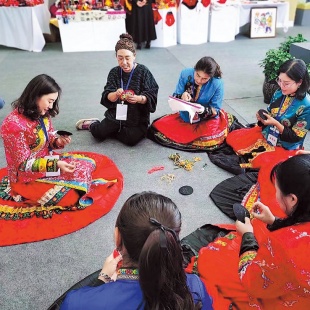
"We hold regular training sessions at the prefecture's cultural center twice a year, teaching tea art techniques and sales skills," Jian says.
So far, Changshengchuan has developed 170 distributors and partners in Bortala, most of them local women.
E-commerce training has helped local partners expand sales online.
"Many homemakers have become tea art specialists or salespeople through the program, earning monthly incomes between 5,000 and 6,000 yuan — all without leaving their hometowns," Jian says. Moreover, Changshengchuan not only sells brick tea in Xinjiang but also uses its Hubei distribution network to bring local specialties, such as Hotan jujubes and roses, to wider markets.
"Innovative tea products that incorporate these ingredients have been well received," Jian says.
With these partnerships, Changshengchuan has achieved steady sales growth in Xinjiang.
Annual sales in Bortala jumped from 120 tons at the beginning to nearly 2,000 tons, while regional sales across Xinjiang grew from around 5,000-6,000 tons to nearly 10,000 tons, Jian says.
"We are not just doing business — we are continuing an ethnic unity story centuries in the making," Jian says.
"We will keep helping local communities prosper through tea," she adds.
Both projects represent just a fraction of the extensive pairing assistance efforts carried out by provinces and municipalities across Xinjiang.