



Beijing hotline a model of people-centered approach









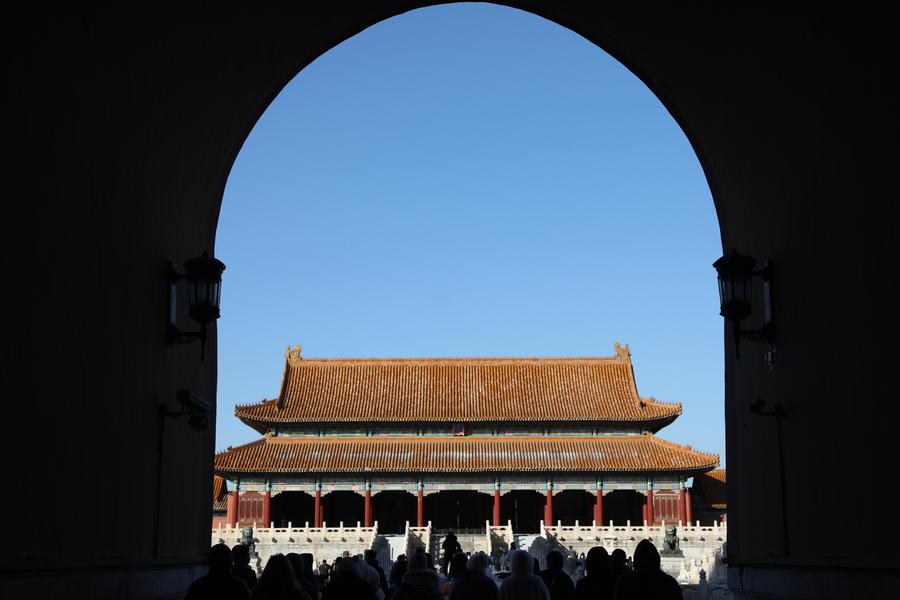
From street-light failures and insufficient parking to annoying mosquitoes and loud "square dancers," every inquiry and complaint you can possibly think of can be filed via Beijing's 12345 citizen hotline—a 24/7 service essential to the megacity's people-centered governance.
Beijing, the most populous capital city in the world, is a pertinent example of tackling urban governance challenges to provide efficient public services. With a population of 22 million, twice that of New York, citizen appeals can be trivial and sometimes feisty, ranging from traffic and education to housing and pensions.
The city's answer is a set of innovative practices aimed at addressing public complaints immediately upon receipt, with cross-departmental solutions. According to the Annual Data Analysis Report of Beijing's 12345 Citizen Service Hotline for 2024, the service handled 24.195 million petitions and complaints, with resolution and satisfaction rates standing at 96.7 percent and 97 percent, respectively.
In modern metropolises, resident satisfaction has emerged as a pivotal metric for urban governance. However, the thorny, chronic issues that cry for municipal-level coordination have become a hot potato for local governments worldwide.
To address pressing concerns of the people, the government of Beijing is dedicated to providing an "all-in-one" channel that connects all sub-districts, communities, government departments, and public service enterprises.
And the handling of parking woes in hutong, residential areas with narrow passages, is a vivid display of this people-centered approach of Beijing.
The history of hutong neighborhoods in central Beijing dates back to the Yuan Dynasty (AD 1271-1368). As rapid urbanization increases the number of automobiles in the city, the densely populated hutong areas face thorny parking woes. Insufficient space leads to parking disputes between neighbors as well as frequent parking fines and penalty charges. To deal with this chronic headache, Beijing's 12345 citizen hotline takes a multi-stakeholder approach that has mobilized district community, nearby companies, institutions and public facilities to designate space for residents to park. The less-packed hutong are now more liveable and peaceful neighborhoods adorned with greenery and art installations.
AI-powered service
The technology used to support this humanistic system is stunning. Every day, millions of residents across the city call in with a massive amount of concerns — road repairs, payroll delays, dirty parks, etc.
To handle large volumes of data in real time with high efficiency and accuracy, AI-driven analytics have been incorporated into the hotline service, enabling better-informed decision-making and targeted service. Monitoring systems are used to track the process of how the complaints are being resolved, and follow-up calls are made to get the feedback of citizens.
To promote inclusiveness in urban governance, seamless communication is crucial between service providers and residents. With AI technologies, such as speech-to-text software and multilingual translation services, all line operators can accurately understand foreign residents, provide tailored information, and redirect complainants to relevant departments and stakeholders. A sign language interpreting service is also provided to better assist people with hearing impairments.
A model for the world
By opening a people-centered, tech-empowered public communication channel, Beijing has initiated a worldwide reform of modernizing urban governance.
The capital city's approach is not just efficient but also inclusive. Residents are not deemed as troublesome complainers but stakeholders in how their city is managed and improved. By involving citizens in the entire process of solving a real-world problem, Beijing is practicing whole-process people's democracy that includes extensive engagement, connection, empowerment, and oversight in city governance.
Beate Trankman, UNDP Resident Representative in China, recognized this approach as a global pioneer in exploring frontier technologies and affirmed that Beijing's practice provides critical insights into effective and responsible leveraging of digital intelligence for sustainable urban development.
The Beijing practice in modern days offers a glimpse into China's way of delivering for its 1.4 billion people — truly a government of the people, by the people, and for the people. Or, in the words of Mencius, the ancient Chinese philosopher, "The people are the most important element in a nation."
The author is a commentator on international affairs. The views don't necessarily represent those of China Daily.
If you have a specific expertise, or would like to share your thought about our stories, then send us your writings at opinion@chinadaily.com.cn, and comment@chinadaily.com.cn.





