


Coaxing secrets out of an ancient desert sentinel









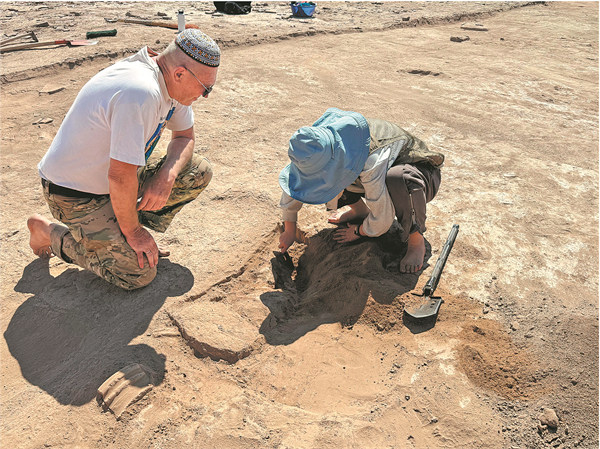
According to Jiang Lu, an associate professor at Zhejiang University, the dig revealed three major cultural layers — deposits of debris and artifacts left by successive generations — with the earliest dating back to the same era as China's Han Dynasty (206 BC-AD 220).
Jiang says they uncovered two well-preserved sections of a brick wall foundation with floor structures dating back to the 7th to 8th centuries, apart from a corner of a wall foundation built during the 2nd to 3rd centuries, marking the first discovery of architectural remains from the site's earlier period.
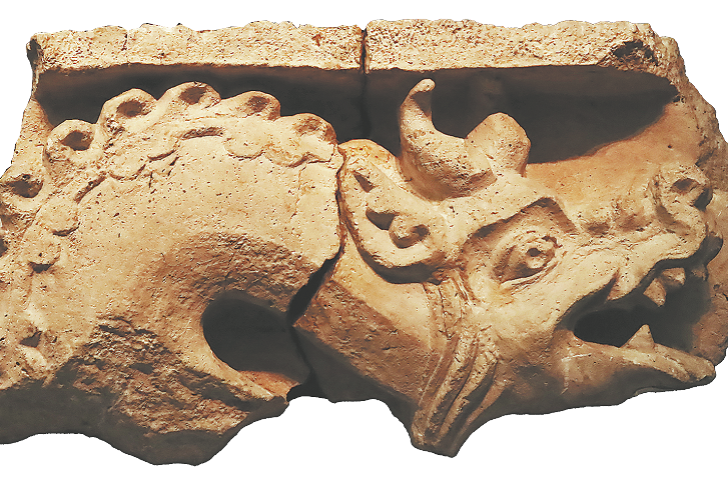
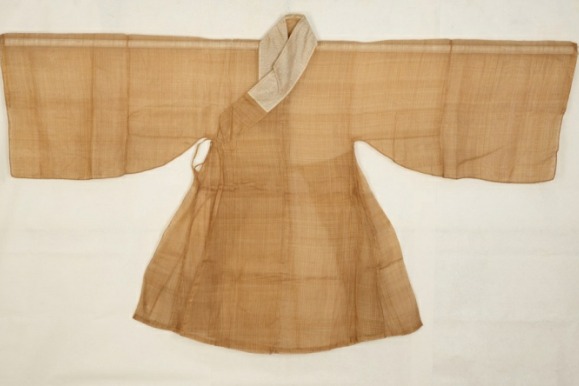
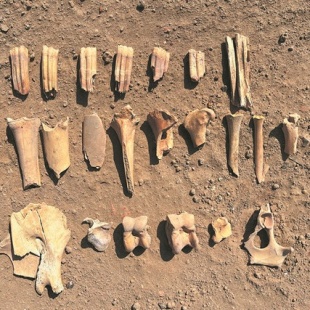
Other discoveries included pottery vessels and shards, animal teeth and bones, textiles and varied artifacts. Patterned pottery fragments in particular displayed a distinctive Central Asian aesthetic that contrasts sharply with Hanera pottery in China, says Hu Yingqi, a graduate student from Zhejiang University who took part in the excavation.
For the joint archaeological program, experts from Zhejiang University's School of Art and Archaeology and School of Earth Sciences launched a collaborative research project through which remote sensing technology powered by generative artificial intelligence is applied to automatically identify ancient relics.
Seven sites along the lower Amu Darya and nearby regions were flagged, including Bolshaya Kyrk-Kyz Kala, demonstrating the promise of the technology for future surveys.
Life in the desert was demanding. Daytime temperatures rose above 40 C only to plunge below 10 C at night with occasional sandstorms and sudden downpours. The team usually began at 7 am, working for six hours to clear the earth's surface, collect artifacts, draw archaeological illustrations and record information, leaving the afternoon for desk work. Sometimes they resumed excavation at 4 pm and continued till 6 pm.
Weekends offered brief respite, as foreign experts guided Chinese students to nearby sites, explaining structures and layouts, drawing comparisons, and interpreting the Khwarazmian civilization.
Zhang Shipeng, a research assistant from Zhejiang University, was impressed by the ancient civilization's urban architecture, highlighted by the dozens of unearthed fortress remains dating from the 6th century BC to the 6th century.
The intricate structures are still visible despite the passage of time: the moisture-resistant foundations are made of river sand and can mitigate earthquake shocks; and the walls built from large mud bricks with special marks on each are bonded with clay mortar, some wedged in and reinforced with natural stones. Unlike ancient Chinese architecture, wood was seldom used due to the absence of tall trees in the Khwarazmian oasis, Zhang explains.