


Decoding hidden history
In 2024, the Beijing Central Axis: A Building Ensemble Exhibiting the Ideal Order of the Chinese Capital was inscribed on the UNESCO World Heritage List. A series of national ceremonial and former imperial buildings since the Ming Dynasty, including the Forbidden City, now line the 7.8-kilometer-long axis and thus consolidate its role as "the backbone of Beijing".
However, questions surrounding its origins in the 13th century still await to be answered.
In the early 1970s, archaeologists unearthed a section of Yuan Dynasty central axis road in Jingshan Park to the north of the Forbidden City, creating a theory that the location of the central axis has never changed.
Decades later, Xu's findings may actually prove it.
"We haven't excavated an entire Yuan palace, due to the fact the core area of Beijing was a group of overlapped layers," Xu says.
"But the constructional foundations have already left us many crucial references.
"The Central Axis lasted from Yuan through Ming to Qing dynasties and the city layout continues to reflect ancient Chinese ideals of national governance," he explains.
"It's like a continuous lineage of Chinese civilization."
He adds: "The city of Dadu thus remains a milestone in the history of ancient Chinese capital cities and is the foundation of Ming-Qing Beijing centering the Forbidden City, which finally reaches the peak of the evolution."
However mighty Dadu might be, when Ming Dynasty rose to drive Mongol rulers northwards, its heyday came to an end. Nanjing in present-day Jiangsu province became the national capital.
"Historical recordings on the destiny of Dadu after the fall of the Yuan Dynasty are severely lacking," Li Xieping, a researcher with the Palace Museum, says.
"Zhu Di, a Ming prince, constructed his mansion in Beijing. Military fortifications were built. But these don't necessarily mean the Yuan imperial palaces were brought down."
After winning a fierce civil war for the throne, Zhu Di became the emperor, and chose to come back to where he resided. In 1420, he moved the capital back to Beijing from Nanjing when construction of the Forbidden City was completed.
Some parts of the Yuan imperial palaces may have survived.
Duanhong Bridge ("bridge of broken rainbows") in the Forbidden City is probably such an example.
Visitors thronging the bridge often pause to take photos of the lion statues, which have become popular on social media. Yet, they frequently overlook the dragon carvings on the railings. These dragons, more refined than their counterparts on other bridges in the palace, stand out as exemplary Yuan-era motifs.
Xu says, "They're typical Yuan-era dragons. The decorations surpass those of any other bridge in the Forbidden City."
Many people believe this is what Dadu left for the Forbidden City. However, after digging below the bridge, Xu has not found Yuan Dynasty stratum.
"You cannot rule out the possibility that artisans moved the bridge components from somewhere else," he remains cautious.
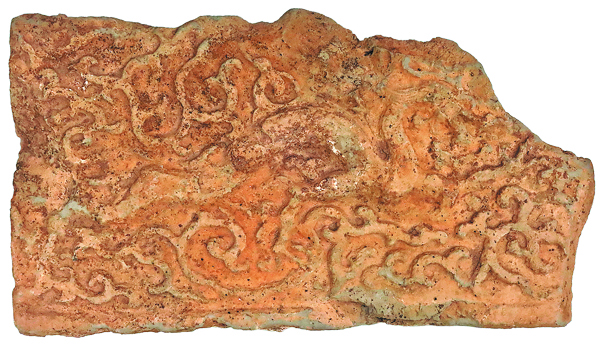
He once found another case in the Forbidden City that Ming artisans use Yuan flooring bricks to build a pool.
"Yuan palaces were not entirely demolished," he says. "It's a kind of inheritance to make full use of old materials."
Xu understands it is always a tough mission to trace Yuan clues in the Forbidden City.
"Generations of archaeologists will strive for that goal," he says. "Hopefully, veils of the Khan's city will be lifted step by step."





