Biography traces a soldier's journey from captive to comrade









As a child, Yokichi Kobayashi devoured Chinese novels about the war against Japanese aggression and wondered why some captured soldiers later helped their former enemy. The answer came through his father's story.
Over the past 50 years, he meticulously pieced together the life of his father, Kiyoshi Kobayashi, eventually chronicling it in a biography. This year, which marks the 80th anniversary of the victory in the Chinese People's War of Resistance Against Japanese Aggression (1931-45), the 74-year-old Japanese authorized a Chinese website to publish the book.
"As a Japanese, I ultimately chose to fight alongside the Chinese during the war of resistance because the Communist Party of China helped me realize the injustice of Japan's war of invasion," Kiyoshi once told his son.
The Yan'an Japanese worker and peasant school reeducated many Japanese captives, transforming their perspectives, says Yokichi. "Many of them later joined the fight against Japanese fascism, playing a crucial role in the broader anti-fascist struggle."
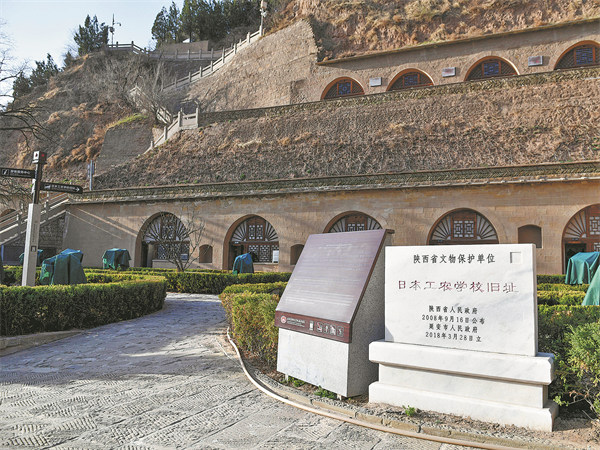
The school opened in May 1941 on Baota Mountain with just 11 students. By August 1945, enrollment had grown to more than 300. Over 30 cave dwellings served as dormitories, classrooms, and other facilities, some of which remain well-preserved and attract visitors today.
Li Donglang, a professor with the Party School of the CPC Central Committee (National Academy of Governance), says, "The school aimed to transform the mindset of Japanese prisoners. It reflects the Party's effectiveness in weakening enemy forces and highlights the importance of military-political work."
Kiyoshi was born into a businessman's family in Osaka. In 1938, at the age of 20, he was enlisted and sent to China the following year. In 1940, he was wounded in a battle against the Eighth Route Army and captured.
"At first, my dad tried to escape and even considered killing the Chinese army leaders," Yokichi says. "He even helped another Japanese prisoner attempt to flee."
Kiyoshi, like many Japanese soldiers, had been told that Japan's actions were defensive and intended for regional peace.
But during his study in Yan'an, he realized that neither Chinese nor Japanese people wanted the war, which caused immense suffering on both sides. Kiyoshi recognized himself as a victim, torn from his family, and saw how Japanese warmongers underestimated China's strength and resolve.
At the site of the school, display boards recount this little-known history to visitors.