


Tech foundation of future industries










Deeper collaboration
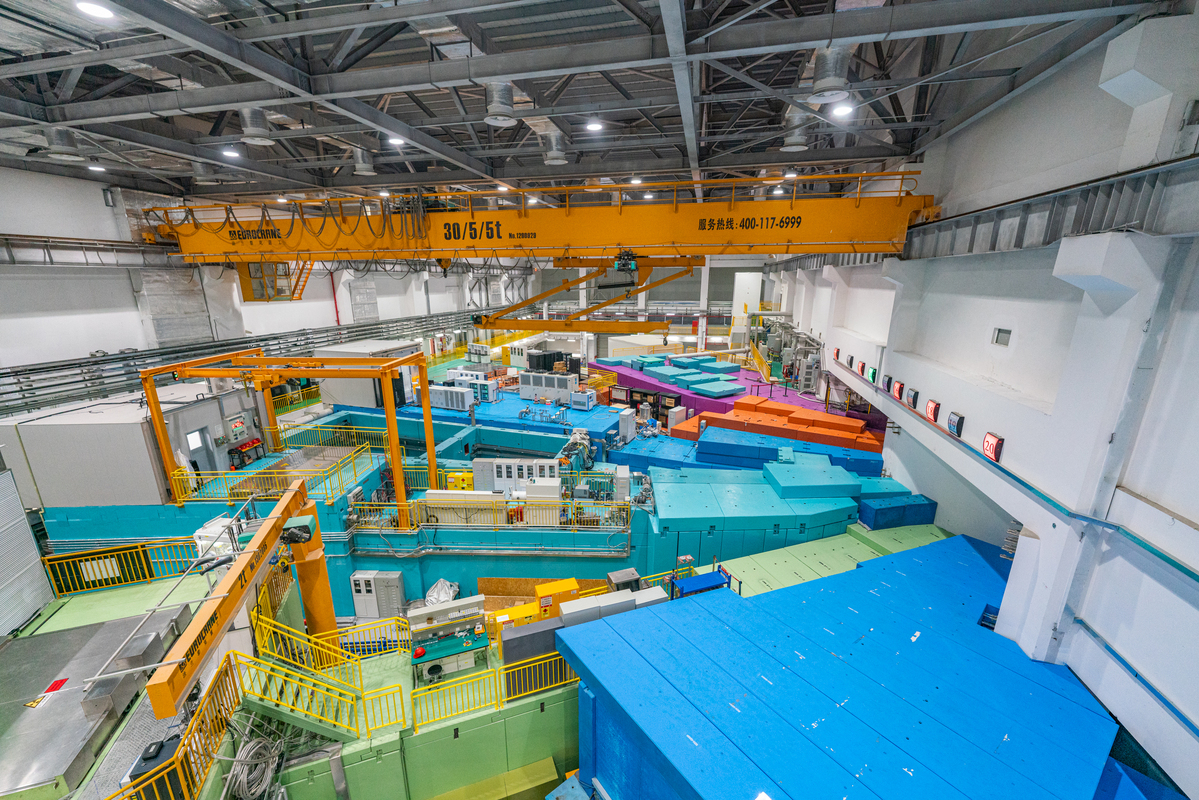
These changes within the CSNS reflect a broader trend of accelerating the industrialization of the nation's major scientific and technological infrastructure, commonly known as "large scientific facilities". This shift is expected to support enterprises to achieve a quantum leap in research capabilities to explore the previously inconceivable, calculate the previously incomputable, and create what was once deemed impossible.
As the first national-level scientific infrastructure operating within the Guangdong-Hong Kong-Macao Greater Bay Area, the CSNS has achieved many outcomes in this area since its launch seven years ago.
It has facilitated improvements in lithium battery performance and shale extraction efficiency; safety checks for airplane engines, as well as for high-speed train wheels.
Making use of the facility, scholars from Hong Kong universities have advanced researches into amorphous alloy materials that can significantly enhance the lifespan of foldable smartphone hinges, as well as creating "super steel", which has set world records for strength, ductility, and toughness.
Technologies developed by the CSNS also led to the birth of its first industrialization project — a boron neutron capture therapy (BNCT) device, an innovation used for radiation treatment that can accurately kill cancer cells, without harming surrounding tissues.
This device began clinical trials at Dongguan People's Hospital in May. If successful, it could be officially implemented by the end of next year.
The second phase of the CSNS is expected to be completed by 2029, which will bring the number of its neutron instruments to 20 and significantly enhance the facility's capabilities to boost industries.
When collaborating with enterprises, Zhang has also noticed a progressively smoother communication process.
"In the initial stages following the CSNS' establishment in 2018, companies often struggled to understand how these theories about the composition of matter could benefit them. It was hard to reach a dialogue and we often needed university professors to act as translators," Zhang says.
The situation has since improved significantly, with many leading companies and startup teams led by university scholars forming a clear understanding of how to harness the facility's considerable power.





