


From beneath the ground rise great stories of ingenuity and defiance









Generations of Chinese people grow up watching the 1965 cinematic classic Tunnel Warfare, a black-and-white film that dramatizes the ingenuity of villagers who fought invaders from beneath the ground. For audiences across the country, the movie was more than entertainment: it offered a vivid portrait of courage and a reminder of the collective resistance during the Chinese People's War of Resistance Against Japanese Aggression (1931-45).
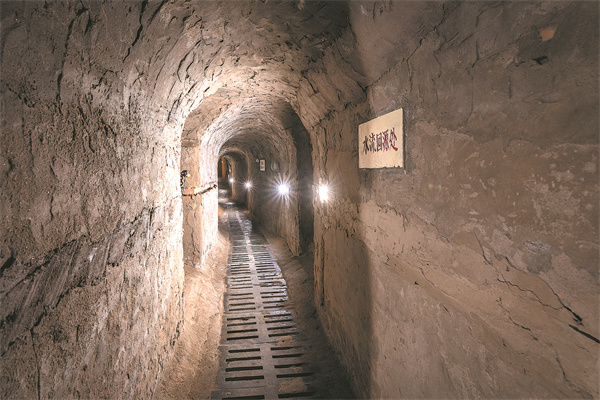
Decades have passed since its release, but the story still echoes underground. In northern China, wartime relics and the tunnels themselves remind visitors that the silver-screen heroes were drawn from real lives.
When 15-year-old student Hou Bohan stoops to enter a narrow passage in Ranzhuang's tunnels, her fingertips brush over the marks on the wall.
"These marks are history left by militiamen and civilians," says the Hebei Dingzhou Middle School student. "In this labyrinth, every scratch tells a story of resistance."
She was exploring what locals call the "Underground Great Wall" — a 16-kilometer tunnel network beneath this northern Chinese village where soldiers and farmers outwitted invaders around 1940.
The Ranzhuang Tunnel Warfare Site, located in Ranzhuang village, Qingyuan district in Baoding, North China's Hebei province, sits approximately 180 km southwest of Beijing.
The site embodies the boundless wisdom and strength of the military and civilians during the war against Japanese aggression.
The tunnels were born out of terror. On July 31, 1939, Japanese forces launched a sudden attack on Ranzhuang, herding villagers to the Sanguan Temple at Nandaqiao, using bayonets to force them to hand over military cadres.