Secondary schooling now compulsory in Malaysia









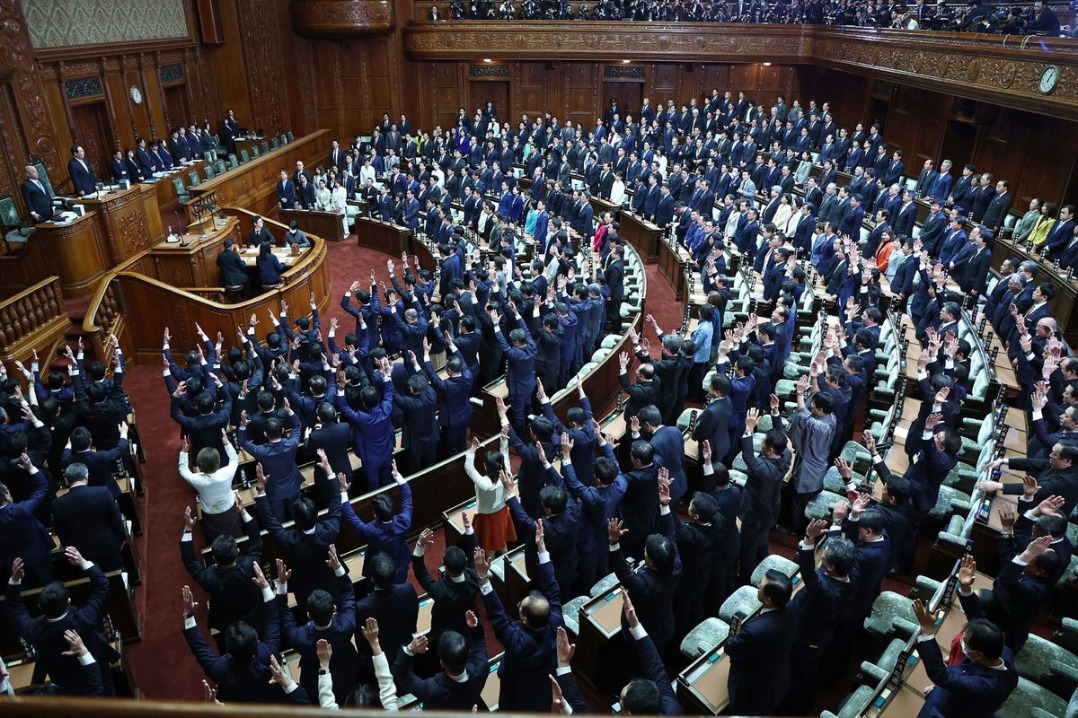
Dewan Rakyat, the federal legislature of Malaysia, passed the Education (Amendment) Bill 2025, which expands the definition of "compulsory education" under the 1996 Education Act to include secondary schooling.
The amendment also introduces a new provision, Section 32A, empowering the education minister to designate secondary education as mandatory for all Malaysian children residing in the country.
It states that parents are legally required to enroll their children in both primary and secondary institutions, unless officially exempted.
Under the new section, parents who fail to do so may face a fine of up to 5,000 Malaysian ringgit ($1180), imprisonment for up to six months, or both upon conviction.
The amendment further outlines penalties for noncompliance and authorizes the minister to make additional regulations related to enforcement and exemptions.
It also revises provisions related to primary school registration, requiring parents to enroll children who have reached the age of 6 by Jan 1 of any given academic year.
Malaysian Education Minister Fadhlina Sidek said on July 30 that the legislation aims to strengthen educational responsibility rather than introducing punitive measures.
"The spirit of this amendment is not about punishment, but about education — to ensure that no child falls behind.
"The government's priority is to foster a sense of responsibility among parents and guardians to ensure their children are enrolled in school, in line to uphold every child's right to education," she said.
She said the ministry is also taking steps to improve awareness among communities and enhance support systems to address issues of dropout and absenteeism.
During the debate earlier, Cha Kee Chin, Member of Parliament for Rasah, welcomed the amendment, calling it "bold, progressive and long overdue".
However, he urged the government to clarify whether the law would apply to children of mixed-nationality parents, children of noncitizen and those in private, Chinese independent or home-school settings.
In response, Fadhlina said home schooling will be considered for exemption on a case-by-case basis, depending on the needs of each child. "I'm open to exploring how we can ensure the justification, space and opportunity for these children without any form of discrimination," she said.
On enforcement, Cha proposed focusing on awareness and outreach rather than punishment.
He said if enforced well, this could boost secondary education certification holding rates and reduce dropout gaps between lower and upper secondary levels.
Addressing the causes
Teresa Kok, Member of Parliament for Seputeh, called on the Education Ministry to address the root causes of student dropouts before enforcing amendments to make secondary education compulsory.
"Many students leave school due to poverty, family problems or lack of interest in academics," she said. Kok warned that penalizing low-income parents is unjust and burdensome.
She also questioned how the law would apply to home-schooled children, slow learners and those in private institutions. "Reform should focus on curriculum and school improvements, not just legal punishment," she said, adding that slow learners should be allowed to repeat a year to catch up.
On concerns about poverty, Fadhlina Sidek stressed that the ministry had taken the matter into account and would prioritize support over punishment.
"Punitive measures are not the core of this bill — our focus is on providing assistance, including 18 forms of aid such as scholarships and school-related support like uniforms, to ensure children remain in school," she said.
Radzi Jidin, Member of Parliament for Putrajaya, called for clarity on how the amendment will affect students in unregistered private institutions.
"Will these students automatically be exempted under Section 32A (3), or must parents apply individually?" he asked, referring to a provision that allows the minister to exempt any pupil or group of pupils from compulsory education, either fully or conditionally, by announcing an official order.
On this, Fadhlina said all registered private institutions, including religious schools, are subject to the provisions of the Education (Amendment) Bill 2025.
"We are engaging with unregistered institutions to encourage them to register so we can implement a standard curriculum and address issues like bullying — if they remain unregistered, the legal responsibility will fall on parents, and that's a concern we're working to resolve," she said.
The Star, Malaysia