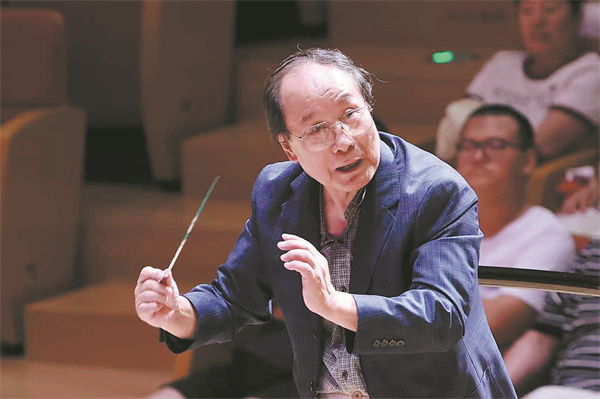
At the opening ceremony of the 20th World Saxophone Congress in late July, as a melody filled the venue, 57-year-old Yin Zhifa was swept back to a distant morning in 1976 when he first caught sight of a shimmering saxophone.
Little did he know then that over the next five decades, he would travel across China with his saxophone in hand, bringing fresh melodies to countless listeners.
Yin is a veteran saxophonist who serves as president of the professional saxophone committee of the China Popular Music Association.
He vividly recalls seeing a saxophone for the first time at a public performance when he was 8. "The golden gleam of its brass body and its vibrant, soaring melody instantly captivated me."
Yin began formal training at 9 and joined a local performance troupe at 17, becoming one of China's few saxophonists at that time.
Back then, the saxophone still carried an air of mystery in China. While it occasionally appeared in military honor guard shows or parades, for most people it remained a rare and exotic import from the distant West.
"Only a handful of factory and school bands had saxophones. It looked and sounded incredible, so I worked hard to learn it," Yin says, adding that a light music tape released in 1982 helped introduce the instrument to a wider audience in China.
Recorded by a Beijing-based orchestra, the tape featured the saxophone as the lead instrument, backed by drums and guitar. Its fresh, vibrant sound soon became a symbol of the country's spirit of opening up since late 1970s.
In 1991, Yin joined the Art Ensemble of the All-China Federation of Trade Unions as a saxophonist. During performances across the country, he noticed audiences responding with growing enthusiasm, often erupting in applause during his saxophone solos.
"That's when I decided to popularize the saxophone among the public, because only with widespread affection can it truly thrive," he says.
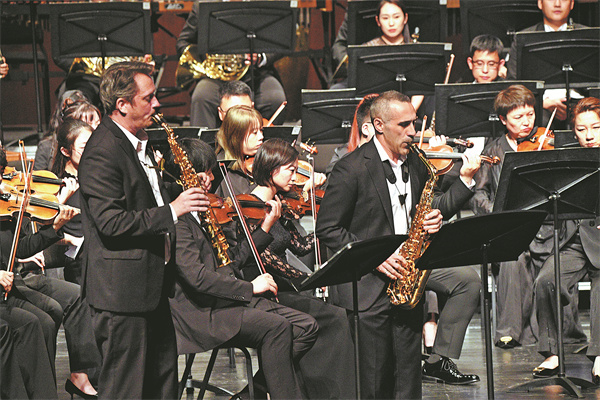
Over the next three decades, Yin's life would mirror the saxophone's growing popularity in China.
In 1993, he compiled China's first saxophone grading exam textbook, laying the foundation for a standardized evaluation system. Thanks to Yin's persistent advocacy, institutions like the Central Conservatory of Music began launching saxophone programs from 1997 onward, formally introducing the Western instrument into China's higher music education.
"At first, many thought it lacked roots in traditional Chinese instruments, but music knows no borders. A beautiful melody always resonates," Yin says, noting how the iconic piece Going Home sparked a nationwide craze.
In 2002, American saxophonist Kenny G performed Going Home in China, and its tapes and CDs quickly became a "signature melody" heard in shopping malls, school halls and even over park loudspeakers.
"Emphasizing family bonds in traditional culture, Chinese people hold a special connection to the idea of 'returning home', making the name and melody deeply resonate with our emotions," says Yin Shenghua, Yin Zhifa's daughter and a young saxophonist.
Having grown up watching her father promote the instrument, the junior Yin was struck by a deep passion for it after returning from her studies in France.
She observed retired seniors practicing in groups with speakers in Beijing parks, and many 5-year-olds attending saxophone classes in Harbin, the capital of Northeast China's Heilongjiang province.
According to the CPMA, there are now approximately 800,000 people learning to play the saxophone in China.
To further promote the saxophone's popularity, Yin Zhifa compiled simplified notation textbooks for middle-aged and elderly enthusiasts and encouraged manufacturers to produce smaller instruments tailored for children.
For him, the saxophone has been more than a source of joy for Chinese music lovers; it has also served as a bridge for cultural exchange.
From July 26 to 31 this year, the World Saxophone Congress was held in China for the first time, drawing musicians from 33 countries to Harbin. Yin Zhifa and fellow saxophonists believe that this gathering of diverse musical ideas and cultural styles has paved a brighter future for the saxophone in China.
The sheer number of saxophonists and the presence of many large saxophone orchestras is a remarkable achievement, says Arno Bornkamp, president of the International Saxophone Committee.
"Though it originated in the West, the saxophone has taken root in China," the senior Yin says.