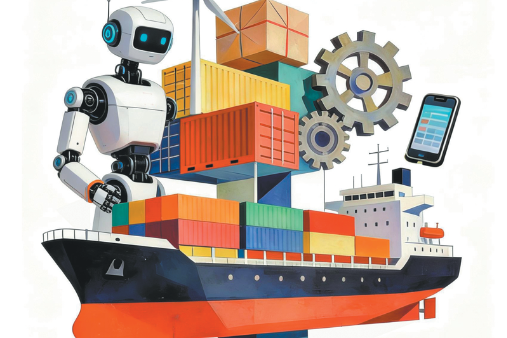
E-commerce growth reshaping Global South










China has found a creative way to manage its e-commerce chain beyond its borders. The impact of Chinese e-commerce on countries of the Global South is visible in more ways than one. In particular, Chinese e-commerce brands have had a huge impact on Peru, my country, within a short span of time.
Temu entered the Peruvian market last year. In less than a year, it is close to becoming the leader in this sector in the country. Data from the Peruvian Chamber of Electronic Commerce (CAPECE in Spanish) show that Chile's Falabella was the most visited marketplace last year, with 22 million page views a month.
Temu was second on the list with 21.9 million page visits — and it achieved that in less than one year. In third place was AliExpress with 16.3 million monthly page views.
CAPECE also said that Shein, another important Chinese marketplace, had increased its presence in Peru in the last quarter of 2024.
I'm pretty sure the situation is similar in other countries of the Global South, with China helping stabilize cross-border e-commerce.
Temu's success can be attributed to its relatively low product prices, special 24-hour services and inbuilt app games that allow you to get even bigger discounts. Temu's success is all the more surprising because it has succeeded in prompting Peruvian people to loosen their purse strings despite their inherent tendency and traditional culture to save. We Peruvians love to say, "el dinero no sobra" (there is no money to spare), because in general, salaries in Peru are low and a good percentage of the country's population is relatively poor.
The most recent data from the National Institute of Statistics and Informatics (INEI in Spanish) show the average monthly salary in 2024 was 1,196 soles ($335) — only a few soles more than the minimum wage in Peru: 1,130 soles (about $317). The amount was increased by Dina Boluarte's government at the beginning of this year.
Also, according to the INEI, 27.6 percent of Peru's population was living in poverty in 2024, with 31.8 percent (about 10.8 million people) being "vulnerable" to poverty, meaning they were in danger of slipping into poverty.
In 2019, that is, before the COVID-19 pandemic, however, only about 20.2 percent of the Peruvian population was living in poverty. This means the pandemic increased the number of poor in the country.
But what do e-commerce platforms such as Temu, AliExpress and Shein have to do with all this? These platforms offer inexpensive products, often with discounts, which the poor Peruvians can afford to buy to meet their needs. In fact, they offer a variety of products, some of which Peruvians might not have seen before.
The growth of Chinese cross-border e-commerce in the Global South is difficult to estimate, but there is no doubt they are continuing to grow — and Peru is proof of that.
The Chancay Port, built by China COSCO Shipping Corporation under the framework of the Belt and Road Initiative, was inaugurated in November last year, with Chinese President Xi Jinping attending the inauguration ceremony. The port is set to revolutionize trade in the Asia-Pacific region, especially between South America and Asia, by significantly reducing transit time and costs. For example, it has significantly reduced shipping time between Peru and Shanghai.
As a matter of fact, Sunat, which is the Peruvian tax and customs authority, reported that the revenue from merchandise shipping at the Chancay Port in the first five months of 2025 was more than $777 million. Sunat also said that between January and May, 4,552 export declarations were processed, of which 71 percent were from the Netherlands, Spain, the United States, Chile and China.
The initial reports on Chancay Port's impact suggest it is on way to becoming a shipping hub and distribution center for all of South America. Temu, AliExpress and Shein can take advantage of this development to expand their businesses in this part of the world.

The views don't necessarily reflect those of China Daily.
If you have a specific expertise, or would like to share your thought about our stories, then send us your writings at opinion@chinadaily.com.cn, and comment@chinadaily.com.cn.