



Weather forecasting can meet the challenges









Editor's Note: In recent years, extreme weather events have become increasingly frequent. In a recent interview with Xinhua, Jin Ronghua, director-general of the National Meteorological Center of China Meteorological Administration, explained the reasons behind the surge in extreme weather events, changes in weather patterns and why weather forecasts may sometimes appear inaccurate. Following are excerpts from the interview. The views don't necessarily represent those of China Daily.
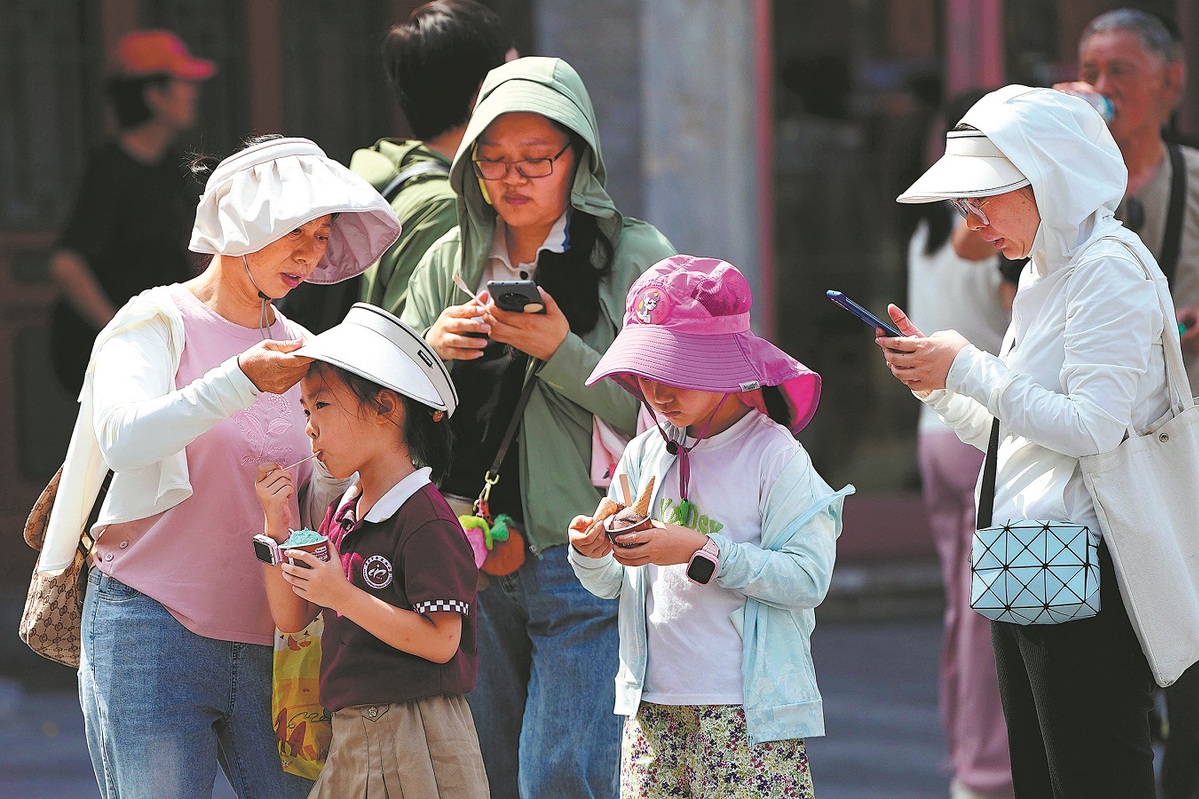
In summer, due to the influence of the subtropical high, large parts of China often experience hot weather. This year, the subtropical high has strengthened. At the same time, the continental high has also been more active, often leading to clear and sunny conditions. Together, these two systems have contributed to widespread abnormal high temperatures across the country.
High temperatures are normal in summer. However, in late June, the northeastern region, especially parts of Heilongjiang, experienced temperatures above 35 C, which was indeed unusual. In some areas, the temperatures even broke historical records since meteorological data began to be recorded in 1961.
In addition, global warming is also a contributing factor to the rise in summer temperatures. Compared with the past, the intensity, duration, extent and frequency of high-temperature events are all likely to increase.
Extreme weather is defined in relation to the climatic average. Against the backdrop of global warming, atmospheric fluctuations have become more intense, leading to more deviations from the climatic norm. This, in turn, makes extreme weather events more likely to occur.
Over the past 20 years, both the trend and degree of global warming have intensified. As a result, extreme weather events are not only happening more frequently, but are also becoming more severe.
To respond to these challenges, China's meteorological departments have established a comprehensive three-dimensional monitoring network that covers the sky, space and ground. This includes eight Fengyun meteorological satellites in orbit, over 500 weather radars and more than 90,000 ground observation stations, enabling close monitoring of various weather phenomena and disasters.
This system is among the most advanced in the world. However, some weather events, like tornadoes, are very sudden, short-lived and extremely localized, making them difficult to detect and monitor accurately.
The National Meteorological Center issues warnings for 14 types of extreme weather, including typhoons, heavy rainfall, severe convective storms, freezing conditions, cold waves, high temperatures, sandstorms and dense fog. The lead time for issuing warnings varies depending on the type of weather. For systematic events like cold waves and heatwaves, forecasts can be made up to seven days in advance, with warnings typically issued two to three days before the event happens. In contrast, phenomena like severe convective storms and heavy rainfall are more complex in origin and require more cautious analysis, so warnings are generally issued one day in advance.
Ultimately, weather forecasting is a predictive science, and forecasters are constantly working to improve accuracy. In most cases, weather assessments are accurate. As global warming continues, forecasters are facing more and more challenges.
Yet, with an advanced observation system in place and the empowering capabilities of artificial intelligence, meteorological departments in China are expected to meet future challenges. They are confident of providing improved services to the public and various sectors in the future.





