


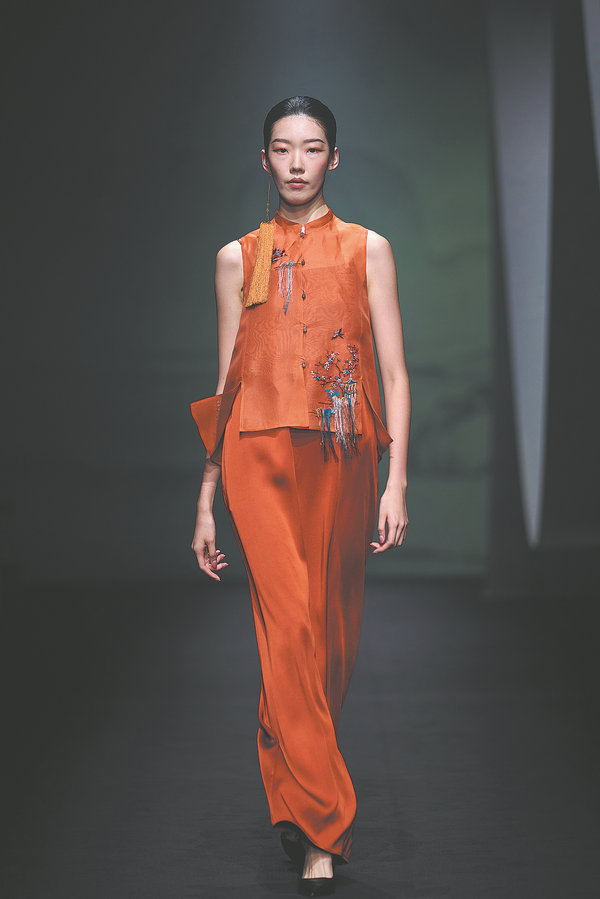
Journey through history
The qipao, a quintessential symbol of Chinese attire revered in modern times, has journeyed through history influenced by diverse cultures such as the nomadic traditions of the Manchu and Mongolian ethnic groups, Han culture, and modern Western influences.
However, in its transition into the modern era, the Shanghai-style qipao played a crucial role. As described in the book The History of Chinese Qipao Culture by Professor Liu Yu from Donghua University: "Shanghai-style qipao epitomizes the qipao of the early 1900s. If we dare to go further, we could assume that modern qipao, or qipao in the narrow sense, is essentially Shanghai-style. This is because, in the minds of most people, the term 'qipao' evokes images of Shanghai-style qipao from the 1930s and 40s."
In the early 1920s, female students in Shanghai sparked a fashion revolution by adopting qipao and breaking away from traditional norms. Born from the open social ethos of the time and Shanghai's unique geographic and cultural landscape, the Shanghai-style qipao emerged as a new genre of fashion and an ideological statement.
"Initially unadorned, loosely cut, and resembling Han men's robes, the Shanghai-style qipao served as a 'battle robe' inspired by men's attire," explains Liu, a scholar specializing in Shanghai-style qipao. It was a cry for gender equality, expressing inner aspirations through an outward appearance — a symbol of female independence and liberation."
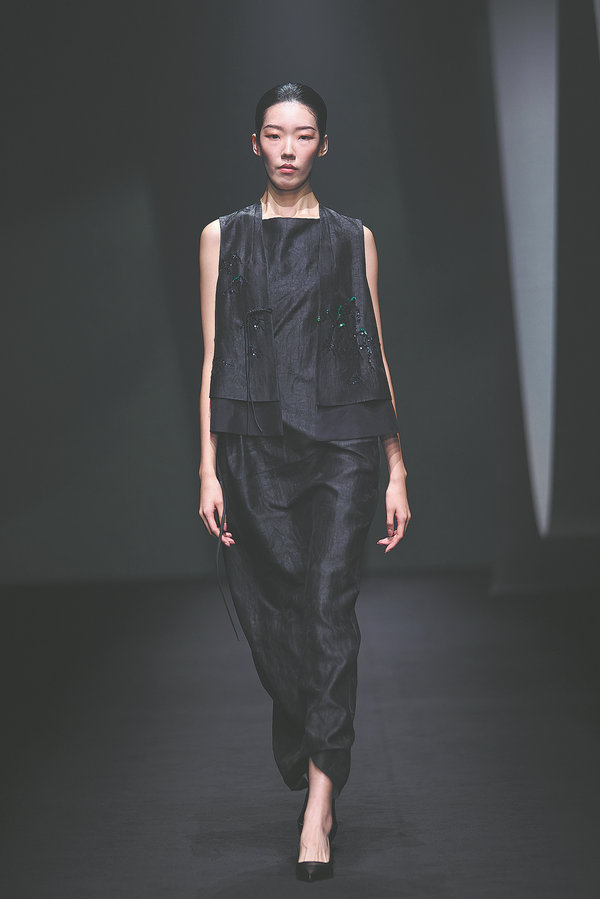
This boundary-breaking spirit established the "East-meets-West" foundation of the Shanghai-style qipao's aesthetic. While preserving six intangible cultural heritage crafting methods — binding, insertion, piping, decorative edging, frog closures, and embroidery — it introduced three-dimensional Western tailoring, using waist and bust darts to outline the female figure and transform the traditional flat garment into a structured silhouette. These techniques turned the qipao into wearable cultural heritage," Liu notes.
By the 1930s, Shanghai-style qipao had pushed this fusion to new heights: high collars paired with ruffled edges, long hems with short jackets, and imported georgette fabric contrasted with traditional Yunjin brocade.
"Shanghai-style qipao exhibited stable yet ever-changing varieties, with constant fluctuations in length and collar height — any oversight could easily lead to obsolescence," Liu observes. This keen sense of trends made Shanghai the "Oriental Paris" in fashion, transforming the qipao from an elite garment into a universal fashion trend. As seen in old photographs, both celebrities and factory workers wore qipao to express individuality, making it a symbol of both cosmopolitan glamor and everyday urban life.





