Cultural identity
Singaporean author traces the evolution of Singaporean Chinese names









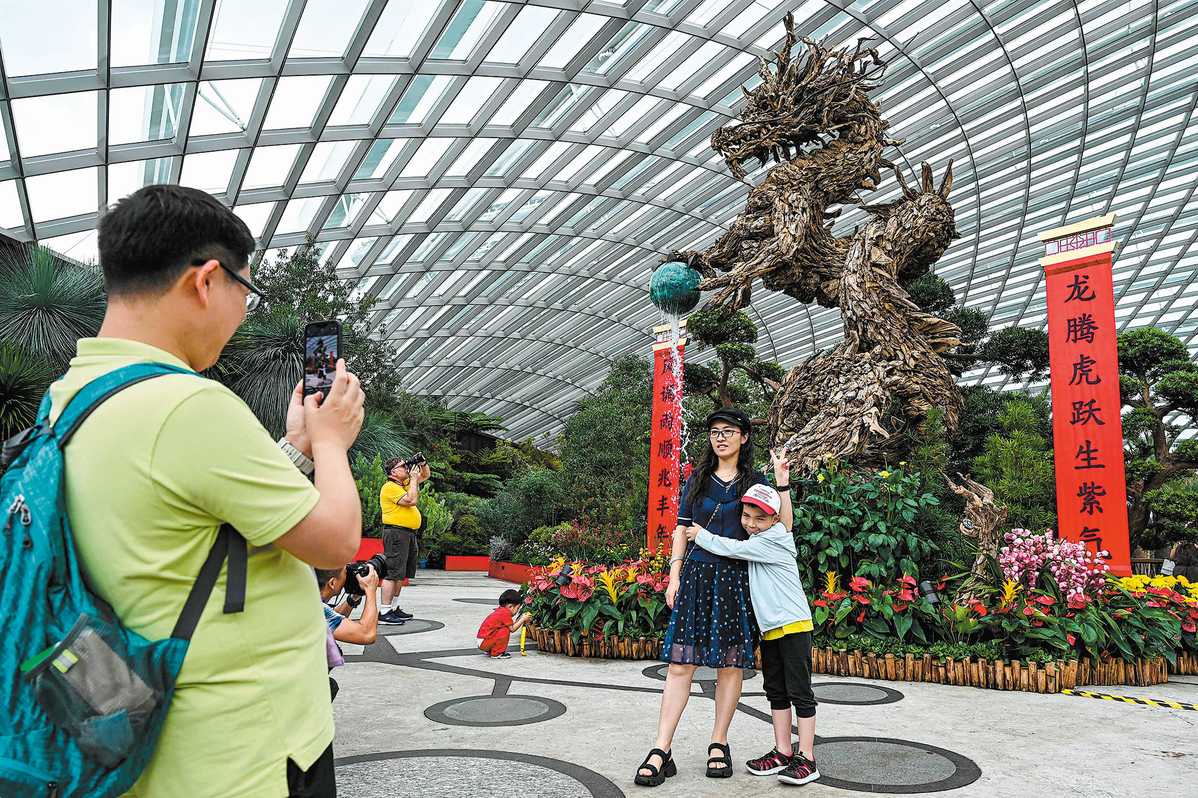
In 1981, pinyin names were introduced in pre-primary and Primary 1 classes in Singapore, where pupils were told to write their pinyin names with dialect names.
Lee said: "Pinyin offered a consistent and standardized system for romanizing Chinese names and proved useful for administrative purposes such as school registration, ICs and passports."
This policy was later reversed in 1991, when the Ministry of Education of Singapore allowed the use of dialect surnames from the following year, but its effects were long-lasting.
Lee said that since then, a wider range of naming conventions has emerged.
"Today, we see full pinyin names (for example, Li Weixiong), traditional dialect romanization (for example, Lee Wee Heong), and hybrid forms combining dialect surnames with pinyin given names (for example, Lee Weixiong)," he said.
Some choose to register both dialect and pinyin names, with the latter being reflected in brackets in official records.
Chua Sioh Ling, 54, is one such example. Although her birth certificate lists only her dialect name, her identity card reads "Chua Sioh Ling (Cai Xiaoling)".
This has, however, led to some confusion when filling in documents or booking flights as she is constantly unsure of which name to use.
Another Singaporean, Lee Xuan Jin, 25, has both his dialect and pinyin name — Li Xuanjin — recorded on his birth certificate.
His parents followed the format used for Lee's father, whose name includes the pinyin version in brackets, but opted to name their son in pinyin instead of dialect.
In school, Lee typically wrote his name as "Lee Xuan Jin", though he once experimented in primary school by using "Xuanjin", as he thought it looked more "stylistic".
Among younger Chinese Singaporeans, Shiau has observed that some no longer include their Chinese names in the English portion of their birth certificate.
Shanice Hoo, 22, is a case in point. Although her father has a dialect name, he chose a simple and recognizable name for her. Hence, her identity card lists only "Shanice Hoo" in English, with her Chinese name appearing only in Chinese characters.