Women find gift of gab in takeover of crosstalk
High-energy, humorous, verbal art form is seeing a surge of female performers










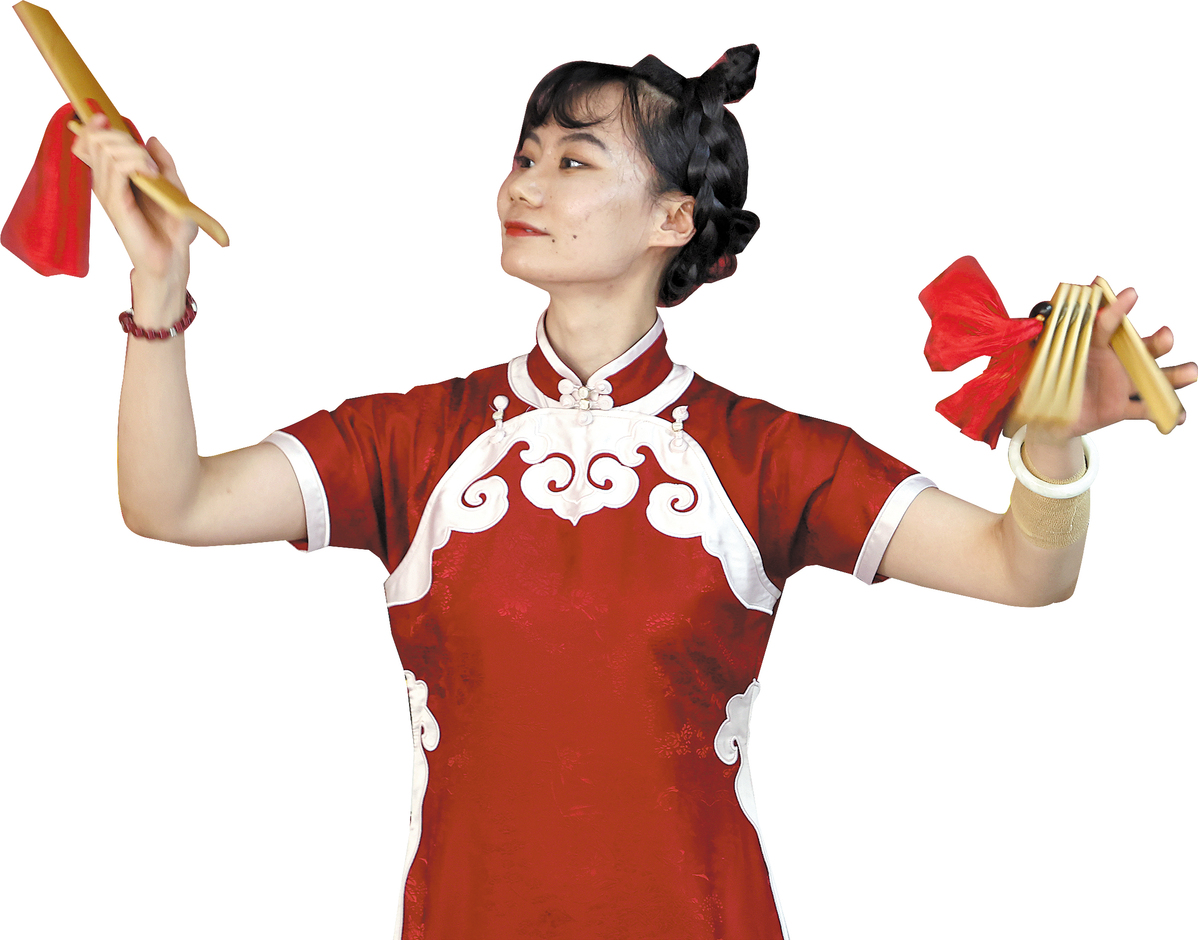
Fresh perspectives
Historically, crosstalk has been a male-dominated art form.
In traditional Chinese society, many forms of public performance — especially those based on humor and satire — were viewed as inappropriate for women.
"Comedy and wit were seen as tied to male identity, and women were expected to take on more 'feminine' roles," said 26-year-old Tang Jinzhu. "That's why men were often the natural fit for comic performances. But I don't agree with that."
Tang had trained to become an athlete before switching career paths about five years ago to become a crosstalk performer.
She believes female performers often stand out by offering a unique perspective that challenges gender norms, and they present fresh takes on topics that resonate with both men and women. Women in crosstalk today are not only gaining in visibility, but are also reshaping the art form, Tang said.
"By showcasing our wit, strong presence, and individuality, many female performers have carved out their own niche in this traditionally male-dominated world," she said.
Another crosstalk performer, Zhao Yuting, 23, said female performers have an advantage when it comes to topics that seem more authentic and relatable from a woman's perspective.
"For example, issues like the obsession with limited-edition lipsticks, awkward blind dates arranged by relatives, or the long queues at popular scenic spots — these topics are very well received by female audiences because we've lived through them," Zhao said. "The tone is often self-mocking, and the audience feels seen and validated."
Zhao became interested in crosstalk after watching shows on TV when she was a child. She made her debut in Beijing last summer, performing Kua Zhu Zhai, a classic crosstalk piece that highlights guan kou, a traditional technique that involves rapid-fire delivery of words without pauses.
The performer strings together words, sounds, and sometimes nonsensical syllables, creating a rhythm that's almost musical. The technique is known for its precision and the ability to engage the audience with speed and rhythm.
"I was so nervous my hands were trembling," Zhao recalled. "The piece I was performing was one of the first guan kou pieces I learned. I practiced it thousands of times. But when I was on stage, I couldn't finish it. The audience was very forgiving, though, and some young women in the front row even clapped for me when I forgot my lines. That helped me stay calm and continue."
Earning respect
Despite the differences between male and female crosstalk performers, both male and female artists dedicate themselves to mastering timing, delivery, and wordplay — essential skills for success in this art form.
Xu Hongyu, 32, another female performer, added that the training involves studying traditional scripts, refining verbal dexterity, and developing a personal style. She emphasized that persistence is the key to mastering crosstalk.
Xu, who made her stage debut in 2017, was introduced to crosstalk by her grandfather, a fan of the art form. Although she initially studied architecture, she chose to pursue crosstalk because it made her genuinely happy.
"I enjoy expressing myself on stage and connecting with the audience," said Xu.
However, there's still a lingering belief that women aren't as funny as men, especially in traditional art forms like crosstalk, she said. This bias sometimes leads to a lack of respect or acceptance from audiences, who may view female performers as less skilled.
Xu recalled one awkward experience when her performance received little laughter from the audience.
"But I'm a positive person," she said. "Overcoming criticism and societal expectations is part of the journey for both male and female performers. There are times when the audience doesn't laugh, but that's part of learning and growing as a performer."
Liu Yan, 23, who left a career in preschool education to become a crosstalk performer, shared a similar experience. "When I first performed, there were only four people in the audience. It was so quiet I almost cried. But I gave it my all, even though I didn't get the laughs I was hoping for."