



Green transition
Cooperation between China and Central and Eastern European countries may help the region bridge the gaps with other EU members









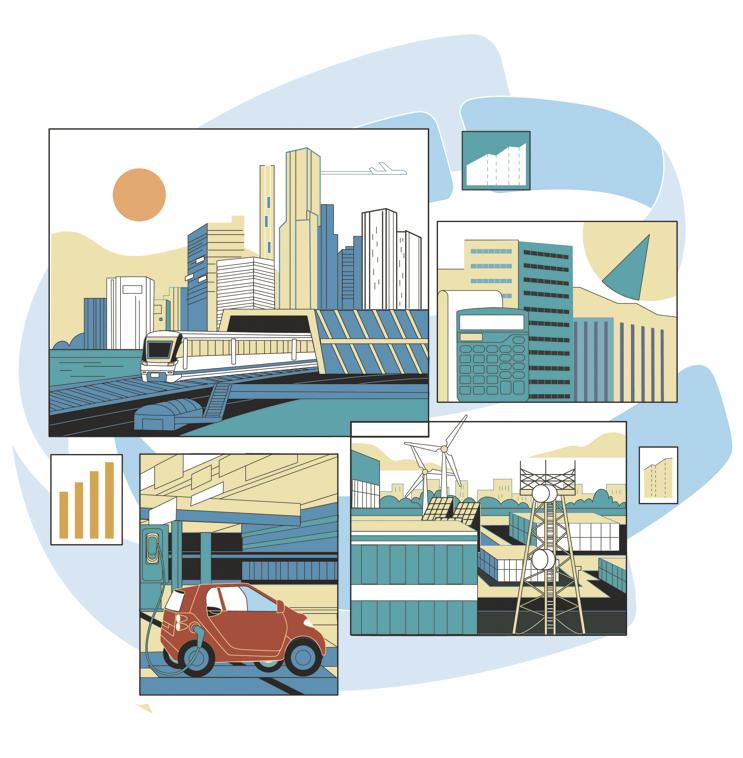
Europe is a leading advocate and pioneer in addressing global climate change issues and advancing the green transition. The European Green Deal (2019) sets out the European Commission's explicit goal of establishing Europe as the world's first climate-neutral continent by 2050. Despite current geopolitical complexities impeding progress, the European Union's commitment to this vital transformation remains unwavering.
The path to a green transition presents greater challenges for Central and Eastern European countries compared with their Western European counterparts. The foremost obstacle is the scale of investment required, which is particularly challenging given the region's significantly lower economic and income levels. As of the end of 2023, Slovenia, the wealthiest CEEC nation, reached only 74.3 percent of the EU's average in per capita GDP, and five other CEEC members recorded even below 50 percent, reflecting a persistent gap with Western Europe. Furthermore, CEEC members generally lack the critical green and digital technologies needed for transition, making external cooperation essential to achieve their goals.
The economic structure of the CEEC region is more heavily loaded toward industry compared with Western Europe. According to the World Bank's World Development Indicators, in 2023, with the exception of Croatia, Estonia, Latvia and Bulgaria, the industrial value added of other CEEC members, which are also EU members, exceeded the EU's average. Notably, Slovakia, the Czech Republic and Poland all had industrial value added exceeding 30 percent of their GDP. This industrial prominence means that the EU's climate goals and green transition will have a more pronounced impact on the economies of CEEC members.
Moreover, CEEC members have a higher dependency on traditional fossil fuels, particularly coal. A study by the European Commission Joint Research Center highlighted that the closure of coal mines and power plants in CEEC members would result in significant job losses that would be difficult to offset with new employment opportunities created by clean energy development and improved energy efficiency.
Given these challenges, the attitude of CEEC members such as Poland and Hungary toward the green transition is markedly less proactive than that of developed EU member states such as Germany. There is widespread concern among CEEC members that the EU's climate ambitions and the green transition could disrupt their efforts to catch up with Western Europe or even widen the existing gap with Western European states. The United States' withdrawal from the Paris Agreement underscored the imperative for China and the EU — as leading global powers — to align strategically and deepen cooperation on green transition. Nevertheless, their partnership confronts notable obstacles, chief among them being a lack of sufficient strategic trust. The EU's formal designation of China as a "systemic rival" and its focus on "de-risking" have impeded collaborative progress.
Crucially, China and the EU share far more common interests than differences, particularly in climate action and green transformation — areas where their stakes are profoundly aligned. Within the China-EU green cooperation framework, China's collaboration with the members of the CEEC in green sectors not only alleviates financial constraints, overcomes technological hurdles and accelerates transition timelines, but also enables these nations to secure competitive positions within Europe's burgeoning green industry chain. This dynamic bridges the development gap with Western Europe while advancing the EU's broader integration agenda.
Since the establishment of the China-CEEC cooperation mechanism in 2012, green collaboration has emerged as a central growth driver within the partnership. Renewable energy and the new energy vehicle industry chain constitute the two primary pillars of this green cooperation. Driven by European climate goals, CEEC members have set ambitious renewable energy targets for 2030, generating substantial demand. Bilateral cooperation in renewable energy focuses primarily on engineering and construction projects, with significant growth in joint investments within wind and solar power sectors in recent years.
To date, China has successfully delivered multiple renewable energy projects, including wind, hydro and solar power plants and waste-to-energy facilities in CEEC members such as Bosnia and Herzegovina, Croatia, North Macedonia, Montenegro, Greece and Hungary. These projects have not only effectively addressed local electricity shortages and accelerated energy structure upgrades but also boosted employment and economic growth, receiving broad recognition from local communities.
Cooperation in the new energy vehicle industry chain stands as a defining feature of China-CEEC collaboration. Notably, it became the largest sector for Chinese investment in Europe, absorbing 69 percent of all Chinese capital flows into Europe in 2023. This shift has propelled Hungary to surpass Germany as Europe's top destination for Chinese investment since 2022. Industry giants such as electric vehicle battery provider Contemporary Amperex Technology Co Ltd and EV maker BYD have announced major factory investments in Hungary since 2022, generating significant employment, advancing industrial upgrading, and transforming the country's automotive competitiveness — demonstrating how green transition challenges can be converted into strategic opportunities.
Within the realm of green finance, China and CEEC members are actively exploring new cooperative avenues. Moving beyond green credit, they have co-financed green infrastructure projects in the CEEC region via institutions such as the Asian Infrastructure Investment Bank and the European Bank for Reconstruction and Development. Furthermore, the two sides have advanced cooperation in issuing green financial bonds. A landmark event occurred in late 2021 when Hungary successfully issued 1 billion yuan ($139.4 million) in green panda bonds within China's interbank bond market. This issuance marked the inaugural offering of sovereign green panda bonds in China by a foreign sovereign state.

The author is an assistant research fellow at the Institute of Russian, East European and Central Asian Studies at the Chinese Academy of Social Sciences. The author contributed this article to China Watch, a think tank powered by China Daily. The views do not necessarily reflect those of China Daily.
Contact the editor at editor@chinawatch.cn.





