Gaokao not only way to be successful in life









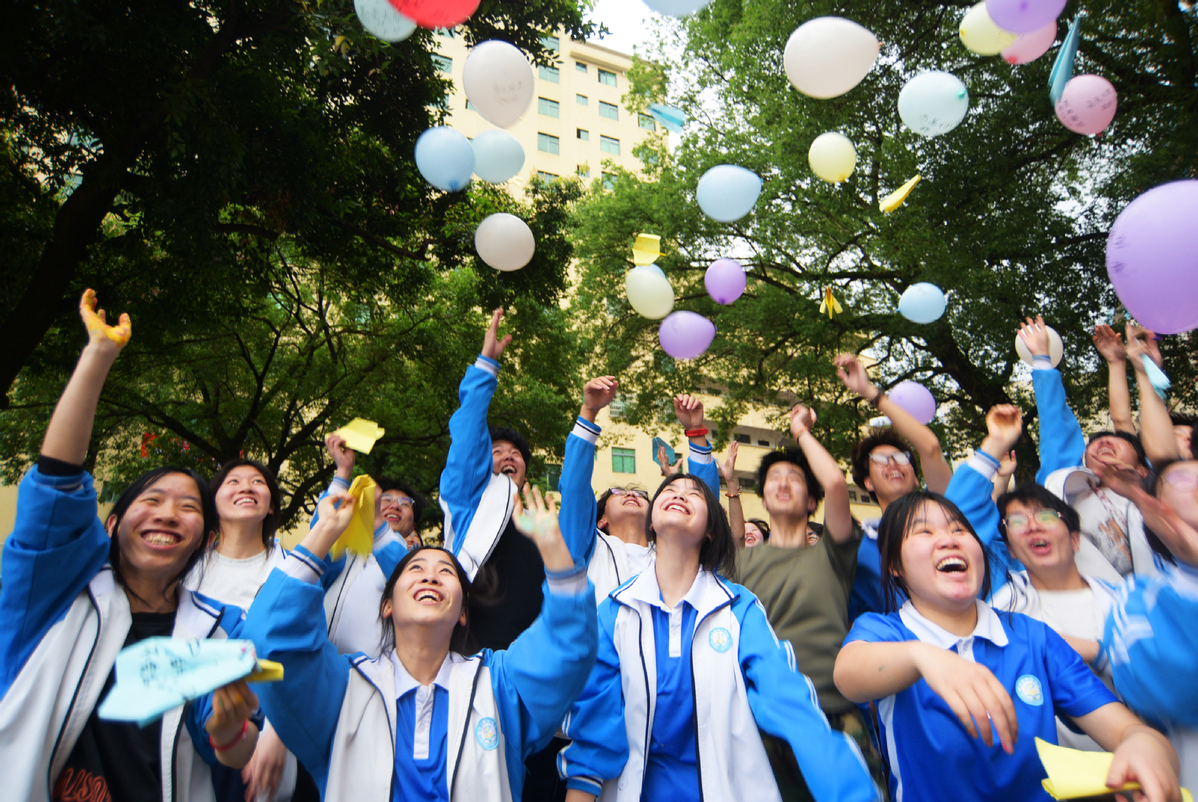
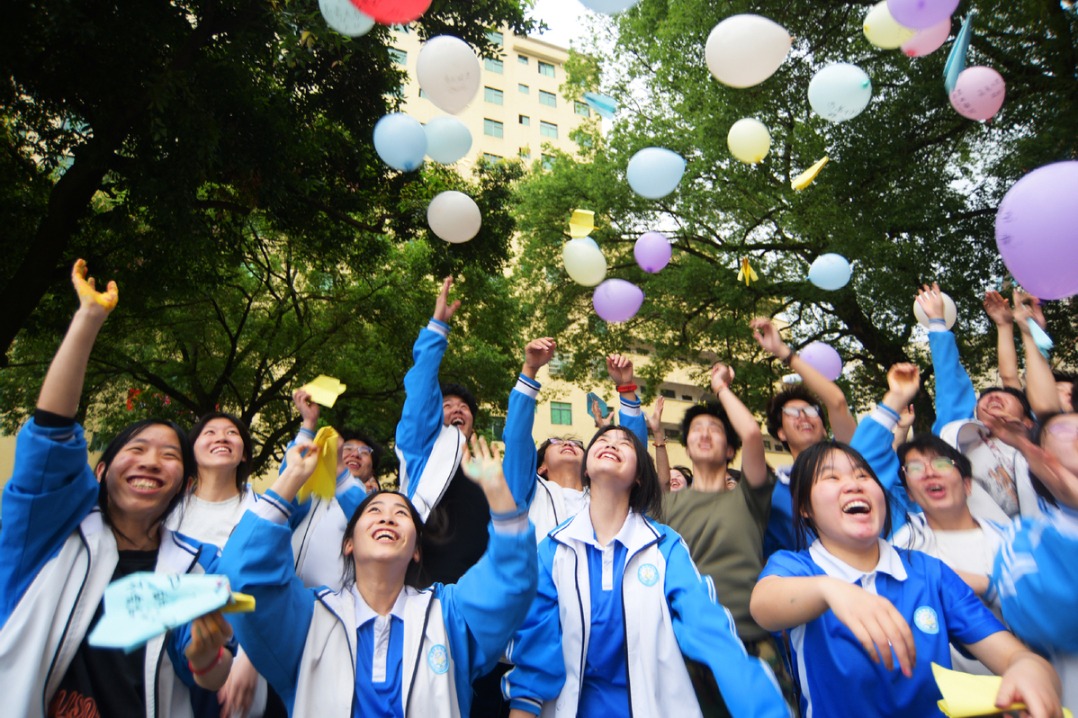
It's that time of the year when college and university admission letters make their way to hopeful students. Interestingly, the heat surrounding gaokao, or the college entrance exam, seems to have cooled off a bit this year, perhaps paving the way for some cooler heads and wittier thoughts to prevail.
The number of students registered for gaokao this year declined to 13.35 million — 70,000 fewer than in 2024. It's the first such decline since 2018.
One of the important reasons for this decline is the reduction in the number of candidates of eligible age. This year, most of the participants taking gaokao were born in 2006 or 2007, and the number of births in these two years was lower compared with the preceding years. What's more, with the advancement of the new gaokao reform and the diversification of admission methods, the proportion of students taking gaokao in some regions has decreased.
Despite these reasons, this development also reflects the shift in how Chinese society views education and job opportunities.
The conclusion of gaokao merely marks the beginning of another critical journey for students. The subjects they choose to major in demand prudent consideration, and their choice directly shapes their career prospects and future.
For more than four decades, gaokao has been a symbol of upward social mobility in China. Since its revival in 1977, more than 180 million students have been admitted to universities through the gaokao system. Yet the number of individuals who actually climb up the socioeconomic ladder after clearing gaokao and graduating from a university is limited. In contrast, the broader marketplace — through entrepreneurship, employment and capital — offers far greater opportunities for upward social mobility.
Still, public faith in gaokao as a "fair and reliable" path to success far outweighs people's belief in the market's potential.
Why does this narrow but high stakes exam continue to command such devotion, even as its practical payoff in the job market diminishes?
Deeply rooted ideas like "knowledge fetches rank", "study hard to rise above others", and "reading is the noblest pursuit" still shape many families' perception of education. These beliefs, steeped in a hierarchical world-view, drive millions of students to pin their hopes on gaokao, even as the economic returns on college degrees shrink.
Compare an exam room to the marketplace. Gaokao is orderly, predictable, and offers a clear reward structure — if you study hard and secure good scores, you will get admission to a good university. The market, in contrast, is chaotic and risky, but often far more rewarding for those who succeed. The exam is like an elevator in a multistory building; it lifts you upward within a fixed structure. But the market is more like a wideopen plain — harder to navigate, but with immense possibilities.
As the competition for jobs tightens, the limitations of the gaokao model are becoming increasingly apparent. A college degree is no longer a guarantee for a job.
So why are so many students still taking part in this high-pressure game? Simply because belief is a powerful force.
Gaokao is still rooted in exams, ranking and selection. This obsession with scores puts students, parents and schools alike in a situation where they face ever-escalating pressure with diminishing returns.
It's time to step back and ask: What is education really for?
To become a truly educational powerhouse, China should reform the education system beyond the exam-centric model and adopt a more human-centered approach, which means making the public understand that evaluation is not just about measuring knowledge, but also about nurturing character and unleashing potential. We must abandon our outdated beliefs and build a system that values different forms of achievements, creativity and emotional intelligence.
A modern education system should have multiple channels to achieve social mobility. It should support both those who thrive in the market as well as those who excel in academics. It should not allow rigid exams to prevent youths from realizing their dreams.
After all, every major leap forward in history has begun with a revolution in thought. And the future belongs not to those who simply secure excellent scores, but to those who can think, adapt to changes, and create.
The author is a senior researcher at the China National Academy of Educational Sciences. The views don't necessarily represent those of China Daily.
If you have a specific expertise, or would like to share your thought about our stories, then send us your writings at opinion@chinadaily.com.cn, and comment@chinadaily.com.cn.