



Growth target of 5% achievable despite trade uncertainties
'Exports aren't the only engine'; realty, consumption underlined as key drivers









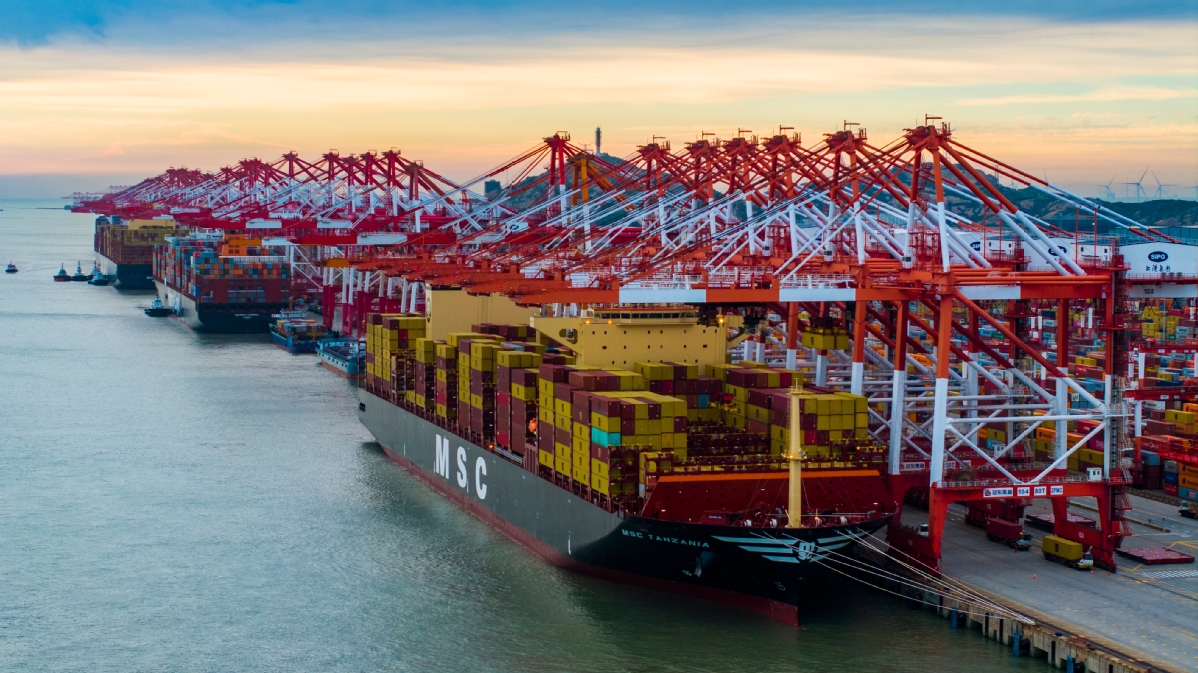
China's 2025 growth target of around 5 percent remains achievable despite major trade disruptions, while a sustained recovery will hinge on structural reforms to bolster consumer confidence and unlock long-term growth potential, said a renowned expert.
"As long as tariffs stay at current levels and trade tensions don't escalate, it's reasonable to expect growth to come close to that 5 percent target," said Ben Simpfendorfer, a partner at consultancy Oliver Wyman. "Exports aren't the only engine — real estate and consumer spending also play key roles."
Data from the National Bureau of Statistics showed China's retail sales grew 6.4 percent year-on-year in May compared with a 5.1 percent rise in April, the fastest pace since late 2023.
With consumer figures improving in the short term, much of the recent support has come from the trade-in deals for consumer goods, but Simpfendorfer cautioned against relying too heavily on such tools.
"They do play a role and there is short-term influence, but it's not a medium-term driver of consumer spending," he said during a recent exclusive interview with China Daily. "Ultimately, what we need to see is sustained recovery in consumer confidence, but equally, the types of structural reforms that would provide consumers with the confidence to spend."
These reforms, he suggested, could include "more support for education expenses, health expenses, a stronger social safety net so that lower-middle-income households feel confident in the outlook and confident enough to spend".
Looking into the second half of the year, Simpfendorfer said that "while the challenges may not be greater, they still exist".
As such, he expects Beijing to remain measured in its fiscal response. "Fiscal measures are important, but I wouldn't expect the government to turn on its full fiscal firepower. It does need to conserve money for future risks, so it will be modest," he said.
Simpfendorfer described China's current recovery path as "a marathon, not a sprint", seeing a medium-term transformation underway.
"It means a transition or evolution from being a purely manufacturing hub into an innovation hub, ensuring that artificial intelligence is wired into all parts of the economy to improve efficiency and productivity," he said. "Combine that with stronger consumer sentiment and stabilization in the property market and all of a sudden, you have the conditions for a much stronger recovery. That's a multi-year story, not a multi-quarter story."
The property sector, a drag on China's growth, may be nearing a turning point.
"We haven't yet reached the bottom, but we're getting very close," Simpfendorfer said. "The government is now taking quite reasonable measures to support the property sector without providing excessive support that would only contribute to future imbalances."
He added, "It may take at least another year or more until we get there, but for now the property sector is no longer such a drag on growth that it was in previous years."
On the consumption front, Simpfendorfer said boosting demand for services — rather than just goods — would be key to unlocking China's vast consumer potential.
"In most countries, services account for the largest share of consumption — whether that's health, education, tourism or simply going to see a movie," he said. "Strengthening services consumption will be the key to unlocking the Chinese consumer spending."
He also welcomed recent support for tourism and called for broader regulatory efforts to support other service areas like healthcare and education. "It's showing that the regulations are in place to encourage development of the services sector, especially in areas where there may not be full development."
Looking at the next few years, Simpfendorfer believes China's strength lies in its ability to innovate and scale. "The most resilient part of China's economy is the ability of the country to both innovate and build ecosystems around that innovation," he said.
"China will be an anchor for global manufacturing, for global innovation. It will also obviously play an important role in exporting some of these successes to the Global South. The developed world will also find that China remains an important commercial partner for many companies and economies."











