China's experience using tech for urban growth draws adulation









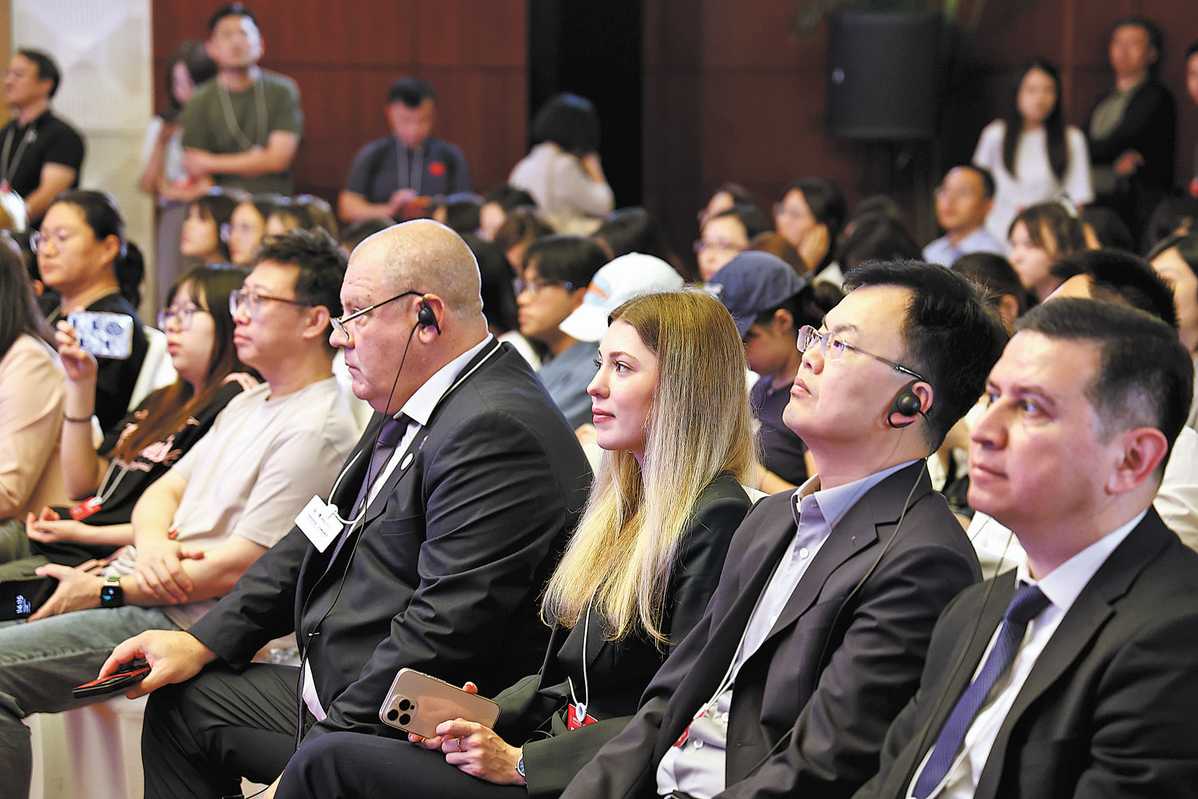
Cities in countries involved in the Shanghai Cooperation Organization are accelerating efforts to use science and technology to drive smarter, more inclusive and resilient urban development — with China's experience and cooperation emerging as a key catalyst in this shared pursuit, officials and experts said on Tuesday.
Speaking at a thematic dialogue among cities of SCO member states in Tianjin, Aleksandra Voronova, a counselor with the division of foreign economic activity at the Moscow Center for International Cooperation, highlighted the potential for deeper and mutually beneficial partnerships between Moscow and Chinese provincial-level regions that serve the long-term interests of all.
Voronova, who has visited China twice, said she was deeply impressed by the remarkable speed at which Chinese cities have embraced technological progress and innovation. She noted that China stands at the forefront of global advances in areas such as high-speed rail development, the rise of the sharing economy and the rapid expansion of internet-based commerce.
Moscow closely follows the experience of Chinese cities in transportation development, healthcare, urban construction and other fields, she said, adding that the Russian capital has signed multiple cooperation agreements with various Chinese cities.
Experts from Moscow frequently visit China to learn from the country's best practices in urban planning and innovation, she added.
Eduard Eduardovich Poletayev, president of the World of Eurasia Public Foundation, stressed that SCO cooperation extends beyond intergovernmental channels to include dynamic city-to-city collaboration.
Megacities, he said, have long been hubs of socioeconomic activity, as well as centers of cultural exchange and drivers of integration.
He cited partnerships between cities such as Xi'an in Shaanxi province or Urumqi in the Xinjiang Uygur autonomous region and Central Asian counterparts as examples of how such cooperation generates mutual benefits at many levels.
Poletayev also underscored the transformative impact that digitalization has had on building smart cities, noting it has optimized daily life and improved the quality of living for residents. He emphasized that China's Belt and Road Initiative targets not only countries but cities, and that SCO cities will remain key engines of economic cooperation.
Sheradil Baktygulov, director of the Institute for World Policy Study in Kyrgyzstan, emphasized the importance of striking a reasonable balance between economic efficiency, social justice and ecological responsibility to achieve sustainable development.
Speaking after his visit to Tianjin's high-tech port and its smart infrastructure, including museums and intelligent building systems, he praised the city as a model for high efficiency, green development and safety, calling it a fitting choice to host the 25th SCO summit.
Baktygulov highlighted the value of expanding horizontal cooperation among cities, regions and countries and called for the joint development of standards, technology exchanges and mutual learning to promote shared progress.
Zhang Zhen, deputy director of the Industry and Planning Research Institute at the China Academy of Information and Communications Technology, outlined how the nation is embedding green, low-carbon principles into its smart city development.
He pointed to Tianjin's innovative use of renewable energy — including solar panels on park benches and streetlights — and the city's development of a digital platform that integrates big data, cloud computing, the internet of things and artificial intelligence to manage urban renewal sustainably throughout its life cycle.
"We stand ready to work with SCO cities to deepen cooperation on smart cities, promote technology transfer, talent exchange and joint projects, and ensure that the benefits of digitalization reach more people," Zhang said.
Sherzod Fayziev, deputy director of the International Institute for Central Asia in Uzbekistan, said that Central Asia's transformation into a more cohesive, dynamic and open region is becoming a key force in driving the SCO's consolidation and expansion.
He highlighted the significant potential for collaboration at both regional and city levels between Central Asian countries and China, as well as with other SCO members.
zhaojia@chinadaily.com.cn