



Evolution of consumer behavior drives convenience sector's transformation









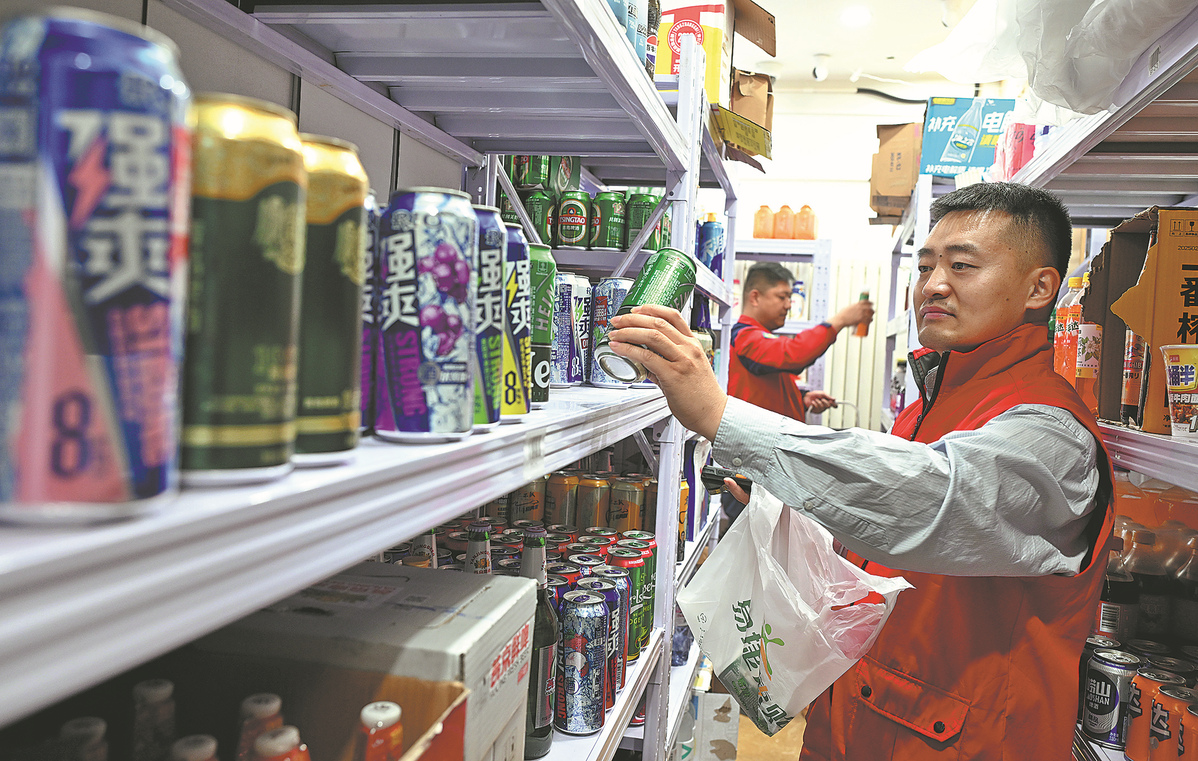
China's convenience store sector continues to grow in store count and sales, with rising competitive pressures, evolving consumer habits and operational challenges testing the format's resilience, according to the 2025 China Convenience Store Development Report.
The annual report, which was released jointly by KPMG China and the China Chain Store & Franchise Association in June, found that store network expansion remains strong. The top 10 convenience store brands continued to widen their footprint and the number of 24-hour stores surged from 38,060 in 2023 to 53,234 in 2024 — driven by nighttime consumer demand and cloud staffing applications.
The report also highlighted a key contradiction: while most operators reported dual growth in store numbers and sales, a noticeable decline in store-level operating capabilities has emerged.
"The rapid rise of discount snack chains and intensifying competition are forcing convenience store operators to reassess their strategies," said Wang Hongtao, vice-president of the CCFA, in the report.
A central theme in the report is the industry's pivot toward food service. As consumer demand shifts toward immediacy, convenience and quality, many convenience stores are moving beyond traditional retail to incorporate fresh-cooked meals, coffee and baked goods, said Lin Qihua, head of retail and consumer goods at KPMG China.
This evolution is not only lifting average transaction values, but also boosting consumer repeat visits, Lin said.
The report found that more than 90 percent of outlets now offer fresh food, with many integrating it with in-store coffee and bakery options. Operators are increasingly exploring "convenience store +canteen" models to capture demand for high-margin, ready-to-eat meals in communities and business districts.
Meanwhile, the next-generation format centered on front warehouses is reshaping operations and logistics. A growing number of stores are serving online-first consumers.
The adoption of cloud-based labor management technology, enabling remote service and 24-hour operations, is also accelerating as retailers seek to expand service hours and improve efficiency amid rising labor costs.
"Under the dual forces of instant demand and tech empowerment, 24-hour stores are becoming an essential format to maintain competitiveness," said Chai Jing, partner at KPMG China and chair of the report organizing committee.
The report showed that convenience stores are rapidly deploying instant retail models that blend online and offline retail, supported by direct sourcing and enhanced logistics networks. This hybrid strategy is helping retailers overcome traditional spatial and temporal limitations. Nearly 40 percent of surveyed convenience store operators launched instant retail services in 2024, up from 26.6 percent in the previous year, a jump of 11.4 percentage points.
Major chains such as FamilyMart and Lawson are doubling down on instant retail, a move reflected in national retail data: online sales of physical goods grew 6.5 percent in 2024, far outpacing the 1.8 percent growth in offline retail. Online retail now accounts for 30.3 percent of total retail sales in China.
The report also found that the recent trend is shedding outdated perceptions that private-label products mean inferior quality or lower prices. Instead, private brands are emerging as key differentiators in brand positioning and profitability.
Yet, despite new initiatives, operators are grappling with headwinds.
Daily sales per store dropped to 4,634 yuan ($647) in 2024, down 1.4 percent from the previous year and continuing a multi-year decline from 5,167 yuan in 2020. The decrease in foot traffic and average spending per transaction are pressuring topline growth.
However, gross margins among sampled chains edged up by 0.5 percentage point this year, thanks largely to lower labor and rental costs. Personnel expense ratios declined by 0.4 percentage point, and average training hours per employee fell by 2.6 hours.
Interestingly, the report found that front-line worker wages rose slightly faster than management salaries. Employee turnover remained stable, while the share of flexible employment fell by 6.2 percentage points.
Looking ahead, KPMG's Chai said the evolution of consumer behavior and demands will be the key driver of the sector's transformation. "Convenience store operators must keep innovating across technology, channels and business models to stay relevant in this competitive environment," said Chai.
Cloud staffing and remote operations are expected to play a growing role in unlocking operational flexibility and efficiency as the sector shifts to a more tech-enabled future, according to the report.











