


Rare species return to Qilian Mountains
Conservation efforts spur wildlife population growth, but human-animal conflicts remain a challenge










New challenges
Zhao Chuanyan, a professor at Lanzhou University, has been conducting ecological monitoring at the Sidalong station for over 20 years. She and her team have conducted a longitudinal study on the ecological function of the mountains, which integrates various indicators such as soil nutrients, precipitation, vegetation and human activities.
"The ecological function index in the area has greatly improved. Precipitation has increased, environmental conditions are better, human activity has decreased, and vegetation growth and biomass have all improved," she said.
While the resurgence in animal populations is a positive indicator of ecological health, new challenges arise that test the delicate balance between humans and wildlife.
"Did I hear right that a brown bear smashed the door of your observation station?" Ma Duifang asked Zhao when they met at the Xiangyangtai center in Sidalong.
For Zhao and her team, encounters with wildlife have become a routine occurrence, with bears and other animals frequently visiting their observation station.
The bear paw prints on the doors of Zhao's observation station were as long as an adult man's shoe.
"This particular bear shattered the glass on the window, injured its paws, and left a trail of blood on the floor as it turned the place upside down," she said.
As wildlife populations grow and their range expands, encounters and conflicts are becoming more frequent outside core areas where boundaries between humans and wildlife are clearly defined.
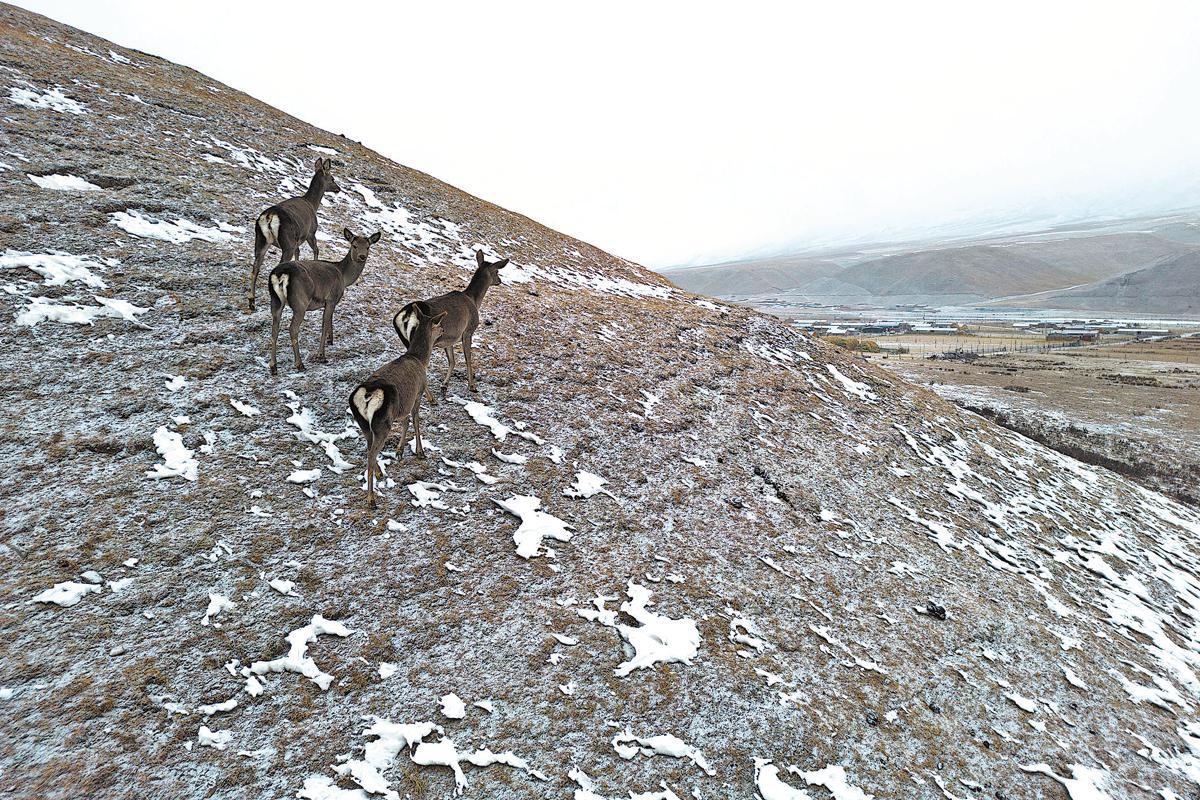
"In recent years, the populations of wild animals have surged due to reduced human interference, especially around management stations where their predators, including snow leopards and dholes, are scarce," Ma explained.
Guo, from the reserve's management center, said that as the numbers of wild animals skyrocket, they devour crops planted by locals overnight in general protection areas, prompting herders to seek compensation from the government. Additionally, brown bears and wolves often prey on livestock, exacerbating human-wildlife conflicts.
Although wildlife are the original inhabitants of the Qilian Mountains, ensuring the safety of herders, rangers and researchers when they encounter these animals remains a pressing issue.





